How to Choose Between AS/RS and Vertical Storage Carousels for Warehouse Automation
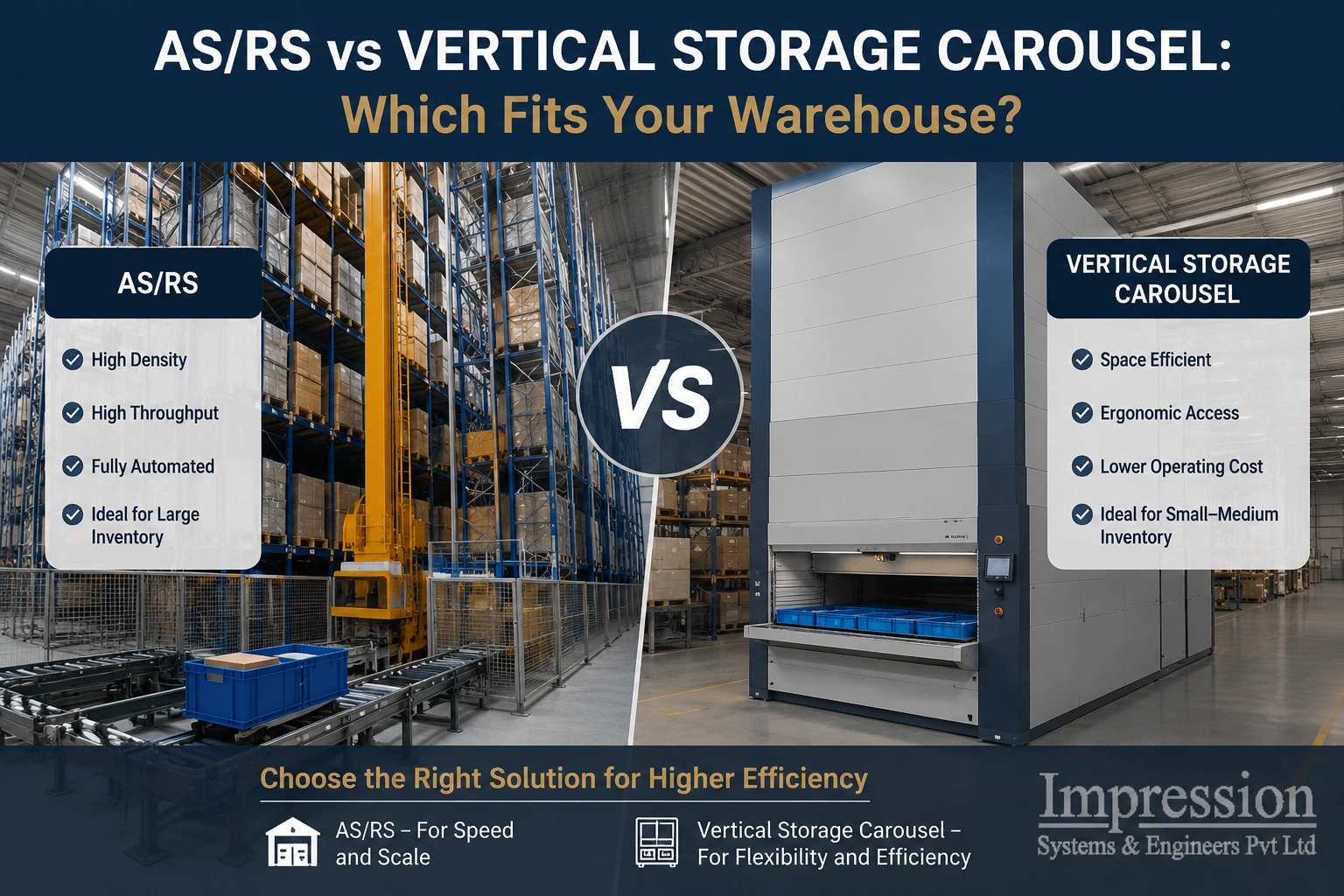
An AS/RS (Automated Storage and Retrieval System) is a broader class of automated storage technology built around cranes, shuttles, or robotic units that store and retrieve items across large, high-volume storage structures — including long, bulky materials. A vertical storage carousel is a compact, enclosed unit that rotates or elevates trays or shelves to bring items directly to an operator at a fixed pick window. AS/RS suits large-scale, high-throughput warehouses; vertical carousels suit space-constrained facilities needing dense, goods-to-person storage for smaller parts.
If you’re planning a warehouse automation upgrade, this comparison breaks down exactly how AS/RS and vertical storage carousels differ, what drives their cost and ROI, and which one — or which combination — fits your facility’s size, SKU mix, and throughput needs.
What Is the Difference Between AS/RS and a Vertical Storage Carousel?
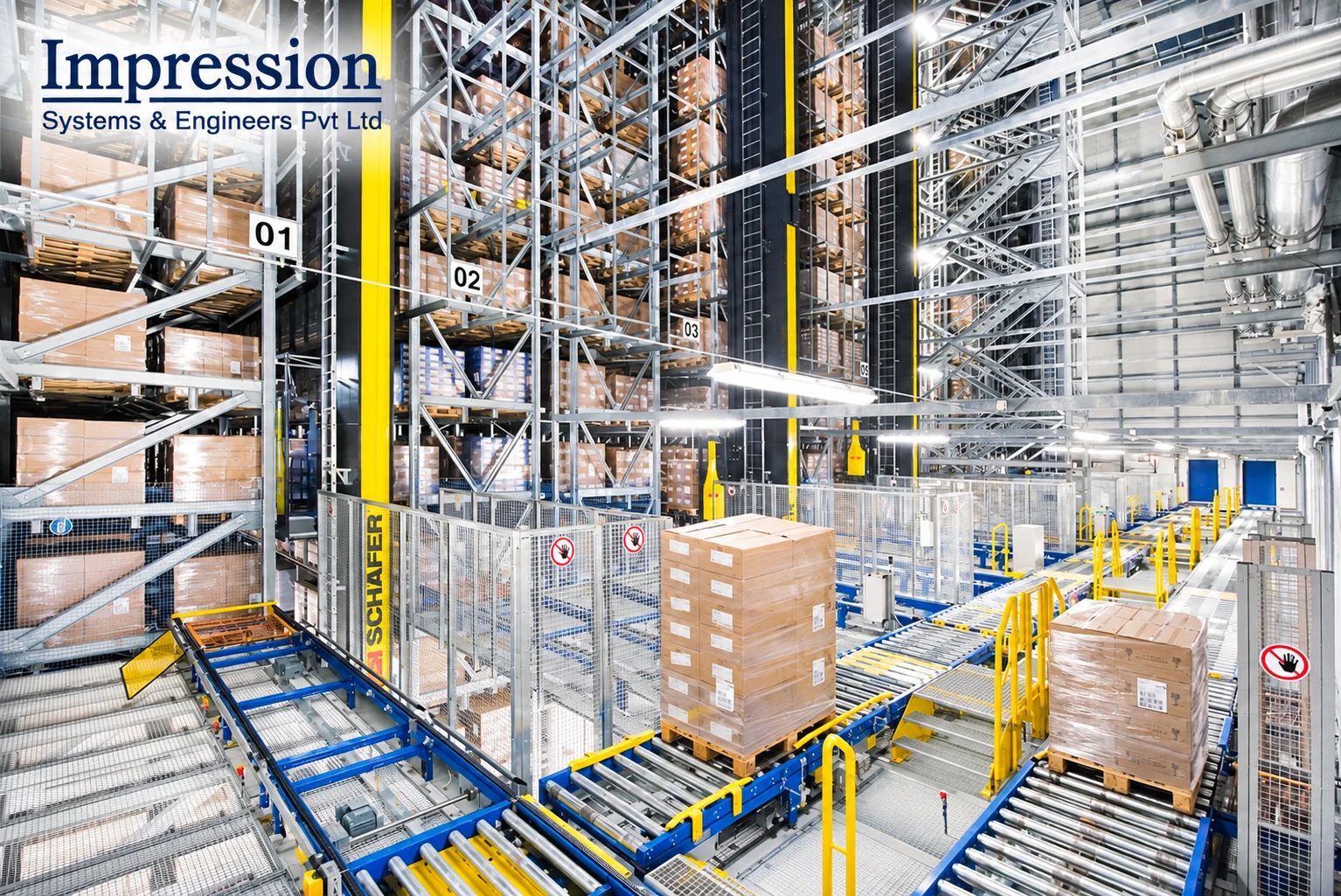
The core difference comes down to scale and format. AS/RS is a broad category of automated storage technology — it can include long-member storage cranes for pipes and beams, pallet-handling cranes, mini-load systems for totes and cartons, or shuttle-based racking. It’s typically deployed at warehouse scale, storing large volumes across tall racking structures, often 8–20+ metres high.
A vertical storage carousel, by contrast, is a self-contained storage unit — essentially a machine, not a warehouse structure. It houses trays or shelves inside an enclosed tower or carousel frame and brings the requested tray to an operator at a fixed access point using a “goods-to-person” principle, rather than sending a person or vehicle to the item.
In short: AS/RS moves large-scale storage automation to your goods. A vertical storage carousel brings your goods to a person, in a compact footprint. Many facilities use both — AS/RS for bulk, palletized, or long-item storage, and vertical carousels for small parts, spares, or frequently picked SKUs.
What Is an AS/RS (Automated Storage and Retrieval System)?
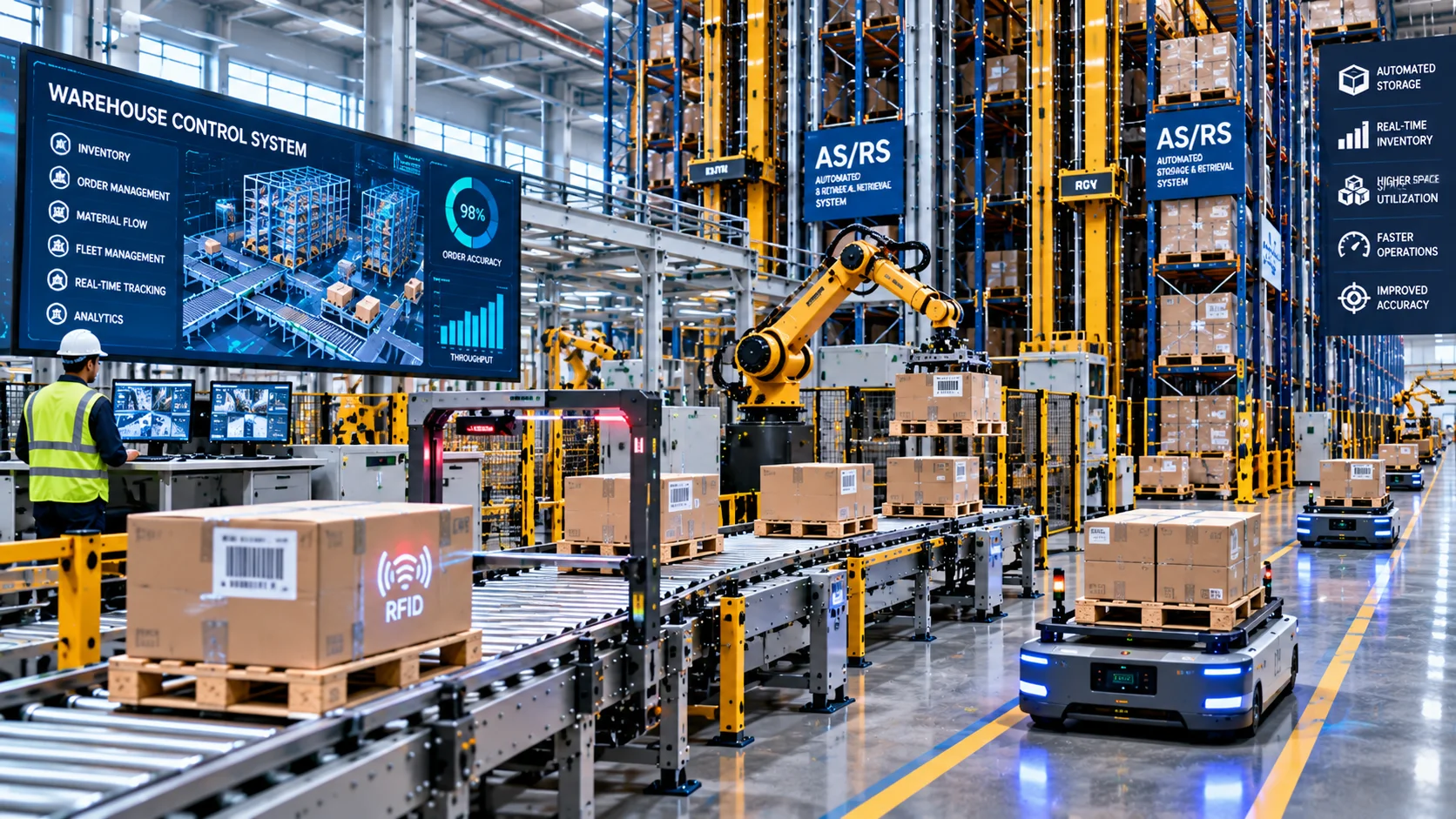
An Automated Storage and Retrieval System (ASRS) is an integrated system of automated cranes, shuttles, conveyors, and software that stores and retrieves materials in a controlled, optimized way — without manual forklift or picker involvement.
At Imensys, our Long Member ASRS is purpose-built for long, bulky items — pipes, profiles, beams, and bars — that don’t fit standard pallet racking. The system uses telescopic arms or custom grippers, guided by sensors, PLCs, and automated control logic, to store and retrieve items based on length, weight, and available space. Requests are typically initiated through a WMS interface, and the system handles the rest — locating the optimal storage slot, retrieving on demand, and delivering to a staging or dispatch zone.
Key characteristics of AS/RS:
- Built for high-volume, high-throughput storage and retrieval
- Handles a wide range of load types — pallets, cartons, totes, or long/bulky items depending on configuration
- Maximizes vertical space utilization, often in tall racking structures
- Integrates with WMS for real-time inventory visibility and traceability
- Supports 24/7 operation, suited to continuously running distribution or production-linked warehouses
- Scales to large facility footprints, but generally requires more space and civil planning than a standalone carousel
What Is a Vertical Storage Carousel?
A vertical storage carousel is a compact, machine-based storage unit that stores trays or shelves vertically and rotates or elevates them to bring a specific tray to an operator at a single access window — the “goods-to-person” model. Instead of a picker walking through aisles searching for an item, the item comes to them.
This format is especially effective for:
- Small parts and components — spares, fasteners, electronic components, tooling
- Space-constrained facilities — the vertical footprint means you can store a large number of SKUs in a fraction of the floor area traditional shelving would need
- Fast, accurate picking — since the system presents exactly the right tray and often highlights the exact bin location with light-guided picking
Because the unit is self-contained, deployment is generally faster and less disruptive than a full AS/RS installation — there’s no need for tall racking structures or extensive civil work, just floor space for the unit’s footprint and clearance for tray movement.
VTS vs VCS: Understanding Imensys’ Two Vertical Storage Formats
Imensys offers two distinct vertical storage formats, and it’s worth understanding the difference before choosing between them:
- Standalone Vertical Storage Towers (VTS) — trays are stored on both sides of a central column and delivered to an access window by an internal lift/extractor mechanism. VTS units are well suited to a large number of SKUs with varying tray heights, since the system can automatically adjust storage slots to tray content height, improving density further.
- Standalone Vertical Storage Carousels (VCS) — shelves rotate around a fixed vertical loop (similar in principle to a paternoster or carousel), bringing the requested shelf to the operator. VCS units are typically favored where consistent shelf sizes and continuous rotational picking cycles suit the SKU profile.
Both fall under the “vertical storage carousel” umbrella referenced throughout this article, and both solve the same core problem — dense, goods-to-person storage in a compact footprint — but the right one depends on your SKU dimensions, picking pattern, and throughput needs. Our team typically recommends VTS for facilities with variable item heights and larger SKU counts, and VCS for facilities with more uniform shelf loads and high picking frequency.
Quick Comparison Table
| Criteria | AS/RS | Vertical Storage Carousel (VTS/VCS) |
|---|---|---|
| Best Suited For | Large-scale, high-volume warehouses; pallets, cartons, long/bulky items | Small parts, spares, components; space-constrained facilities |
| Footprint | Larger — requires racking structure and aisle clearance | Compact — self-contained unit, minimal floor footprint |
| Storage Density | High, especially with tall racking (vertical scale) | Very high per square foot — ideal for small-item density |
| Deployment Complexity | Higher — civil work, racking installation, crane commissioning | Lower — largely a plug-in unit with minimal civil work |
| Retrieval Method | Crane/shuttle travels to the item location | Item comes to a fixed operator access point (goods-to-person) |
| Typical Load Type | Pallets, cartons, totes, long items (pipes, beams, profiles) | Small parts, tools, spares, electronic components, light cartons |
| Throughput Scale | Very high — designed for continuous, high-volume operations | Moderate to high — optimized for frequent small-item picks |
| Integration | WMS/WCS integration standard | WMS integration common, often with light-guided picking |
| Typical ROI Window | Longer, but justified by scale and labor savings across large operations | Often faster for facilities with high-frequency small-parts picking |
| Best-Fit Industry (Imensys clients) | Metal industry, automotive, large-scale warehousing | Appliances, food & beverage, spares/MRO storage, automotive component staging |
Floor Space and Storage Density
Both systems are fundamentally about the same goal — replacing horizontal floor space with vertical storage density — but they achieve it differently.
AS/RS maximizes density across a large racking structure, often multiple aisles deep and many metres tall, making it the better fit when you’re storing high volumes across varied load types, including pallets or long items that a compact carousel simply can’t accommodate. The space savings scale with the size of the operation: the larger your storage volume, the more floor-space efficiency an AS/RS delivers compared to conventional racking and forklift access aisles.
Vertical storage carousels maximize density within a single compact footprint — commonly reducing the floor space required for small-parts storage substantially compared to traditional static shelving, because there’s no need for wide aisles between shelves; the machine handles all movement internally. For facilities with limited floor area but a large number of small SKUs, this is often the single biggest space-efficiency win available.
Rule of thumb: If you’re storing pallets, cartons, or long/bulky items at scale, AS/RS delivers better space efficiency. If you’re storing a high SKU count of small parts in a limited footprint, a vertical carousel typically delivers denser storage per square foot.
Retrieval Speed and Throughput
AS/RS systems are engineered for continuous, high-volume throughput — cranes or shuttles are optimized to serve multiple pick/put requests per hour across a large storage structure, making them well suited to distribution centers, production-linked warehouses, and facilities operating 24/7.
Vertical storage carousels are optimized for fast, accurate single-item or small-batch retrieval at a fixed access point. Because the operator doesn’t need to travel to the item, pick times for small parts are often dramatically faster than manual picking from static shelving, and accuracy improves significantly when paired with light-guided picking or pick-to-light confirmation.
Neither system is universally “faster” — it depends on what’s being measured. AS/RS wins on total system throughput across large, varied inventories. Vertical carousels win on per-pick speed and accuracy for small, frequently accessed items.
Cost and Typical ROI Window
Cost comparisons should separate installation cost from operational payback:
AS/RS cost profile:
- Higher upfront investment — racking structure, crane/shuttle hardware, WMS/WCS integration, and civil work
- ROI is typically realized through labor reduction across a large operation, reduced product damage, improved space utilization, and higher throughput — the payback period generally depends heavily on the scale of the operation and prior manual-handling costs
- Best justified when storage volume and pick frequency are both high
Vertical storage carousel (VTS/VCS) cost profile:
- Lower upfront investment relative to a full AS/RS installation, since it’s a self-contained unit rather than a structural racking system
- ROI is typically realized faster in operations with high small-parts pick frequency, since labor time saved per pick compounds quickly across thousands of picks
- A strong fit for facilities looking to automate incrementally — you can add carousel units to specific zones (spares stores, kitting areas, component staging) without committing to a full warehouse-wide automation project
For an accurate ROI estimate specific to your operation — factoring in current labor cost, pick frequency, and SKU count — it’s worth requesting a tailored assessment rather than relying on general industry figures, since payback periods vary significantly based on facility-specific factors like shift patterns, current manual process efficiency, and SKU complexity.
Which Facilities Fit AS/RS Best?
Based on real deployment patterns, AS/RS consistently performs best in:
- Metal Industry: Long member storage for pipes, profiles, beams, and bars — see our Long Member ASRS
- Large-Scale Distribution and Warehousing: High-volume, high-throughput operations moving pallets and cartons continuously — see our Warehouse Automation Solution
- Automotive and Heavy Manufacturing: Facilities needing structured, traceable storage for large or irregular components feeding production lines
- Operations Running 24/7: Where consistent, automated throughput outweighs the value of compact footprint
Which Facilities Fit Vertical Storage Carousels Best?
Vertical storage carousels (VTS/VCS) tend to outperform AS/RS in:
- Spares and MRO Storage: High SKU counts of small, frequently picked maintenance parts
- Appliances and Electronics Assembly: Component staging where small parts need to be picked quickly and accurately for assembly lines
- Food & Beverage Facilities: Ingredient, packaging component, or tooling storage in space-constrained plant environments
- Facilities With Limited Floor Space: Where floor area is at a premium and vertical building height is available to exploit
Can AS/RS and Vertical Storage Carousels Work Together?
Yes — and in practice, many facilities benefit most from combining both rather than choosing one exclusively.
A common configuration: use AS/RS for bulk, palletized, or long-item storage — the high-volume backbone of your warehouse — and use vertical storage carousels for small parts, spares, and frequently picked components that don’t need a full racking structure and benefit more from fast, goods-to-person retrieval.
This hybrid approach lets you:
- Apply the right storage format to the right item profile, rather than forcing all SKUs into one system
- Automate incrementally — many facilities start with a carousel in a spares store or kitting area, then expand into full AS/RS as volume grows
- Improve overall picking efficiency by reserving carousel access points for high-frequency small items while AS/RS handles bulk movement in the background
If you’re planning a new facility or upgrading an existing one, mapping your SKU profile — by size, weight, pick frequency, and storage volume — is the fastest way to identify which zones suit AS/RS, which suit a vertical carousel, and where a hybrid approach makes the most sense.
Decision Checklist: How to Choose Between AS/RS and a Vertical Storage Carousel
- Are you storing pallets, cartons, or long/bulky items at high volume? → Lean AS/RS
- Are you storing a high count of small parts, spares, or components? → Lean vertical storage carousel
- Is floor space extremely limited, but ceiling height available? → Lean vertical storage carousel
- Do you need continuous, high-throughput storage and retrieval across a large operation? → Lean AS/RS
- Do you want to automate a specific zone (spares store, kitting area) without a full warehouse overhaul? → Lean vertical storage carousel
- Do you have varied item heights within your small-parts inventory? → Consider VTS specifically
- Do you have more uniform shelf loads with high picking frequency? → Consider VCS specifically
- Do you have both bulk storage needs and high-frequency small-parts picking? → Consider a hybrid AS/RS + vertical carousel deployment
Conclusion
AS/RS and vertical storage carousels solve the same underlying problem — maximizing storage density while reducing manual labor and errors — but at different scales and for different item profiles. AS/RS is the stronger choice for high-volume, large-scale, or long/bulky item storage, particularly in metal handling, automotive, and large distribution operations. Vertical storage carousels (VTS/VCS) are the stronger choice for space-constrained facilities managing a high count of small parts, spares, or components that need fast, accurate, goods-to-person retrieval.
The right starting point is an honest assessment of your SKU profile, storage volume, floor space, and pick frequency — not the technology itself. Many of the most efficient warehouses we’ve worked with use both formats side by side, applying each where it delivers the most value.
Not sure which system — or combination — fits your warehouse layout and SKU mix? Our engineers can assess your storage needs and recommend the right configuration.
Request a Quote → | View Our Brochure →
Frequently Asked Questions
What is the difference between AS/RS and a vertical carousel?
AS/RS is a broad category of automated storage and retrieval technology built around cranes, shuttles, or robotic units operating within large racking structures — well suited to pallets, cartons, and long or bulky items at scale. A vertical storage carousel is a compact, self-contained unit that rotates or elevates trays to bring items to a fixed operator access point, best suited to dense storage of small parts within a limited footprint.
Is a vertical storage carousel cheaper than an AS/RS?
Generally, yes, in terms of upfront investment — a vertical storage carousel is a self-contained unit that doesn’t require the racking structure, civil work, or crane/shuttle infrastructure that a full AS/RS installation needs. However, cost-effectiveness depends on the application: for high-volume pallet or bulk storage, an AS/RS often delivers better long-term value despite the higher upfront cost, since it’s purpose-built for that scale.
What is the difference between VTS and VCS?
VTS (Vertical Storage Towers) store trays on both sides of a central column and use an internal lift/extractor to deliver trays to an access window, automatically adjusting slot height to tray content — ideal for varied item heights. VCS (Vertical Storage Carousels) rotate shelves around a fixed vertical loop to bring the requested shelf to the operator, and typically suit more uniform shelf loads with high, continuous picking frequency.
Can AS/RS and vertical storage carousels be used in the same warehouse?
Yes. Many facilities use AS/RS for bulk, palletized, or long-item storage and vertical storage carousels for small parts, spares, or frequently picked components, applying each system where it delivers the most value rather than forcing all inventory into a single storage format.
How much floor space can I save with vertical storage automation?
Space savings depend on your current storage method and item mix, but both AS/RS and vertical carousels are built to convert floor space into vertical storage capacity — replacing wide aisles and static shelving with dense, automated storage. For an accurate estimate specific to your facility, it’s best to request a layout assessment based on your actual SKU count, item dimensions, and available ceiling height.
How long does it take to see ROI from warehouse storage automation?
ROI timelines vary based on labor cost savings, pick frequency, and current manual process efficiency. Vertical storage carousels often show faster payback in facilities with high small-parts pick frequency, since labor time saved per pick compounds quickly. AS/RS payback is typically realized over a longer horizon but is justified by scale — high-volume operations see returns through reduced labor, damage, and space costs across the entire facility.
Have questions about which warehouse storage automation system fits your facility? Contact the Imensys team for a tailored recommendation based on your layout, SKU mix, and volume.