Automated Warehouse Material Flow: A Complete Guide for Modern Warehouses
Automated warehouse material flow is becoming increasingly important for manufacturers, distribution centers, logistics providers, and businesses seeking to improve warehouse productivity. As companies manage higher inventory volumes, faster production schedules, increasing customer expectations, and limited storage space, traditional manual material movement can create delays and operational bottlenecks.
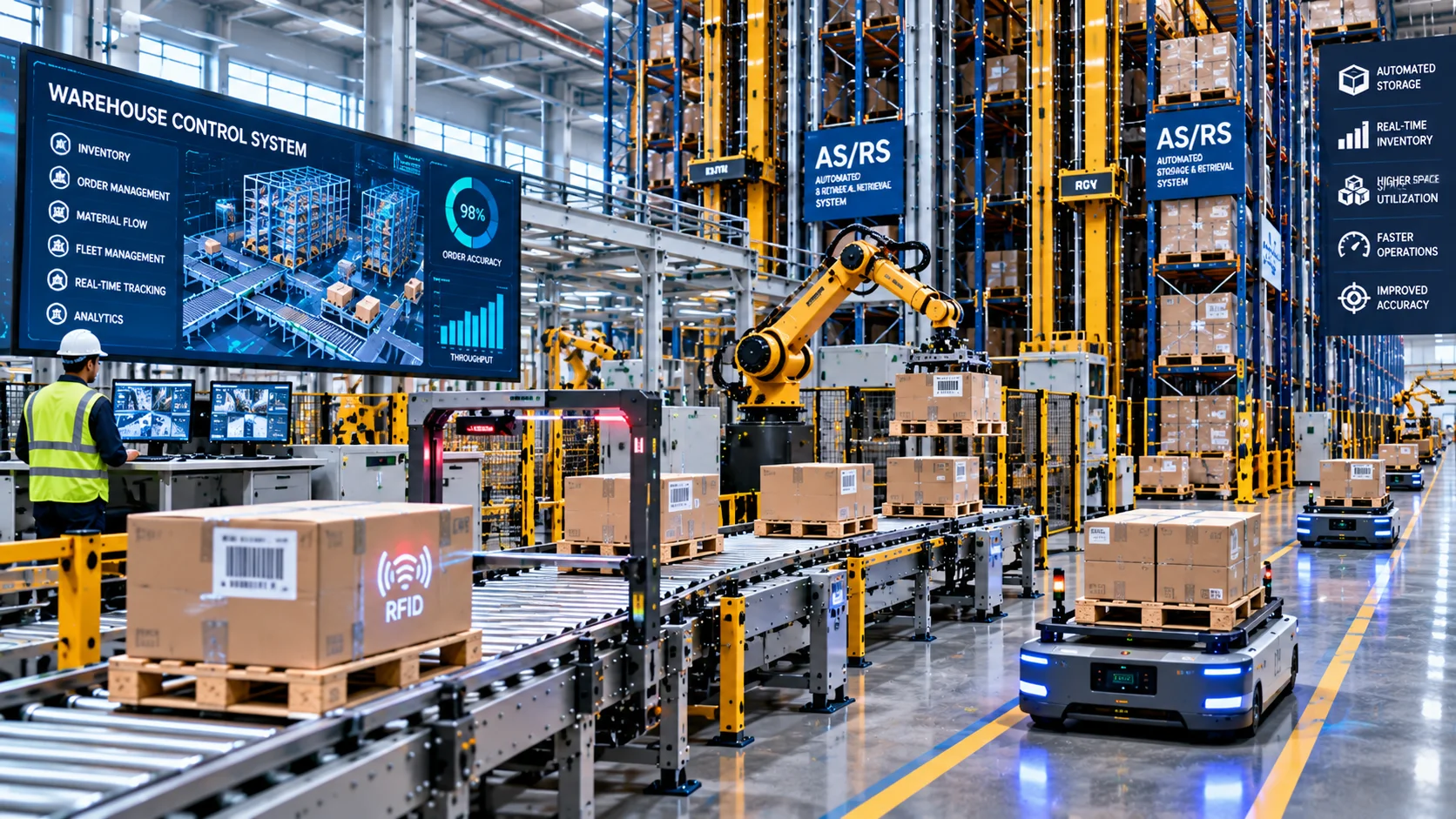
Automated warehouse material flow uses conveyors, automated storage and retrieval systems (AS/RS), robotic equipment, automated guided vehicles (AGVs), autonomous mobile robots (AMRs), sensors, and intelligent control software to move materials efficiently between warehouse locations. These technologies help coordinate receiving, storage, retrieval, production supply, order processing, and dispatch.
Instead of treating each warehouse activity as an independent task, an automated material-flow system connects the complete operation. Materials can move from receiving to storage, from storage to production, and from production to dispatch through coordinated equipment and software.
For modern industrial facilities, the objective is to create a reliable, traceable, and scalable movement process that reduces unnecessary transportation, improves inventory visibility, and supports consistent operations.
This guide explains how automated warehouse material flow works, its components, benefits, applications, implementation process, integration requirements, and future trends.
What Is Automated Warehouse Material Flow?
Automated warehouse material flow is the coordinated movement of products, pallets, cartons, components, and other materials through a warehouse using automated equipment and control systems.
A conventional warehouse may depend heavily on forklifts, manual transportation, paper instructions, and operator decisions. In an automated warehouse, equipment and software coordinate material movement according to defined rules and real-time operational requirements.
A typical material-flow sequence may include:
Receiving → Identification → Inspection → Storage → Retrieval → Production or Picking → Dispatch
Depending on the facility, automation may include:
- Pallet conveyor systems
- Roller and chain conveyors
- Automated storage and retrieval systems
- Rail Guided Vehicles (RGVs)
- Automated Guided Vehicles (AGVs)
- Autonomous Mobile Robots (AMRs)
- Robotic palletizing and depalletizing
- Vertical lifts and transfer units
- Barcode and RFID identification
- Warehouse management systems
- Warehouse control systems
- Sensors and programmable logic controllers
These technologies work together to transport materials to the correct locations at the appropriate time.
For example, when a finished-goods pallet leaves a production line, sensors can detect its arrival, an identification system can associate it with inventory data, and a control system can route it toward storage. When the pallet is required for dispatch, the system can coordinate its retrieval and transportation to the outbound area.
Why Is Warehouse Material Flow Important?
Material flow directly affects warehouse performance. If materials cannot move efficiently, storage capacity alone will not solve the problem.
Poorly designed material flow can cause:
- Congestion around receiving and dispatch areas
- Delays in production supply
- Excessive forklift movement
- Long transportation distances
- Unnecessary material handling
- Inventory-location errors
- Product damage
- Unbalanced equipment utilization
- Delayed order fulfillment
Automated warehouse material flow addresses these challenges by establishing structured transportation routes, coordinating equipment, and connecting physical movement with digital inventory information.
For example, a warehouse might have enough storage space but still experience delays because pallets wait too long for transportation. Introducing an appropriate conveyor, transfer vehicle, or automated routing system may improve the flow without requiring the facility to expand.
The most effective solution begins with understanding where materials originate, where they need to go, how frequently they move, and what constraints affect each movement.
How Does Automated Warehouse Material Flow Work?
A complete system typically combines identification, software, controls, and material-handling equipment.
1. Receiving Materials
Materials enter the warehouse from suppliers, production lines, or other facilities.
The receiving process may include unloading, inspection, identification, and verification of product or pallet information.
2. Identification and Tracking
Barcode scanners, RFID readers, sensors, or vision systems identify products and pallets.
The information can be associated with an inventory record, production order, or warehouse task.
Accurate identification helps prevent materials from being sent to the wrong destination.
3. Transportation
Conveyors, RGVs, AGVs, AMRs, or other automated equipment move materials through the facility.
The equipment selected depends on pallet dimensions, product weight, route requirements, throughput, and warehouse layout.
4. Routing and Control
A warehouse control system or another suitable control architecture coordinates equipment movement.
For example, a pallet may be directed toward a storage system, production buffer, inspection area, or dispatch lane.
5. Storage and Buffering
Materials can be transferred into storage or temporary buffer locations.
Buffers help balance differences in speed between connected processes, such as a production line and a warehouse storage system.
6. Retrieval and Delivery
When materials are needed, the warehouse software generates or coordinates a retrieval request.
Automated equipment retrieves the required material and moves it to the appropriate destination.
7. Status Updates and Monitoring
Sensors and equipment controllers report operational status.
When integrated correctly, the software can update material locations and provide information about movement, system availability, and potential delays.
Key Technologies Used in Automated Warehouse Material Flow
Conveyor Systems
Conveyors provide controlled movement between fixed locations.
Common types include:
- Roller conveyors
- Chain conveyors
- Belt conveyors
- Pallet conveyors
- Accumulation conveyors
- Transfer conveyors
- Sortation conveyors
Conveyors are useful when materials follow predictable routes between production, storage, picking, and dispatch areas.
They can reduce repetitive forklift journeys and help create a consistent transportation process.
Explore Imensys industrial automation solutions to learn more about industrial automation applications.
Automated Storage and Retrieval Systems
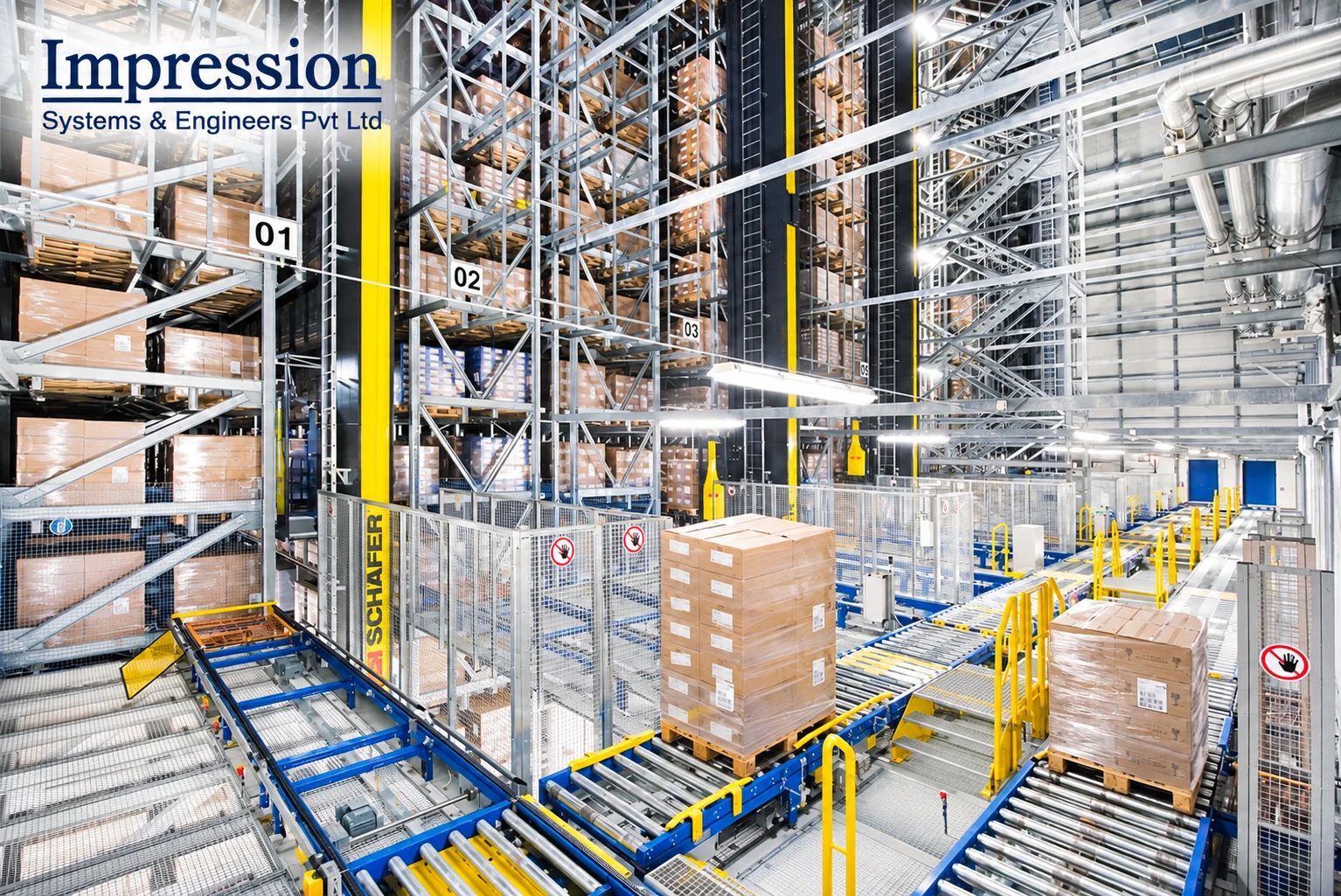
Automated storage and retrieval systems, commonly known as AS/RS, automatically store and retrieve materials from designated storage locations.
Pallet-based systems are particularly relevant to warehouses handling standardized pallet loads.
AS/RS can help coordinate material flow by connecting storage operations with incoming and outgoing transportation equipment.
Potential advantages include:
- Better use of available storage height
- Controlled storage and retrieval
- Reduced manual travel
- Improved inventory-location visibility
- Integration with warehouse control software
The right configuration depends on storage capacity, throughput, load characteristics, and the required level of automation.
Rail Guided Vehicles
Rail Guided Vehicles travel along predefined rail paths to transport materials between fixed locations.
They can be suitable for repetitive, high-throughput transportation tasks where the routes are well established.
RGVs may connect production lines, pallet conveyors, storage systems, and buffer areas.
Automated Guided Vehicles
AGVs transport materials using predefined navigation methods.
They can support pallet movement, production supply, and warehouse transportation where a vehicle-based solution fits the facility layout.
Autonomous Mobile Robots
AMRs can navigate using suitable sensing and mapping technologies, depending on the system design.
They may be useful when material destinations or transportation routes change more frequently than in a fixed conveyor environment.
AGVs, AMRs, and conveyors are not interchangeable in every situation. Their suitability depends on throughput, routing flexibility, safety requirements, and operating conditions.
Robotic Material Handling
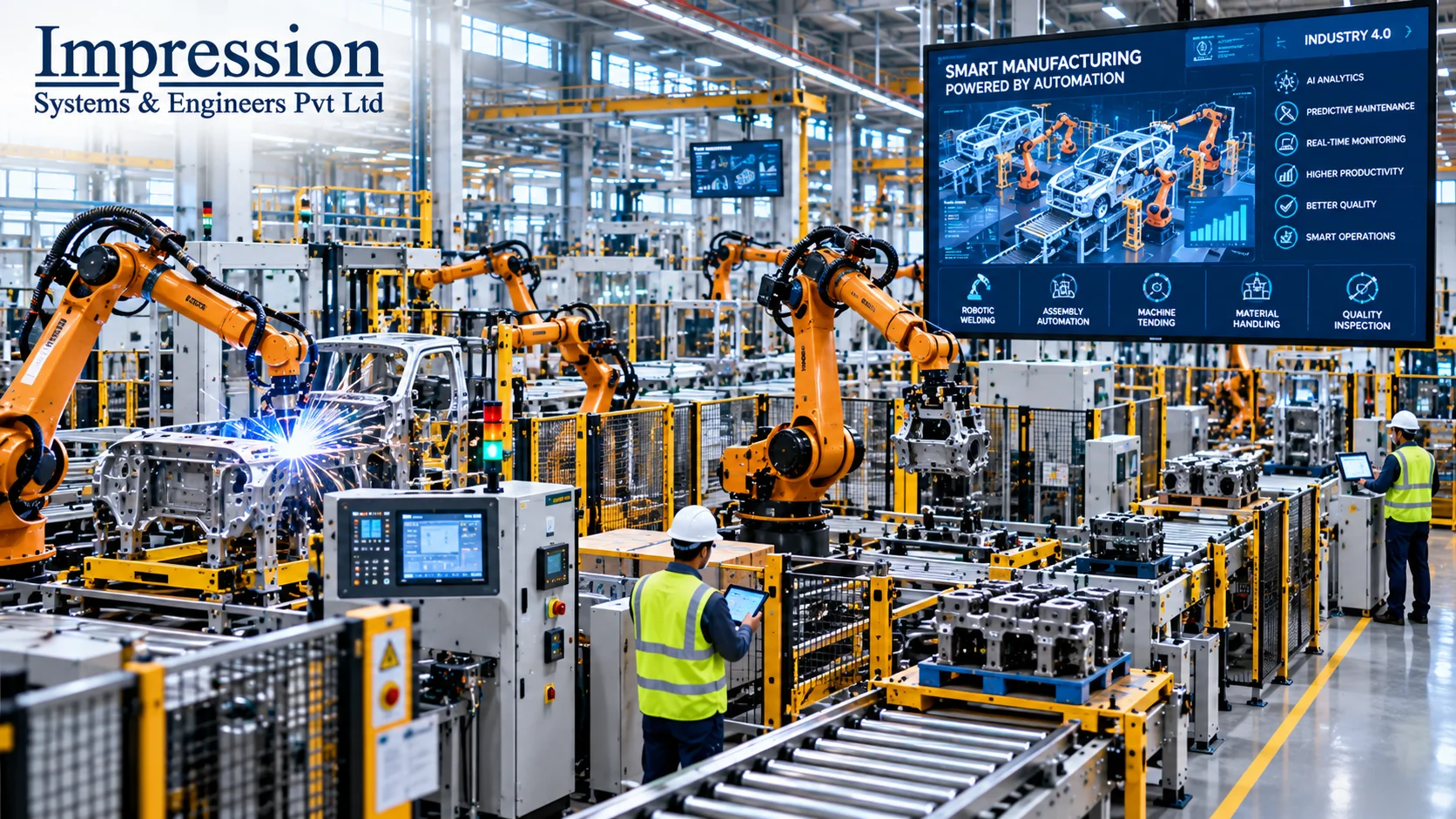
Industrial robots can transfer products and components between conveyors, machines, pallets, and workstations.
Robotic systems may perform:
- Palletizing
- Depalletizing
- Pick and place
- Sorting
- Machine tending
- Product transfer
Robotics can connect warehouse operations with packaging and manufacturing processes.
Vertical Lifts and Transfer Units
Vertical lifts move materials between different elevations, while transfer units redirect materials between conveyor lines.
These technologies help connect multi-level facilities, mezzanines, production floors, and storage systems.
Sensors, PLCs, and Control Systems
Sensors detect material presence, position, movement, and equipment conditions.
Programmable Logic Controllers (PLCs) coordinate machine-level operations, including conveyor motors, transfers, lifts, and safety interlocks.
Higher-level software coordinates tasks across multiple pieces of equipment.
Benefits of Automated Warehouse Material Flow
Improved Productivity
Automated transportation can reduce repetitive manual movement and unnecessary waiting.
When equipment is appropriately sized and coordinated, materials can move more consistently between warehouse operations.
Reduced Transportation Delays
Defined routes and automated task coordination can help reduce delays caused by manual transportation and equipment conflicts.
Better Inventory Visibility
When identification systems and warehouse software are integrated, businesses can maintain better visibility into where materials are stored and where they are moving.
Improved Space Utilization
Automated material flow can support high-density storage and make more effective use of vertical warehouse space.
Reduced Manual Handling
Automation can reduce repetitive lifting, pushing, and transportation activities. Employees can focus more on supervision, maintenance, quality control, and exception handling.
Improved Operational Consistency
Automated systems follow programmed routes and operating sequences, helping create more predictable processes.
Better Production Supply
Manufacturing operations depend on receiving the correct materials at the correct time.
Automated warehouse material flow can connect storage and production processes so that components are delivered according to defined requirements.
Improved Safety Management
Reducing unnecessary forklift traffic and creating separated transportation routes may help improve workplace safety.
However, automated equipment introduces its own hazards. Risk assessments, guarding, emergency stops, safe access, and appropriate personnel training remain essential.
For general workplace safety resources, visit the Occupational Safety and Health Administration (OSHA).
Greater Scalability
A modular system may be expanded as warehouse throughput, product range, or production requirements change.
Expansion possibilities depend on the original layout, control architecture, equipment capacity, and available space.
Automated Warehouse Material Flow in Manufacturing
Manufacturing facilities often require a continuous connection between incoming materials, production operations, finished-goods storage, and dispatch.
A typical flow may be:
Raw Material Storage → Production Supply → Work-in-Process Buffer → Finished Goods → Dispatch
Automated material flow helps connect these stages.
For example, a production workstation may request a component from storage. The warehouse system can coordinate retrieval, while conveyors or automated vehicles transport the material to the required production area.
Once production is complete, the finished product can be transferred to a buffer or storage location.
Automotive Manufacturing
Automotive facilities often manage components, subassemblies, production containers, and finished products.
Automated material flow can connect component storage, line-side delivery, production buffers, and finished-goods handling.
Explore Imensys automotive solutions.
Food and Beverage
Food and beverage facilities may need to transport packaged products, raw materials, and finished pallets between processing, storage, and dispatch.
Automation can help coordinate these movements while accounting for product characteristics, hygiene requirements, and the operating environment.
Explore Imensys food and beverage solutions.
Metal Industry
Metalworking operations may handle heavy components, fabricated parts, and industrial products.
Conveyors, transfer systems, RGVs, and appropriately designed automated vehicles can support controlled material movement.
Explore Imensys metal industry solutions.
Appliance Manufacturing
Appliance production often involves multiple assembly stages, components, packaging materials, and finished goods.
Automated material flow can connect production areas with storage and dispatch operations.
Explore Imensys appliance industry solutions.
The Role of WMS, WCS, MES, and ERP Integration
Automated equipment needs accurate instructions and reliable communication to coordinate material movement.
Warehouse Management System
A Warehouse Management System (WMS) manages inventory and warehouse processes.
It can support:
- Receiving
- Storage allocation
- Inventory tracking
- Replenishment
- Picking
- Dispatch
Warehouse Control System
A Warehouse Control System (WCS) coordinates automated warehouse equipment.
Depending on the architecture, it may manage conveyors, sorters, AS/RS, RGVs, and other automated systems.
Manufacturing Execution System
A Manufacturing Execution System (MES) connects warehouse activity with production operations.
For example, a production requirement can trigger a request to retrieve materials from storage.
Enterprise Resource Planning
An Enterprise Resource Planning (ERP) system manages broader business information, including orders, inventory, procurement, and production planning.
Integration helps connect warehouse movement with business requirements.
The exact division of responsibilities between WMS, WCS, MES, and PLC systems varies by project. A clear software architecture is important to avoid conflicting instructions and unreliable inventory updates.
How to Design an Efficient Automated Material-Flow System
Analyze Current Material Movement
Start by documenting how materials enter, move through, and leave the facility.
Identify:
- Origin and destination points
- Transportation distances
- Pallets or units moved per hour
- Peak operating periods
- Waiting points
- Congestion areas
- Manual handling activities
Define Throughput Requirements
Calculate the number of pallets, containers, cartons, or individual items that must move during normal and peak operations.
Consider both average and peak demand.
Understand Load Characteristics
Record the dimensions, weight, stability, and type of materials being transported.
Pallet quality and load overhang can affect conveyor and automated storage compatibility.
Select Suitable Technologies
Choose technologies according to the movement task.
For example, conveyors may suit repetitive fixed routes, while AMRs may be more appropriate for some flexible transportation tasks.
Design the Layout
Consider aisle widths, equipment locations, turning areas, transfer points, access routes, maintenance space, and emergency exits.
Define Control and Software Architecture
Determine how equipment, PLCs, WCS, WMS, MES, and ERP will exchange information.
Plan Safety and Maintenance
Include risk assessment, safeguarding, safe maintenance access, operator training, and spare-parts planning from the beginning.
Steps for Implementing Automated Warehouse Material Flow
Step 1: Conduct a Warehouse Assessment
Study existing warehouse processes, material routes, equipment, inventory practices, and bottlenecks.
Step 2: Establish Measurable Objectives
Define goals such as throughput, transportation time, inventory accuracy, equipment availability, and reduction of unnecessary movement.
Step 3: Develop the Concept Design
Create a proposed material-flow layout and determine which technologies are appropriate.
Step 4: Complete Detailed Engineering
Finalize equipment specifications, mechanical layouts, electrical design, controls, safety systems, and software integration.
Step 5: Test the System
Verify normal operating sequences, routing, equipment communication, fault recovery, and safety functions.
Step 6: Commission and Train
Install and validate the system, then train operators and maintenance personnel.
Step 7: Monitor Performance
Measure actual results and compare them with the original objectives.
Performance monitoring should identify both equipment issues and process-level bottlenecks.
Common Challenges in Automated Warehouse Material Flow
Poor Process Planning
Installing automation before understanding material flow can simply transfer existing inefficiencies into a more expensive system.
Incorrect Capacity Planning
If equipment capacity is lower than actual peak demand, queues and bottlenecks may remain.
Integration Difficulties
Different equipment and software platforms may use different communication methods and data structures.
These interfaces should be defined and tested carefully.
Unreliable Product Data
Incorrect pallet dimensions, inaccurate inventory records, and inconsistent identification can interrupt automated operations.
Insufficient Flexibility
A system designed around current requirements may struggle when product types, production schedules, or warehouse routes change.
Inadequate Training
Employees need to understand normal operation, alarms, safe recovery, and escalation procedures.
Maintenance Limitations
Automation requires planned maintenance, technical support, spare parts, and appropriate diagnostic tools.
Maintenance and Continuous Improvement
Automated warehouse material flow depends on reliable equipment and well-managed processes.
Typical maintenance activities include:
- Conveyor and roller inspection
- Motor and drive inspection
- Chain and belt checks
- Sensor cleaning and testing
- Electrical inspections
- Safety-device testing
- PLC diagnostics
- Vehicle maintenance
- Robot and tooling inspections
- Software and configuration backups
Maintenance frequency should follow manufacturer recommendations, operating conditions, equipment usage, and observed performance.
After commissioning, businesses should monitor throughput, downtime, equipment utilization, and transportation delays. These measurements help identify where additional improvements are needed.
For industrial support information, visit Imensys maintenance and support services.
Future Trends in Automated Warehouse Material Flow
Artificial Intelligence
AI can support demand forecasting, route optimization, exception detection, and operational analysis. The benefits depend on data quality and the application.
Autonomous Mobile Robots
AMRs may offer flexible transportation in facilities where routes and tasks change regularly.
Digital Twins
Digital twins can model warehouse layouts and material-flow behavior, helping teams evaluate scenarios before changing the physical facility.
Predictive Maintenance
Equipment data can help maintenance teams identify abnormal operating conditions and plan interventions.
Connected Industrial Systems
Integration among warehouse, manufacturing, and enterprise systems can provide more consistent visibility into material movement.
Advanced Robotics
Robotic picking, palletizing, depalletizing, and product handling can connect warehouse transportation with packaging and production processes.
Energy-Aware Operations
Future designs may increasingly consider equipment energy consumption, idle time, route efficiency, and system utilization alongside throughput.
Automated Warehouse Material Flow at Imensys
Imensys works in the industrial automation and material-handling domain. Businesses considering automated warehouse material flow should evaluate the complete process, from receiving and storage to production supply and dispatch.
A suitable solution may combine conveyors, transfer systems, RGVs, AS/RS, automated vehicles, robotic handling, sensors, PLCs, and warehouse control software.
System design should account for:
- Material characteristics
- Pallet dimensions and weight
- Required throughput
- Storage capacity
- Warehouse layout
- Production requirements
- Software integration
- Safety
- Maintenance
- Future expansion
Explore Imensys industrial automation solutions and Imensys products.
For a project-specific discussion, visit the Imensys contact page.
Frequently Asked Questions About Automated Warehouse Material Flow
What is automated warehouse material flow?
Automated warehouse material flow is the use of automated equipment and control software to transport, route, store, retrieve, and track materials within a warehouse or manufacturing facility.
Which technologies are used for automated warehouse material flow?
Common technologies include conveyors, AS/RS, RGVs, AGVs, AMRs, industrial robots, barcode scanners, RFID, sensors, PLCs, WMS, and WCS.
What are the benefits of automated warehouse material flow?
Benefits can include improved productivity, more consistent material movement, better inventory visibility, reduced manual handling, improved space utilization, and more predictable production supply.
What is the difference between warehouse automation and material flow automation?
Warehouse automation covers a broad range of warehouse processes, including storage, retrieval, picking, sorting, and inventory management. Material flow automation focuses specifically on the movement and routing of materials between locations.
Can automated material flow connect with production lines?
Yes. Conveyor systems, automated vehicles, RGVs, and robotic systems can connect warehouse storage with production lines and buffer areas when appropriately engineered.
How does a WCS support material flow?
A Warehouse Control System coordinates automated equipment and executes or manages material movement tasks according to the system architecture.
Are conveyors better than AMRs?
Neither technology is universally better. Conveyors often suit predictable fixed routes and repeated movements, while AMRs may suit applications requiring flexible routes. Throughput, layout, safety, and total cost should guide selection.
How do I choose an automated warehouse material-flow solution?
Begin with material-flow mapping, throughput analysis, load specifications, warehouse layout, storage requirements, software integration, safety assessment, maintenance planning, and future expansion needs.
Is automated warehouse material flow suitable for manufacturing facilities?
Yes. It can connect raw-material storage, production supply, work-in-process buffers, finished-goods storage, and dispatch operations.
Conclusion
Automated warehouse material flow helps businesses coordinate how materials move through warehouses, manufacturing facilities, and distribution environments. By combining conveyors, AS/RS, RGVs, AGVs, AMRs, robotics, sensors, PLCs, and warehouse software, organizations can create more controlled and visible material-handling processes.
Successful implementation depends on understanding the existing workflow, calculating realistic throughput requirements, selecting appropriate equipment, planning system integration, and prioritizing safety and maintenance.
For manufacturers and warehouse operators, the greatest value often comes from connecting individual automation technologies into one coordinated material-flow strategy.
Planning to improve material movement in your warehouse? Contact Imensys to discuss an automated warehouse material-flow solution based on your storage, throughput, layout, production, and integration requirements.