Smart Warehouse Automation: A Complete Guide for Modern Warehouses
Smart warehouse automation is transforming how modern warehouses, manufacturing facilities, distribution centers, and logistics operations store, move, track, and manage materials. As businesses face increasing inventory complexity, faster delivery expectations, labor challenges, limited warehouse space, and growing customer demands, traditional manual warehouse processes are becoming increasingly difficult to scale.
Smart warehouse automation combines automated material handling equipment, warehouse software, sensors, robotics, data systems, and intelligent control technologies to create a connected and efficient warehouse environment. Instead of treating storage, transportation, picking, and inventory management as separate activities, smart automation connects them into one coordinated material-flow system.
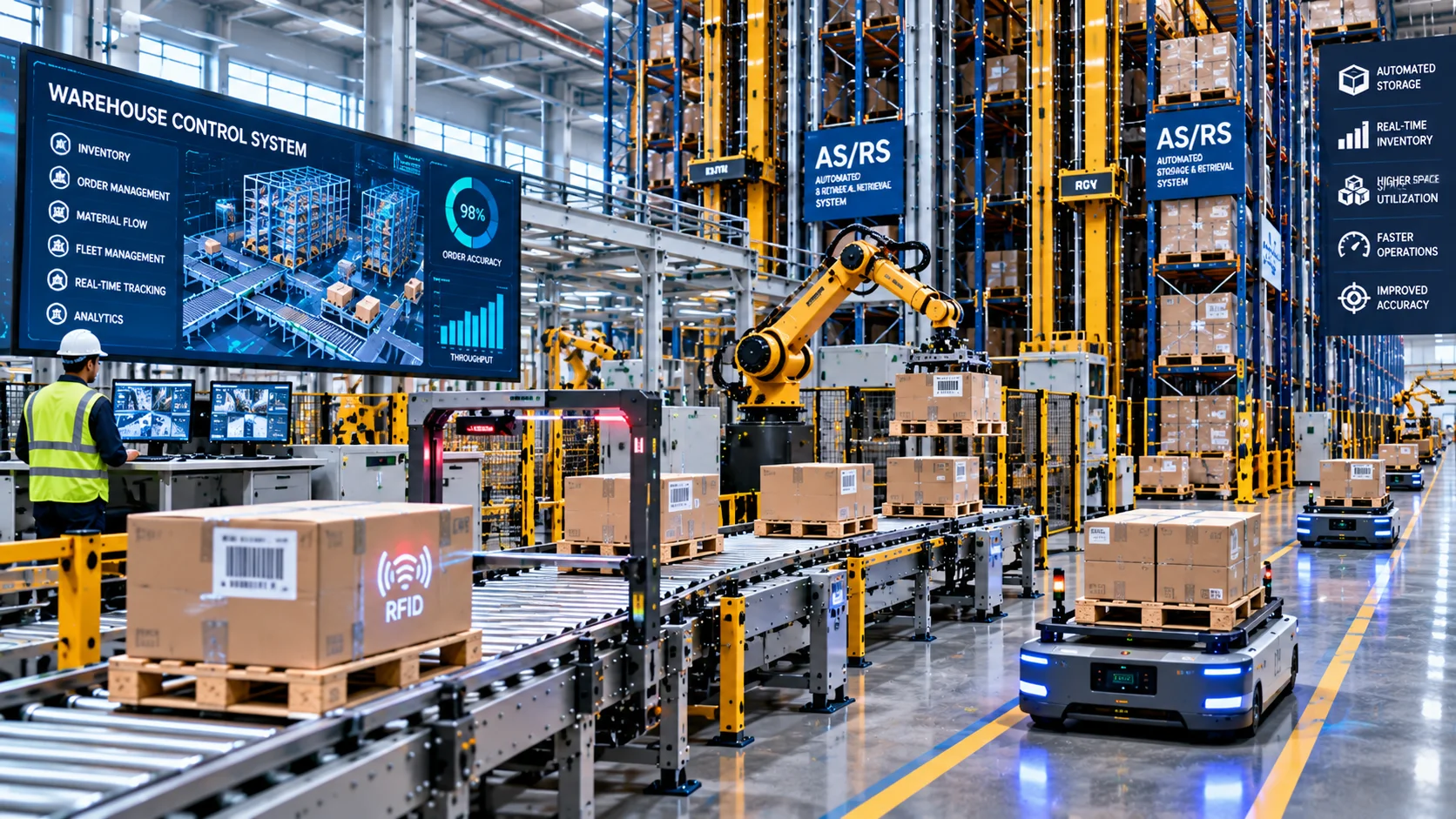
Modern warehouses can use technologies such as automated storage and retrieval systems (AS/RS), conveyors, automated guided vehicles (AGVs), autonomous mobile robots (AMRs), robotic systems, pallet handling automation, barcode and RFID technologies, warehouse management systems (WMS), warehouse control systems (WCS), sensors, and industrial IoT.
The goal is not simply to automate individual warehouse tasks. A smart warehouse is designed to make the entire material flow more visible, predictable, efficient, and scalable.
This guide explains what smart warehouse automation is, how it works, its major technologies, benefits, applications, implementation process, integration requirements, challenges, and future trends.
What Is Smart Warehouse Automation?
Smart warehouse automation is the integration of automated equipment, software, sensors, robotics, data, and control systems to automate and optimize warehouse operations.
Traditional warehouse automation may focus on automating one activity, such as moving products on a conveyor. Smart warehouse automation goes further by connecting multiple processes and using real-time information to coordinate them.
A smart warehouse may automatically:
- Receive incoming materials
- Identify products and pallets
- Transport materials
- Store inventory
- Retrieve products
- Buffer materials
- Sort products
- Pick orders
- Move pallets
- Monitor inventory
- Route materials
- Track equipment
- Detect system faults
- Generate operational data
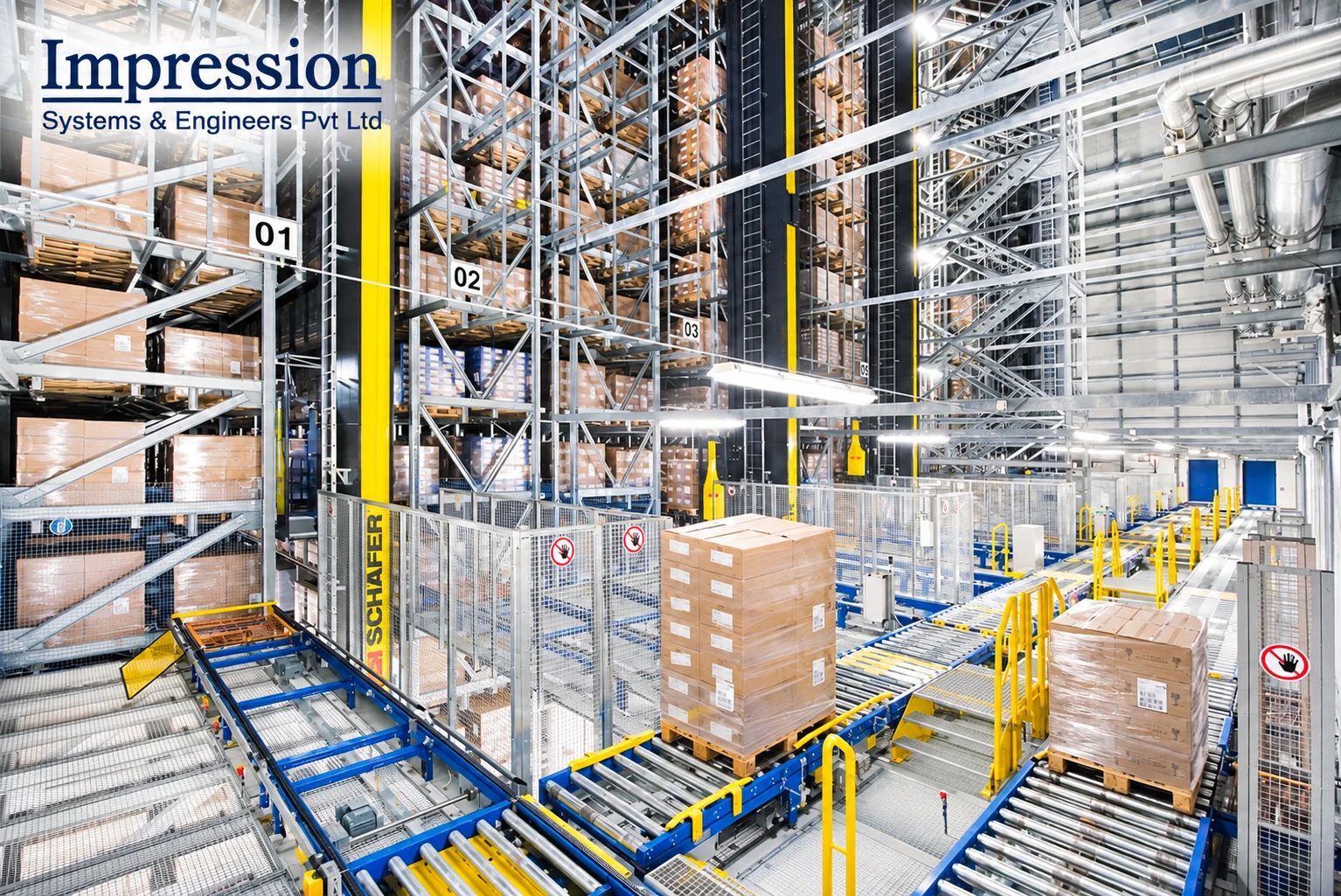
For example, a pallet arriving from a production line can be identified using barcode or RFID technology, transported using a conveyor, automatically assigned a storage location, transferred to an AS/RS, and retrieved later based on a production or dispatch requirement.
The entire process can be coordinated by warehouse and automation software.
Why Is Smart Warehouse Automation Important?
Warehouses are becoming more complex.
Businesses increasingly need to manage:
- Larger product ranges
- Higher inventory volumes
- Faster order processing
- Shorter delivery windows
- Higher inventory accuracy
- Limited warehouse space
- Increasing operational costs
- Greater traceability requirements
Manual warehouse processes can struggle to maintain efficiency as volume increases.
For example, manually locating a pallet may require an employee to search through storage areas. In a smart warehouse, the WMS can maintain the pallet’s digital location while automated equipment performs the physical retrieval.
This creates a connection between digital inventory information and physical material movement.
How Does Smart Warehouse Automation Work?
A smart warehouse generally combines five layers:
Identification → Software → Control → Automation Equipment → Data
1. Identification
Products, cartons, containers, and pallets can be identified using:
- Barcodes
- QR codes
- RFID
- Vision systems
- Sensors
Identification provides information about what is being moved.
2. Warehouse Software
The WMS manages inventory and warehouse processes.
It may determine:
- Where inventory should be stored
- What should be picked
- Which order should be processed
- Where materials should be sent
3. Control Systems
Warehouse control and automation systems coordinate equipment.
They can manage:
- Conveyors
- Sorters
- AS/RS
- RGVs
- AGVs
- AMRs
- Robots
4. Automated Equipment
The physical movement can be performed by:
- Conveyor systems
- Automated storage systems
- Automated vehicles
- Robots
- Lifts
- Sortation equipment
5. Data and Analytics
Operational information can be collected and analyzed to identify:
- Throughput
- Equipment utilization
- Bottlenecks
- Downtime
- Inventory movement
- System performance
This information supports continuous improvement.
Key Technologies in Smart Warehouse Automation
Automated Storage and Retrieval Systems
AS/RS is one of the most important technologies used in smart warehouses.
These systems automatically store and retrieve materials from designated storage locations.
AS/RS can help:
- Increase storage density
- Reduce manual travel
- Improve inventory accuracy
- Automate pallet movement
- Utilize vertical warehouse space
Pallet-based AS/RS is particularly useful for manufacturing and distribution environments handling standardized pallet loads.
Conveyor Systems
Conveyors provide controlled movement of materials.
Common types include:
- Roller conveyors
- Belt conveyors
- Chain conveyors
- Pallet conveyors
- Accumulation conveyors
- Sortation conveyors
Conveyors are particularly useful when materials move repeatedly between fixed locations.
Explore Imensys industrial automation solutions for broader automation applications.
Automated Guided Vehicles
AGVs transport materials using predefined navigation methods.
They can be used for:
- Pallet transportation
- Raw material movement
- Production logistics
- Warehouse replenishment
Autonomous Mobile Robots
AMRs provide more flexible navigation and can adapt their routes according to the environment and task requirements.
Potential applications include:
- Cart transportation
- Picking assistance
- Material transportation
- Production logistics
Robotic Systems
Robots can automate:
- Picking
- Palletizing
- Depalletizing
- Packaging
- Sorting
- Machine tending
Robotics can be integrated with conveyors, vision systems, and warehouse software.
RGV Systems
Rail Guided Vehicles can transport pallets along fixed rail paths.
They are useful for high-throughput material movement between defined warehouse and production locations.
Vertical Lifts
Vertical lifts move materials between different levels.
They can help connect:
- Ground-floor storage
- Mezzanine areas
- Production levels
- Multi-level warehouses
Barcode and RFID Systems
Identification technologies improve traceability.
Barcode systems are widely used for product and pallet identification, while RFID can provide automated identification without requiring direct visual alignment in suitable applications.
Machine Vision
Vision systems can help identify products, verify positioning, inspect packaging, and support robotic operations.
Industrial IoT Sensors
Sensors can monitor:
- Equipment status
- Temperature
- Movement
- Position
- Motor conditions
- System faults
The resulting data can support operational monitoring and predictive maintenance strategies.
Benefits of Smart Warehouse Automation
Improved Warehouse Productivity
Automation can reduce manual transportation and repetitive activities.
Automated equipment can operate according to predefined workflows, helping warehouses process materials more consistently.
Better Inventory Accuracy
When warehouse software and automated equipment are integrated, businesses can maintain better visibility into inventory locations and movements.
Faster Material Movement
Automated transportation can reduce unnecessary waiting and manual travel.
Improved Space Utilization
AS/RS and vertical storage systems can make better use of available warehouse height and floor space.
Reduced Manual Handling
Automation can reduce repetitive material movement and allow employees to focus on supervision, exception handling, maintenance, and other higher-value tasks.
Better Workplace Safety
Reducing unnecessary forklift and manual traffic can help create more controlled material-flow environments.
Safety should always be evaluated through a complete system-level risk assessment.
For workplace safety resources, businesses can refer to OSHA.
Improved Traceability
Digital identification and warehouse software can create records of material movement.
Consistent Operations
Automated systems follow programmed processes, which can improve operational consistency.
Scalability
A modular smart warehouse can potentially be expanded as business requirements grow.
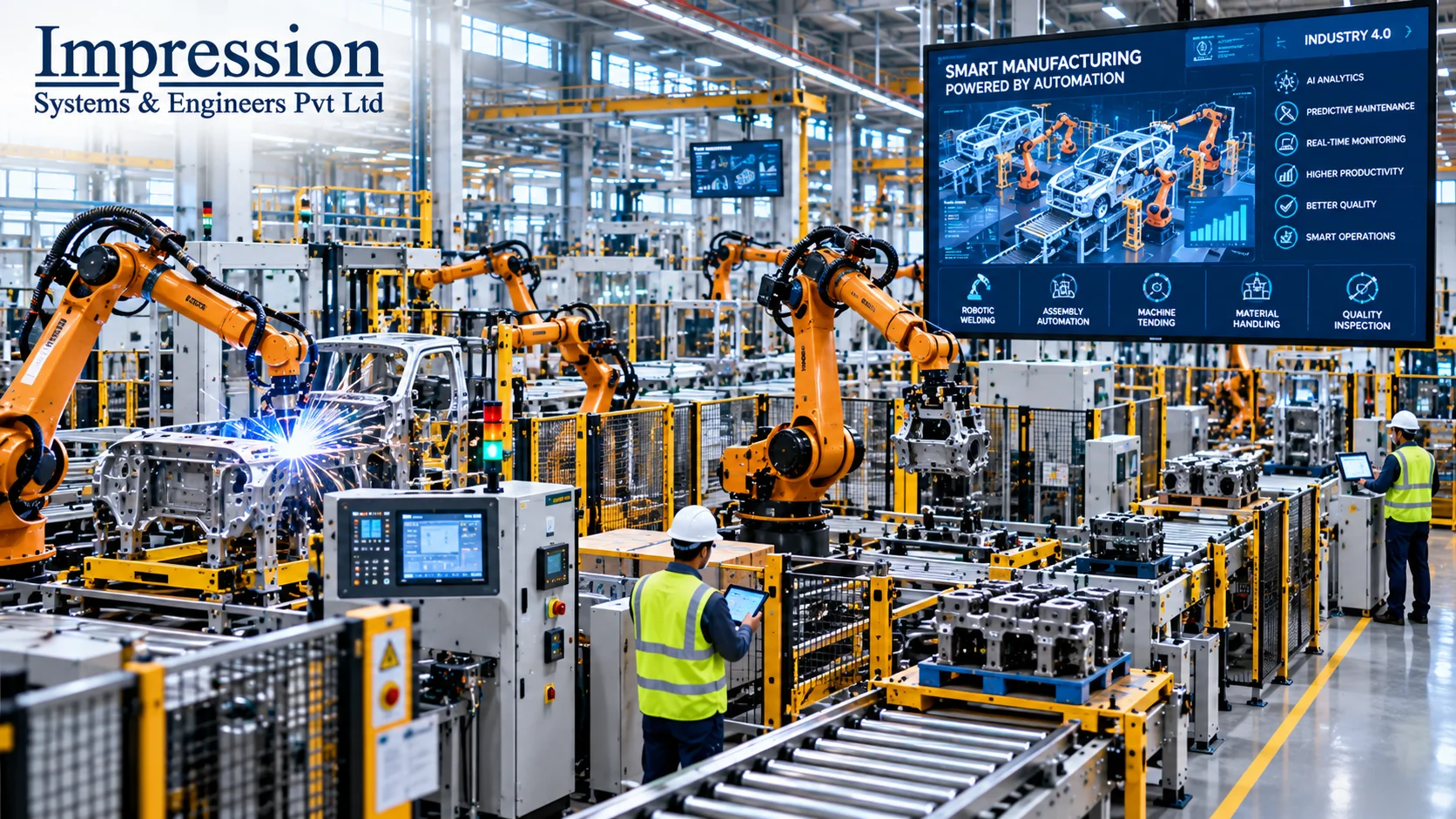
Smart Warehouse Automation and Industry 4.0
Smart warehouses are closely connected to Industry 4.0.
Industry 4.0 emphasizes connected equipment, real-time information, automation, analytics, and intelligent decision-making.
A smart warehouse can connect:
WMS → WCS → PLC → Sensors → Automation Equipment → Data
This creates a continuous information flow.
For example, the WMS may generate a retrieval request. The warehouse control system determines which equipment should execute the task. The PLC controls the physical equipment. Sensors confirm that the operation is completed, and the resulting status can be returned to the software.
Organizations researching smart manufacturing and industrial technology can explore resources from NIST.
WMS, WCS, MES and ERP Integration
Smart warehouse automation works best when the physical system and software environment are properly integrated.
Warehouse Management System
A WMS manages warehouse operations and inventory.
It can manage:
- Inventory locations
- Receiving
- Storage
- Picking
- Replenishment
- Dispatch
Warehouse Control System
A WCS coordinates automated warehouse equipment.
It may control and communicate with:
- Conveyors
- Sorters
- AS/RS
- RGVs
- Automated vehicles
- Robotic systems
Manufacturing Execution System
MES integration is particularly important in manufacturing environments.
It can connect warehouse activity with production requirements.
For example, when production requires a particular component, the system can generate a material request and trigger automated retrieval.
Enterprise Resource Planning
ERP systems provide broader business information such as:
- Orders
- Inventory
- Production planning
- Procurement
- Financial information
Integration helps connect warehouse operations with business processes.
Smart Warehouse Automation for Manufacturing
Smart warehouse automation is particularly useful for manufacturers.
A manufacturing facility may need to manage:
Raw Materials → Production → Buffer → Finished Goods → Dispatch
Automation can connect these stages.
For example, raw-material pallets can be transported from storage to production automatically. Finished goods can then be transferred from production to an automated storage system.
This creates a continuous material-flow process.
Automotive Manufacturing
Automotive facilities often manage large quantities of components and production materials.
Smart warehouse automation can support:
- Component storage
- Line-side delivery
- Pallet transportation
- Production buffering
- Finished-goods handling
Explore Imensys automotive solutions.
Food and Beverage
Food and beverage warehouses often require controlled material movement and high throughput.
Automation can support:
- Product storage
- Pallet transportation
- Sorting
- Packaging
- Dispatch
Explore Imensys food and beverage solutions.
Metal Industry
Metal products and components can be heavy and require robust material-handling equipment.
Automation can support:
- Heavy pallet movement
- Storage
- Production logistics
- Buffering
Explore Imensys metal industry solutions.
Appliance Manufacturing
Appliance manufacturers can use automated storage and transportation for components, finished products, and packaging materials.
Explore Imensys appliance industry solutions.
Smart Warehouse Automation for E-Commerce and Distribution
Distribution environments often require fast and accurate order fulfillment.
Automation can support:
- Receiving
- Storage
- Picking
- Sorting
- Packing
- Dispatch
Depending on the operation, warehouses may combine conveyors, AMRs, AS/RS, robotic picking systems, and sortation equipment.
The appropriate combination depends on order profiles, product characteristics, throughput, available space, and investment objectives.
How to Choose Smart Warehouse Automation
Choosing the right solution requires a detailed analysis of the current operation.
Analyze Current Material Flow
Map how products and pallets currently move.
Identify:
- Bottlenecks
- Manual transportation
- Waiting points
- Repetitive activities
- Storage limitations
Define Throughput
Determine:
- Pallets per hour
- Cartons per hour
- Orders per hour
- Peak demand
- Daily volume
Automation should be designed around realistic peak requirements.
Analyze Product Characteristics
Consider:
- Product dimensions
- Weight
- Packaging
- Fragility
- Pallet type
- SKU variety
Evaluate Warehouse Layout
Consider:
- Floor space
- Ceiling height
- Storage configuration
- Existing equipment
- Human traffic
- Emergency routes
- Expansion space
Define Integration Requirements
Identify systems that must communicate with automation:
- ERP
- WMS
- WCS
- MES
- PLC
- SCADA
Plan for Future Growth
The system should consider future:
- Volume increases
- SKU growth
- Storage expansion
- Production changes
- Technology upgrades
Implementation Process
Step 1: Warehouse Assessment
Analyze current processes and identify automation opportunities.
Step 2: Requirements Definition
Define throughput, storage capacity, system availability, accuracy, safety, and integration requirements.
Step 3: Concept Design
Develop possible automation architectures.
For example:
Receiving → Conveyor → AS/RS → Retrieval → Conveyor → Dispatch
or:
Production → Pallet Conveyor → RGV → AS/RS → Dispatch
Step 4: Detailed Engineering
Finalize:
- Equipment
- Layout
- Controls
- Software
- Safety
- Electrical systems
Step 5: Integration
Connect the automation equipment with WMS, WCS, MES, ERP, and PLC systems as required.
Step 6: Testing
Test:
- Normal operations
- Fault conditions
- Material routing
- Equipment communication
- Safety functions
- Recovery procedures
Step 7: Commissioning
Install and validate the system in the operating facility.
Step 8: Training
Train operators and maintenance teams.
Step 9: Performance Monitoring
Measure:
- Throughput
- Downtime
- Equipment utilization
- Order accuracy
- Inventory accuracy
- Cycle time
Common Smart Warehouse Automation Challenges
High Initial Investment
Automation can require significant capital investment.
Businesses should evaluate total cost of ownership and expected operational benefits rather than focusing only on equipment price.
Integration Complexity
Connecting multiple automation technologies and software platforms requires careful engineering.
Poor Data Quality
Automation depends on accurate product, inventory, and process information.
Inadequate Change Management
Employees need appropriate training and involvement during implementation.
Maintenance Requirements
Automated equipment requires preventive maintenance and technical support.
Over-Automation
Not every warehouse requires maximum automation.
The right level of automation should match the business case.
Maintenance of Smart Warehouse Automation
Maintenance is critical to long-term system availability.
Typical maintenance activities include:
- Conveyor inspection
- Motor inspection
- Roller and chain inspection
- Sensor cleaning
- Electrical inspection
- Robot inspection
- AGV/AMR maintenance
- Safety-device testing
- PLC diagnostics
- Software backup
- Spare-parts management
Condition monitoring and predictive maintenance can further improve reliability.
For industrial maintenance support, see Imensys maintenance and support services.
Training and Handover
Successful warehouse automation requires trained personnel.
Training should cover:
- System operation
- HMI usage
- Alarm management
- Basic troubleshooting
- Safety procedures
- Emergency procedures
- Preventive maintenance
A structured handover ensures the customer’s team understands how to operate and maintain the system.
Explore Imensys training and handover services.
Future Trends in Smart Warehouse Automation
Artificial Intelligence
AI can support demand forecasting, route optimization, predictive maintenance, and operational decision-making.
Autonomous Mobile Robots
AMRs can provide flexible material transportation and adapt to changing warehouse requirements.
AI-Powered Vision
Computer vision can improve product recognition, inspection, picking, and robotic handling.
Digital Twins
Digital twins can model warehouse processes and help identify bottlenecks before implementing physical changes.
Predictive Maintenance
Equipment data can be analyzed to identify abnormal operating conditions.
Cloud-Based Warehouse Analytics
Connected systems can provide centralized operational visibility and reporting.
Advanced Robotics
Robotic picking, palletizing, depalletizing, and sorting are expected to become increasingly integrated into smart warehouse environments.
Smart Warehouse Automation from Imensys
Imensys provides industrial automation and material-handling capabilities for businesses seeking to modernize production and warehouse operations.
A smart warehouse automation project can be developed around:
- Storage requirements
- Material characteristics
- Throughput
- Facility layout
- Automation level
- Production requirements
- Software integration
- Safety
- Future expansion
The solution may combine conveyors, automated storage systems, RGVs, AGVs, AMRs, robotics, sensors, PLCs, and warehouse control technologies.
Explore Imensys industrial automation solutions and Imensys products.
For a project-specific discussion, visit Imensys Contact Us.
Frequently Asked Questions About Smart Warehouse Automation
What is smart warehouse automation?
Smart warehouse automation combines automated material-handling equipment, robotics, sensors, warehouse software, control systems, and data technologies to automate and optimize warehouse operations.
What technologies are used in smart warehouses?
Common technologies include AS/RS, conveyors, AGVs, AMRs, RGVs, robotics, barcode systems, RFID, machine vision, PLCs, WMS, WCS, MES, and IoT sensors.
What are the benefits of smart warehouse automation?
Benefits can include improved productivity, inventory accuracy, material flow, space utilization, safety, traceability, consistency, and scalability.
Can smart warehouse automation integrate with a WMS?
Yes. WMS integration can coordinate inventory information, storage locations, picking activities, replenishment, retrieval requests, and dispatch processes with automated equipment.
What is the role of AS/RS in a smart warehouse?
AS/RS automatically stores and retrieves products or pallets, helping improve storage density, inventory accuracy, and automated material flow.
Are AMRs suitable for warehouses?
AMRs can be suitable for material transportation and other warehouse applications where flexible navigation and changing routes are beneficial.
Can smart warehouse automation be used in manufacturing?
Yes. Smart warehouse systems can connect raw-material storage, production, buffer areas, finished-goods storage, and dispatch.
How much does smart warehouse automation cost?
The cost depends on warehouse size, throughput, storage capacity, equipment, software, integration requirements, building conditions, and automation level. A detailed engineering assessment is required to develop an accurate project estimate.
How do I choose the right warehouse automation technology?
Start with material-flow analysis, throughput requirements, product characteristics, warehouse layout, storage requirements, software integration, safety, budget, and future expansion plans.
Conclusion
Smart warehouse automation is transforming warehouses from manually coordinated storage facilities into connected, data-driven material-flow environments.
By integrating AS/RS, conveyors, RGVs, AGVs, AMRs, robotics, sensors, machine vision, PLCs, WMS, WCS, MES, and ERP systems, businesses can create more efficient and visible warehouse operations.
However, successful automation is not simply about purchasing advanced equipment. The solution should be engineered around the warehouse’s actual material flow, throughput, product characteristics, storage requirements, workforce, safety conditions, software environment, and future growth.
For manufacturers, distributors, and logistics operations planning their next stage of automation, smart warehouse automation can provide a scalable foundation for improved productivity, inventory accuracy, space utilization, safety, and operational control.
Planning to modernize your warehouse? Contact Imensys to discuss a smart warehouse automation solution designed around your material flow, storage, throughput, and integration requirements.