Industrial Automation Integration: A Complete Guide for Modern Manufacturing
Industrial Automation Integration helps manufacturers connect machines, control systems, industrial robots, production software, and business applications so that equipment and information can work together. Instead of operating each machine as an isolated unit, an integrated automation environment coordinates production activities, collects operational data, and supports better decision-making across the facility.
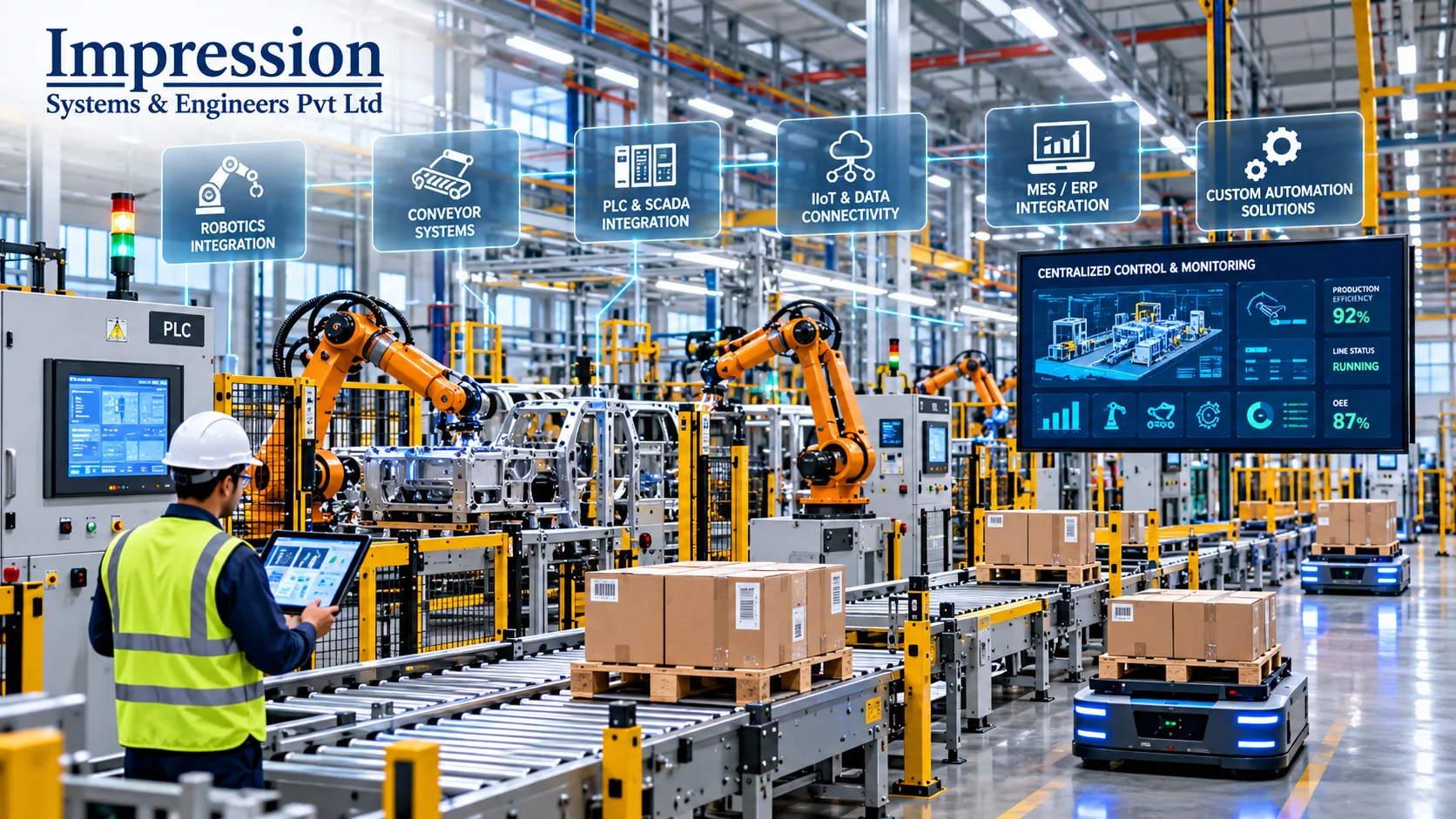
Modern factories often use programmable logic controllers (PLCs), supervisory control and data acquisition (SCADA) systems, human-machine interfaces (HMIs), manufacturing execution systems (MES), enterprise resource planning (ERP) platforms, industrial robots, sensors, and material-handling equipment. When these technologies operate independently, businesses may face communication gaps, duplicated data entry, limited production visibility, and difficulty identifying operational bottlenecks.
Industrial automation integration addresses these challenges by establishing reliable connections between equipment, software, networks, and business processes. Depending on the project, integration may involve connecting a new robotic cell to an existing production line, linking PLCs with SCADA, sharing production data with an MES, or connecting manufacturing operations with an ERP system.
The objective is not simply to connect more devices. It is to create a coordinated manufacturing environment that supports productivity, quality, traceability, safety, and operational flexibility.
In this guide, we explain what industrial automation integration means, how it works, the technologies involved, its benefits, common challenges, implementation steps, and how manufacturers can select an appropriate integration strategy.
What Is Industrial Automation Integration?
Industrial automation integration is the process of connecting and coordinating industrial equipment, control systems, software applications, and communication networks so they can exchange information and perform manufacturing tasks as part of a wider system.
A factory may have automated machines that work correctly individually but do not share production status, fault information, or material requirements. Integration enables selected information and commands to move between these systems according to defined rules and responsibilities.
For example, a production line may use PLCs to control machine sequences, SCADA to monitor equipment, an MES to manage production execution, and an ERP system to plan orders and materials. Integration allows relevant production information to flow between these layers while keeping real-time machine control within the appropriate control system.
An industrial automation integration project may include:
- Connecting PLCs, sensors, drives, and machine controllers.
- Integrating industrial robots with conveyors and production equipment.
- Linking SCADA and HMI systems with industrial devices.
- Connecting MES platforms with production machines and quality systems.
- Exchanging order, inventory, and production information between MES and ERP.
- Integrating warehouse automation and material-handling systems.
- Establishing industrial networks, gateways, data interfaces, and secure remote access.
- Creating dashboards, alarms, reports, and traceability records.
The scope depends on the manufacturer’s production requirements, existing technology, operating environment, and long-term plans.
Why Is Industrial Automation Integration Important?
Manufacturing processes depend on coordination between machines, people, materials, production schedules, and business systems. If these elements do not communicate effectively, problems in one area can affect the entire facility.
1. Better Communication Between Machines
Machines from different suppliers may use different communication protocols, data formats, or control architectures. Integration establishes suitable interfaces so that equipment can exchange the information needed for coordinated operation.
For example, a packaging machine may need to receive product-ready signals from an upstream process and communicate its status to a downstream conveyor. A correctly designed interface helps coordinate the sequence and manage faults.
2. Improved Production Visibility
When equipment and production systems share useful data, supervisors can obtain a clearer picture of machine status, production progress, downtime, and quality events.
Instead of relying entirely on manual reports, teams can use integrated dashboards and production records to identify recurring delays and investigate performance issues.
The value of this visibility depends on data quality, suitable collection frequency, accurate timestamps, and consistent definitions across systems.
3. Reduced Manual Data Entry
Disconnected systems often require employees to transfer information manually between machines, spreadsheets, and business applications. These repeated steps can consume time and introduce errors.
Integration can automate selected data exchanges, such as reporting completed quantities, updating production status, recording machine faults, or communicating material requirements.
Manual checks may still be necessary for exceptions, quality approval, reconciliation, and other controlled processes.
4. More Consistent Production Processes
Integrated control systems can coordinate machine sequences, product transfers, and operating states according to defined logic.
This can improve repeatability and reduce communication-related delays. However, integration does not automatically eliminate defects or downtime. Process design, equipment condition, operator training, and maintenance remain essential.
5. Improved Traceability and Quality Management
Manufacturers may need to track product batches, component identifiers, process parameters, inspection results, and production timestamps.
When appropriate systems exchange consistent data, it becomes easier to connect production events with specific products or batches. This can support quality investigations, compliance documentation, and root-cause analysis.
6. Support for Future Expansion
A well-planned integration architecture can make it easier to add new machines, production lines, sensors, and software applications. Documented interfaces and consistent data models help reduce unnecessary rework when facilities evolve.
Scalability must be designed deliberately. An integration approach that works for one machine may not be suitable for an entire plant without changes to network capacity, cybersecurity, software architecture, and support processes.
Key Technologies Used in Industrial Automation Integration
Successful integration combines technologies selected for the operational task. Each component has a defined role, from controlling physical equipment to exchanging information with business applications.
1. Programmable Logic Controllers (PLCs)
PLCs control industrial machines and processes using programmed logic and input from sensors and other devices. They may control motors, actuators, conveyor sequences, machine interlocks, and process steps.
In an integrated environment, PLCs can exchange selected status and process information with SCADA, other controllers, robotics systems, or higher-level software through supported communication interfaces.
PLC integration requires careful attention to control responsibilities, timing, fault handling, electrical design, and safety-related functions. A business system should not be allowed to interfere with time-critical control in an unsafe or unvalidated manner.
2. SCADA and HMI Systems
SCADA systems help operators monitor and supervise industrial processes across equipment or production areas. HMIs provide interfaces through which operators view machine states, acknowledge alarms, and interact with equipment according to their permissions.
Integration can connect SCADA and HMI applications to PLCs, data historians, alarm systems, and production applications.
A well-designed interface presents useful information clearly and consistently. Alarm priorities, user permissions, screen layouts, and operator workflows should be reviewed during the project.
3. Manufacturing Execution Systems (MES)
An MES coordinates and records production execution activities. Depending on the implementation, it may manage work orders, production tracking, material consumption, quality records, and work-in-progress status.
Integrating MES with machine-level systems can help connect production plans with actual manufacturing events. For example, the MES may provide a production order while machine systems report completion quantities and selected operating data.
Integration requirements should define which system owns each data item and how rejected, incomplete, or duplicate messages are handled.
4. Enterprise Resource Planning (ERP)
ERP systems manage business processes such as orders, purchasing, inventory, resource planning, and financial records.
Integration between ERP and manufacturing systems can coordinate planned orders, material availability, production progress, and completed output.
The exact division of responsibilities depends on the organisation. ERP should not replace real-time machine control; rather, it generally exchanges business and production information with systems responsible for execution.
5. Industrial Robots and Robotics Controllers
Industrial robots support tasks such as assembly, welding, machine tending, palletising, packaging, and component handling.
Integration allows robot controllers to coordinate with PLCs, safety systems, vision equipment, conveyors, and production software. For example, a PLC may coordinate a conveyor and robotic cell while a vision system provides information about component position.
Robot integration must account for payload, reach, cycle time, tooling, product variation, safety zones, interlocks, and recovery procedures.
6. Industrial Communication Protocols
Industrial devices and software use communication protocols to exchange data. The correct choice depends on device support, performance needs, network architecture, and interoperability requirements.
Common technologies include:
- OPC UA: Supports structured data exchange and interoperability between compatible industrial applications and devices.
- PROFINET: An industrial Ethernet communication technology used in compatible automation systems.
- EtherNet/IP: An industrial communication network technology used by compatible control and automation equipment.
- Modbus: A communication protocol used by many industrial devices and systems.
- MQTT: A lightweight publish-and-subscribe messaging protocol that can support data distribution in suitable architectures.
These technologies serve different purposes and are not automatically interchangeable. Protocol gateways, configuration, security controls, data mapping, and testing may be required when connecting different environments.
7. Sensors, IIoT, and Edge Computing
Sensors collect information about variables such as temperature, pressure, position, vibration, flow, and equipment state. Industrial Internet of Things (IIoT) architectures can use connected devices and gateways to make selected data available to monitoring and analytics applications.
Edge computing processes data near the equipment or facility rather than sending every operation to a remote system. It can support local analytics, protocol conversion, data filtering, and applications that require timely responses.
The system architecture should determine which data must remain local, which information should be shared, and how communication failures are handled.
Understanding the ISA-95 Integration Framework
The ISA-95 framework provides a useful reference for organising information exchange between manufacturing operations and business systems. It distinguishes physical processes, control functions, manufacturing operations management, and enterprise planning activities.
In simplified terms, the architecture can be understood as follows:
- Level 0: The physical production process.
- Level 1: Sensors and devices that sense or affect the process.
- Level 2: Control and supervisory systems, such as PLCs and SCADA-related functions.
- Level 3: Manufacturing operations management, including relevant MES functions.
- Level 4: Business planning and logistics, commonly including ERP functions.
The boundaries vary across implementations, and not every facility uses identical system arrangements. The important principle is to define which functions belong at each layer and what information should pass between them.
The ISA-95 standard provides more detailed models and terminology for enterprise-control system integration. Using a recognised framework can help IT, operational technology (OT), engineering, and business teams agree on responsibilities and interfaces.
Major Benefits of Industrial Automation Integration
Increased Operational Efficiency
Connected equipment can coordinate production sequences, material transfers, and machine status reporting. This can reduce delays caused by disconnected workflows and improve the consistency of operations.
The size of the benefit depends on the original bottleneck, system design, and implementation quality.
Improved Data Accuracy
Automated data exchange reduces the need to re-enter the same information across multiple systems. Standardised identifiers, validated interfaces, and clear ownership rules can also reduce conflicting records.
Data governance remains necessary because incorrect source data can still produce incorrect reports.
Better Downtime Analysis
Integrated equipment status, alarms, and maintenance records can help engineers identify recurring failures and determine when problems occur.
For example, linking a machine fault with production timestamps and maintenance work orders may help teams investigate the cause of repeated stoppages.
Integration supports analysis but does not itself guarantee predictive maintenance or eliminate downtime.
Improved Product Quality
Integration can connect machine parameters, inspection results, product identifiers, and batch records. This can help teams investigate quality deviations and determine which products may have been affected.
Any automated quality decision should follow validated procedures and the organisation’s quality requirements.
Better Material and Inventory Coordination
Manufacturing systems can exchange material requirements and production status with inventory or warehouse systems. This helps teams coordinate component availability and finished-goods movements.
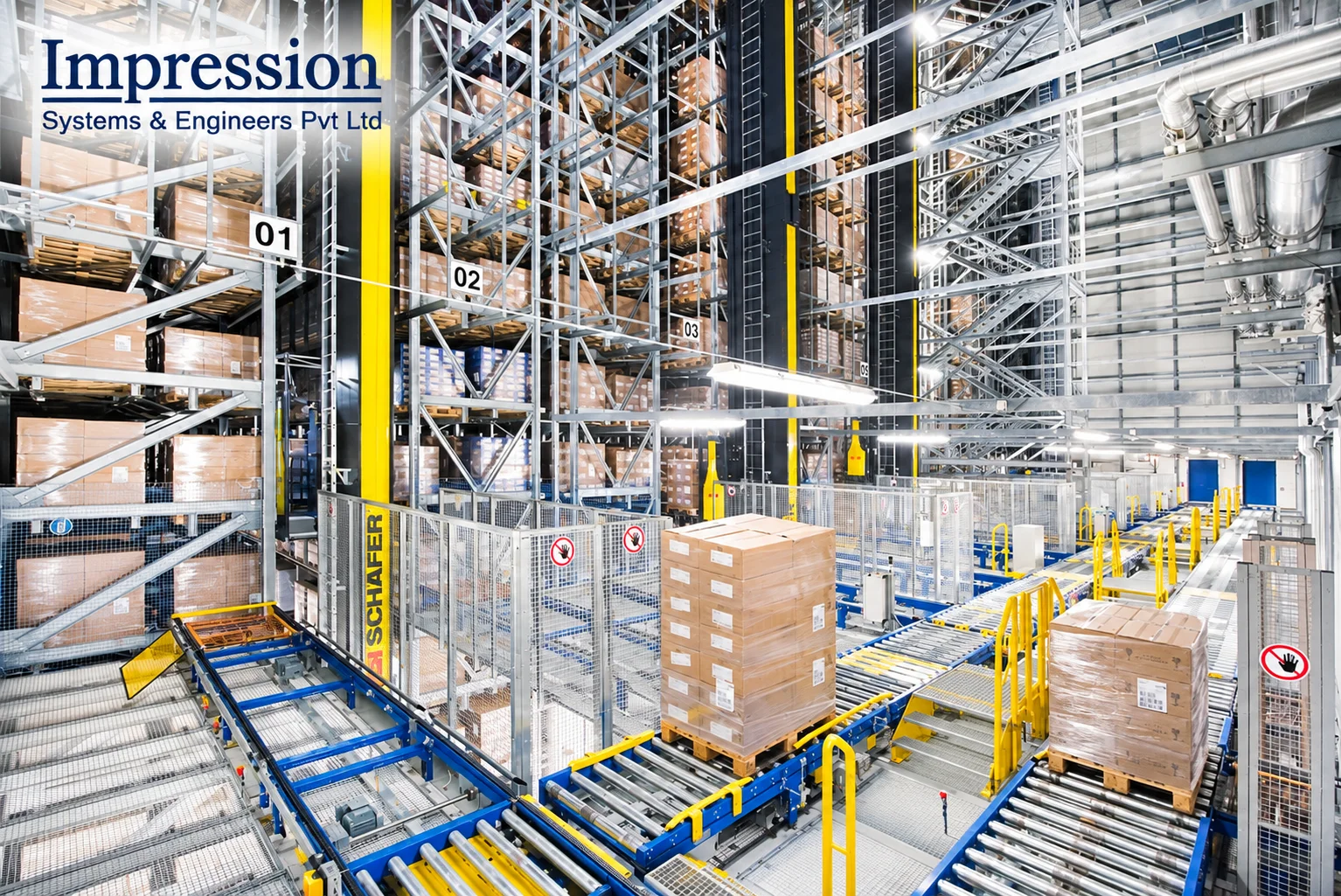
Where warehouse automation is involved, integration may connect conveyors, automated storage and retrieval systems, AGVs, AMRs, and warehouse management software.
Explore related Imensys resources: Products and industrial automation services.
Improved Decision-Making
Integrated dashboards can combine machine performance, production progress, quality indicators, and maintenance information.
Managers can use this information to investigate bottlenecks, compare shifts, plan maintenance, and prioritise improvement initiatives. Metrics should be clearly defined so that different departments interpret them consistently.
Industrial Automation Integration Across Industries
Automotive Manufacturing
Automotive plants use integrated production lines, robots, conveyors, inspection systems, and manufacturing software to coordinate assembly operations.
Integration can help synchronise material delivery, machine status, product tracking, and quality records. Because automotive production often involves tightly linked processes, careful sequencing and fault recovery are particularly important.
Explore Imensys automotive solutions.
Food and Beverage Manufacturing
Food and beverage facilities may integrate process controls, packaging lines, filling equipment, labelling systems, inspection devices, and production records.
The architecture must account for hygiene requirements, product recipes, batch traceability, cleaning procedures, and the operating conditions of the equipment.
Explore food and beverage industry information.
Metal and Heavy Manufacturing
Metal-processing facilities may integrate cutting, forming, welding, handling, inspection, and material transport systems.
Integration can help coordinate machine sequences and share information about production status, load movement, and equipment availability. Designs should consider heavy loads, environmental conditions, equipment clearances, and applicable safety requirements.
Explore metal industry information.
Appliances and Electronics
Appliance and electronics manufacturers often need to coordinate assembly, testing, component identification, packaging, and product traceability.
Integration can connect assembly equipment, robotics, barcode readers, testing systems, and production software. Product variation and frequent changeovers should be considered when designing the system.
Explore appliances industry information.
Warehousing and Material Handling
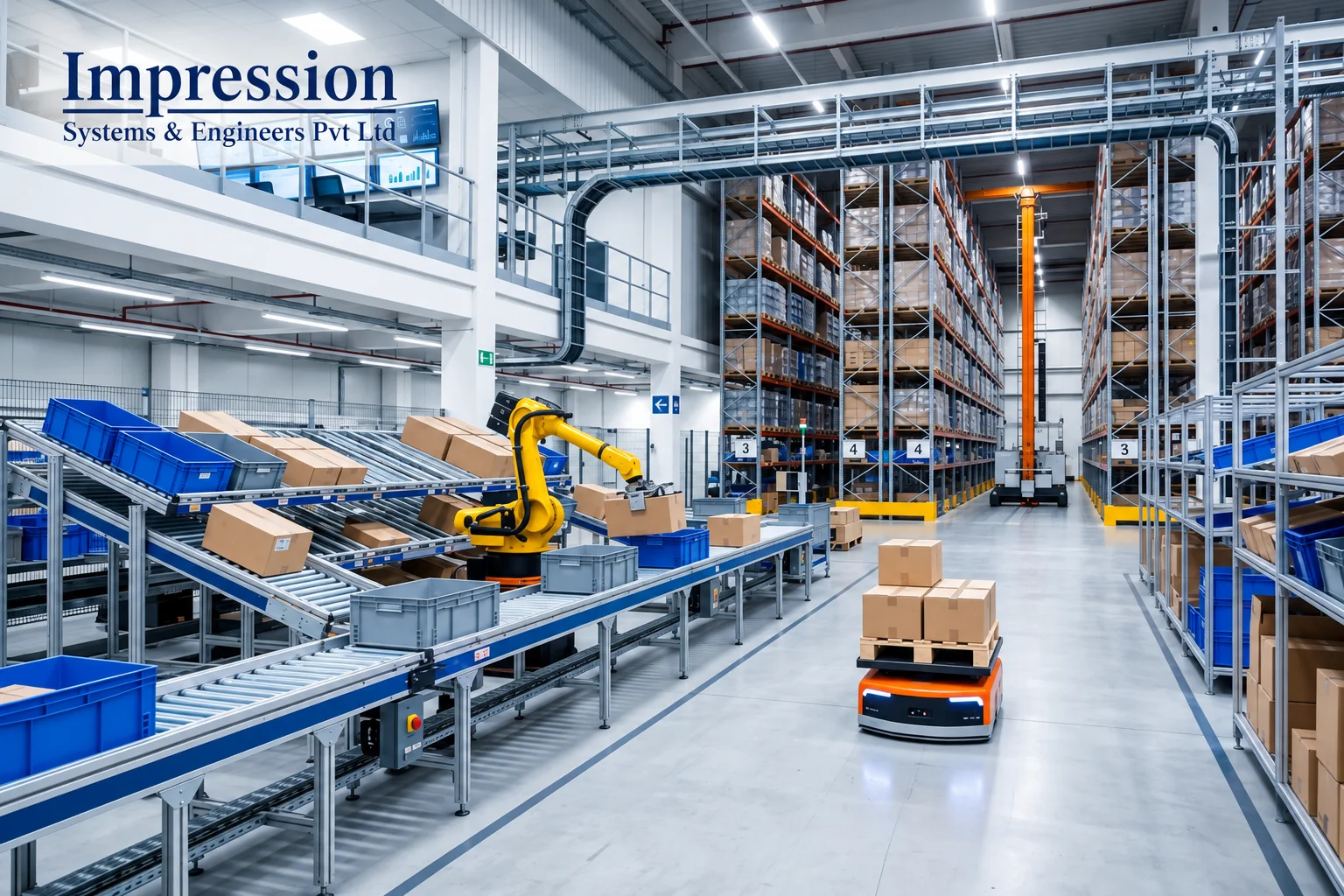
Warehouses and manufacturing plants may integrate conveyors, automated storage systems, mobile robots, sortation equipment, and inventory applications.
The objective is to connect physical material movement with digital task management and inventory records. Reliable exception handling is essential when loads are missing, routes are blocked, or equipment becomes unavailable.
Common Challenges in Industrial Automation Integration
Legacy Equipment and Incompatible Interfaces
Older machines may use proprietary communication methods, outdated controllers, or limited data interfaces. Connecting them may require gateways, protocol converters, controller upgrades, or additional instrumentation.
Before choosing an approach, assess the equipment’s condition, support availability, interface documentation, and operational importance.
Different Data Formats and Naming Conventions
Two systems may describe the same machine, product, or production state using different names, identifiers, units, or status codes.
Data mapping should define standard terminology, units, timestamps, identifiers, and valid values. Validation rules can help identify missing, malformed, or inconsistent data before it affects downstream systems.
Production Disruption During Installation
Integration work may require access to running equipment, control panels, networks, and production software. Poorly planned changes can disrupt operations.
Use a documented change-management process, approved installation windows, backups, rollback plans, and appropriate testing. Where possible, test interfaces outside the live production environment before deployment.
Cybersecurity and Network Segmentation
Connecting industrial control systems to business networks or remote services can introduce additional cybersecurity risks.
Manufacturers should inventory connected assets, restrict unnecessary network paths, control remote access, manage accounts and permissions, maintain backups, and establish monitoring and incident-response procedures.
The ISA/IEC 62443 standards provide a framework for industrial automation and control systems cybersecurity. Security responsibilities should be shared among the asset owner, equipment suppliers, integrators, and service providers.
Unclear Project Ownership
Integration projects can involve controls engineers, IT teams, production managers, machine suppliers, software vendors, and maintenance personnel. Without clear ownership, interface questions and decisions may be delayed.
Assign responsibilities for architecture, data ownership, cybersecurity, testing, commissioning, documentation, and ongoing support before implementation begins.
How to Implement Industrial Automation Integration
Step 1: Assess the Existing Environment
Document the current machines, controllers, networks, software applications, communication protocols, production processes, and operational constraints.
Identify the main business problem. It may be limited production visibility, manual reporting, disconnected machines, inconsistent traceability, or a need to coordinate new automation equipment.
Step 2: Define Measurable Objectives
Set clear objectives such as reducing manual data entry, improving the availability of production information, connecting a defined number of machines, or improving traceability.
Record baseline performance and define how results will be measured. Avoid promising improvements before the existing process has been assessed.
Step 3: Design the Integration Architecture
Decide which systems will communicate, what data they will exchange, and which system owns each function.
Define interfaces, network boundaries, communication requirements, data formats, access controls, fault handling, and recovery procedures. Consider recognised interoperability frameworks where relevant.
Step 4: Select Suitable Hardware and Software
Choose controllers, gateways, network equipment, middleware, and software interfaces based on compatibility, supportability, performance, and security.
Consider the availability of technical documentation, spare parts, vendor support, and future expansion options. Avoid selecting a technology solely because it is new or widely marketed.
Step 5: Develop and Test Interfaces
Create the required communication interfaces, data mappings, alarms, and status exchanges.
Test normal operating sequences, incorrect data, communication loss, duplicate messages, device restarts, and recovery scenarios. Confirm that higher-level systems cannot create unsafe or unintended control behaviour.
Step 6: Commission in a Controlled Manner
Use approved test procedures and an agreed acceptance plan. Validate the equipment, interfaces, alarms, permissions, documentation, and operator workflows.
Where appropriate, begin with a pilot line or limited scope before extending the integration across the facility.
Step 7: Train Employees and Document the System
Provide role-specific training for operators, controls engineers, maintenance teams, IT staff, and administrators.
Maintain network diagrams, software versions, configuration backups, interface specifications, test records, and troubleshooting instructions. Clear documentation helps future teams maintain the system safely.
Step 8: Monitor and Improve
Review integration performance after commissioning. Monitor communication errors, interface delays, missing data, system availability, downtime, and the operational metrics defined at the beginning of the project.
Use these findings to refine interfaces, address recurring faults, and plan future improvements.
Imensys resources: Services and training and handover.
How to Measure the Success of an Integration Project
Integration success should be measured against the original business problem, not simply the number of connected devices.
Useful measures may include:
- Data availability: Whether required information reaches the intended system reliably.
- Interface error rate: The frequency of failed, rejected, or malformed exchanges.
- Production downtime: Downtime attributable to defined integration-related problems.
- Traceability completeness: The proportion of required production records captured correctly.
- Manual reporting effort: Time spent collecting and transferring information.
- System availability: Whether the integrated solution is available when required.
- Operational performance: Changes in throughput, quality, material availability, or other agreed indicators.
Establish definitions, measurement periods, and baseline values before implementation. Report results transparently and distinguish changes attributable to integration from those caused by other process improvements.
The Future of Industrial Automation Integration
Industrial automation integration is evolving as manufacturers adopt more connected equipment, advanced analytics, and digital production tools.
Connected and Data-Driven Manufacturing
Manufacturers increasingly seek to combine machine information, production records, quality data, and maintenance information. A well-governed data architecture can make these sources more useful for operational decisions.
AI and Advanced Analytics
AI and analytics tools may help identify unusual operating patterns, support quality analysis, and improve selected planning decisions. Their effectiveness depends on suitable data, validation, cybersecurity, and human oversight.
AI should complement validated control logic and engineering practices rather than replace safety-critical control functions.
Greater Interoperability
Standardised interfaces and information models can reduce the effort needed to connect systems from different suppliers. Standards such as ISA-95 and interoperability frameworks such as OPC UA can help teams define how information should be represented and exchanged.
Interoperability still requires correct implementation, testing, and agreement between system owners.
Edge and Cloud Architectures
Edge computing can support local data processing, while cloud services may provide selected analytics, reporting, or cross-site visibility. The right architecture depends on latency, data sensitivity, connectivity, resilience, and regulatory needs.
Time-critical control and safety functions should remain within appropriately designed and validated control architectures.
Cybersecurity by Design
As more industrial systems become connected, security must be considered from the beginning of the project. Asset inventories, segmentation, controlled remote access, backups, secure configuration, and incident-response planning all contribute to operational resilience.
Why Choose a Planned Approach to Industrial Automation Integration?
Industrial automation integration is most effective when it starts with a clear understanding of the manufacturing process and the problem that needs to be solved.
Connecting equipment without defining responsibilities, data quality requirements, safety boundaries, and recovery procedures can create complexity rather than value. A planned approach aligns control engineering, software, networking, cybersecurity, production workflows, and employee training.
For manufacturers evaluating automation improvements, the next step is to assess existing equipment and define the interfaces needed to meet production goals. The solution may involve a targeted machine integration, an upgraded control architecture, a connected robotic cell, or a wider manufacturing system.
Imensys offers industrial automation-related product and service information for businesses exploring manufacturing and material-handling improvements. Review the Imensys products page, explore services, or contact the team to discuss your requirements. Confirm the specific capabilities, project scope, and technical suitability directly with the provider before making a purchasing decision.
Frequently Asked Questions (FAQs)
1. What is industrial automation integration?
Industrial automation integration connects machines, controllers, robots, industrial networks, and software applications so they can exchange information and coordinate manufacturing activities.
2. What are the main components of industrial automation integration?
Common components include PLCs, SCADA, HMIs, industrial robots, sensors, industrial networks, communication gateways, MES, ERP, and data or analytics platforms.
3. What is the difference between automation and automation integration?
Automation uses technology to perform or control tasks with reduced manual intervention. Automation integration connects different automated machines and systems so that they can work together and share relevant information.
4. Why is PLC integration important?
PLC integration allows compatible controllers and higher-level systems to exchange defined machine states, process data, and coordination signals. It can support better sequencing, monitoring, and production visibility when correctly designed.
5. What is MES and ERP integration?
MES and ERP integration connects manufacturing execution information with business planning and logistics processes. Depending on the architecture, it can exchange production orders, material information, completed quantities, and production status.
6. Which communication protocols are used in industrial automation?
Common examples include OPC UA, PROFINET, EtherNet/IP, Modbus, and MQTT. The appropriate choice depends on the devices, required performance, system architecture, and security needs.
7. Can older machines be integrated into a modern automation system?
Often, yes. Depending on the equipment, integration may use existing interfaces, communication gateways, additional sensors, or controller upgrades. Feasibility depends on technical condition, documentation, compatibility, and support availability.
8. How does automation integration improve productivity?
It can reduce manual data handling, improve coordination between equipment, make production status more visible, and support faster investigation of recurring problems. The actual improvement depends on the initial process and project implementation.
9. How important is cybersecurity in industrial automation integration?
Cybersecurity is essential because connected industrial systems may affect production continuity, equipment operation, and safety. Integration plans should include asset inventories, access controls, network segmentation, backups, monitoring, and incident-response procedures.
10. How should a manufacturer begin an industrial automation integration project?
Start by assessing existing equipment and systems, identifying a specific operational problem, defining measurable objectives, and documenting the required interfaces. Then develop the architecture, test the solution, plan commissioning, train employees, and monitor performance.
Conclusion
Industrial Automation Integration connects equipment, control systems, software, and business processes to help manufacturers operate with better coordination and visibility. By integrating PLCs, SCADA, robotics, MES, ERP, industrial networks, and data applications, businesses can reduce information gaps and build a more connected manufacturing environment.
Successful integration requires more than compatible hardware. It depends on clear system responsibilities, reliable data exchange, cybersecurity, safe control design, thorough testing, employee training, and ongoing support.
Manufacturers should begin with a practical assessment, choose technologies that meet their operational requirements, and measure the results against defined objectives.
If your business is exploring industrial automation or manufacturing-system integration, review the Imensys products and services, then contact the team to discuss your facility, equipment, and integration needs.