Intralogistics Automation Solutions: A Complete Guide for Modern Industry
Intralogistics Automation Solutions are transforming how modern factories, distribution centres, and warehouses move, store, track, and manage materials within their facilities. By combining automated material handling equipment, intelligent software, robotics, sensors, and real-time data, businesses can create a more efficient flow of raw materials, work-in-progress products, components, and finished goods.
Traditional intralogistics operations often depend on manual material movement, forklifts, paper-based instructions, and disconnected inventory systems. These methods can work for smaller facilities, but increasing order volumes, product variety, labour constraints, and production demands can make manual processes difficult to scale. Delays, unnecessary movement, inventory inaccuracies, and inconsistent material availability can affect the entire operation.
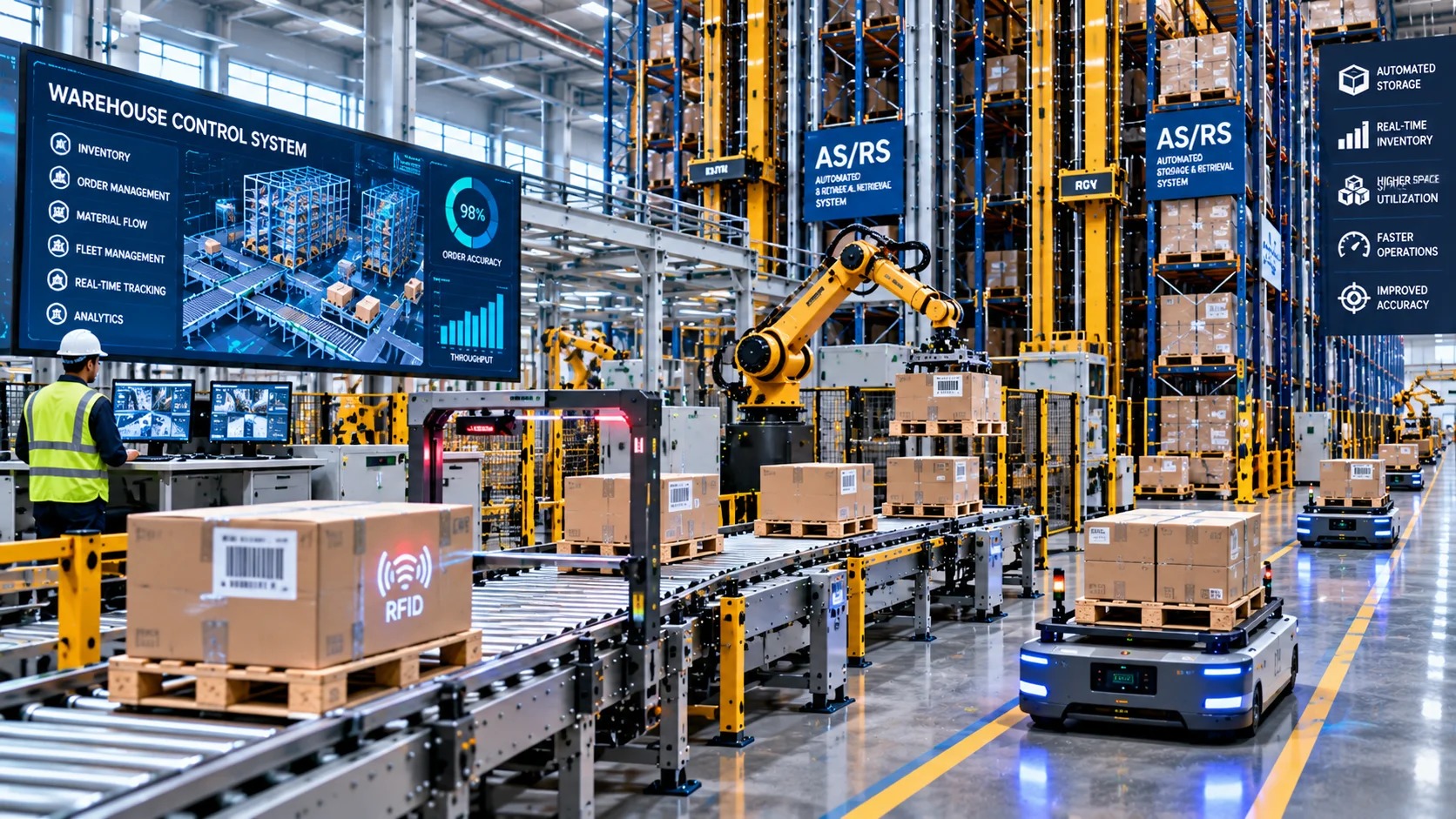
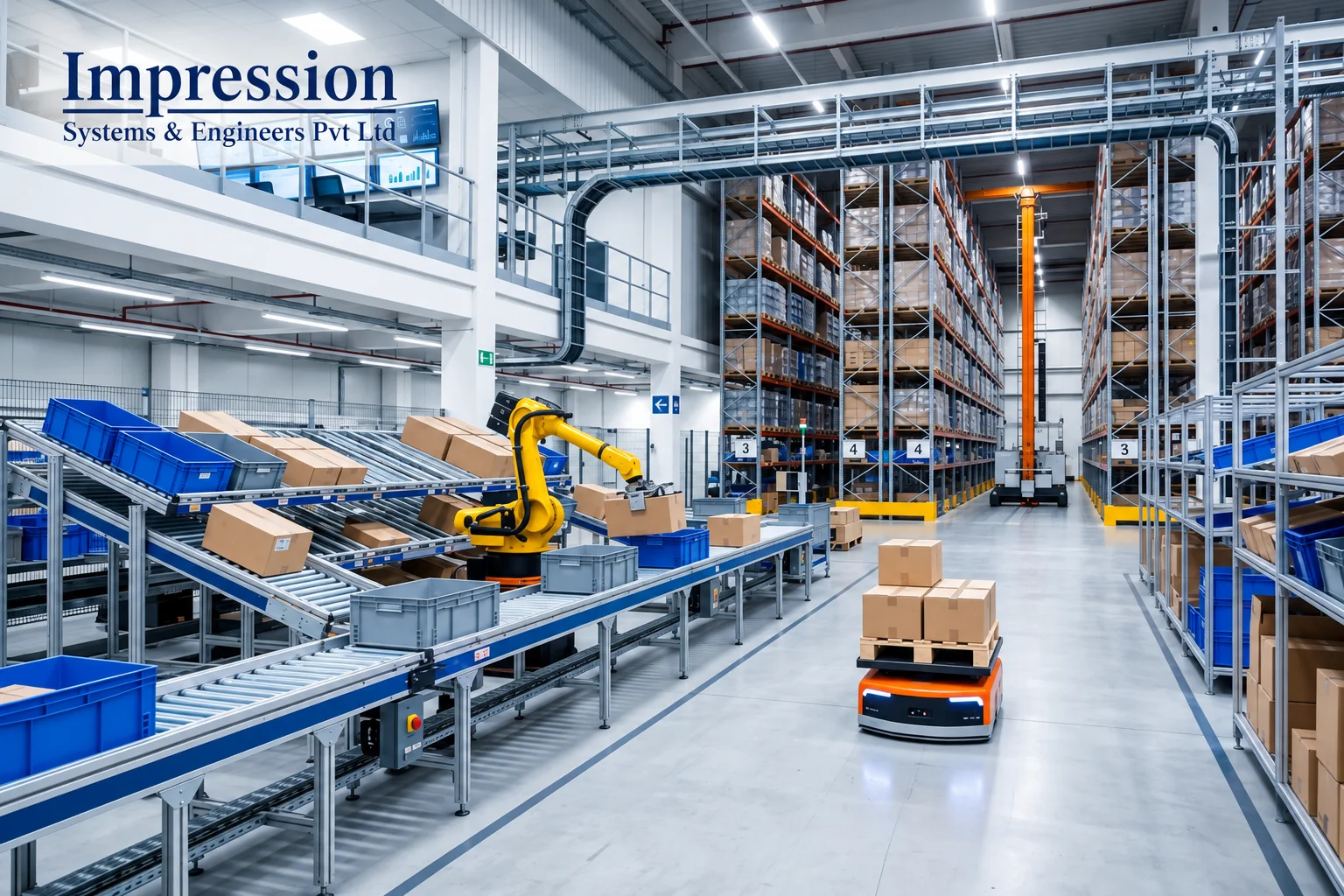
Intralogistics automation addresses these challenges by connecting different internal logistics activities into a coordinated system. Automated conveyor systems, automated guided vehicles (AGVs), autonomous mobile robots (AMRs), automated storage and retrieval systems (AS/RS), robotic handling equipment, and warehouse management software can work together to improve material flow.
For manufacturers and warehouse operators, the goal is not simply to automate individual machines. It is to design a connected material-handling environment that supports productivity, safety, traceability, and reliable operations.
This guide explains how intralogistics automation works, the technologies involved, its major benefits, industry applications, implementation process, and the factors businesses should consider when selecting an automation solution.
What Are Intralogistics Automation Solutions?
Intralogistics refers to the movement, storage, handling, and management of materials and products within a facility. It covers activities such as receiving goods, transporting components to production lines, storing inventory, replenishing workstations, moving work-in-progress materials, collecting finished products, and preparing orders for dispatch.
Intralogistics automation uses machines, control systems, software, and digital technologies to perform or coordinate these activities with reduced manual intervention.
An intralogistics automation solution may include a single automated conveyor line or a fully integrated system connecting receiving, storage, production, picking, packing, and dispatch.
For example, a manufacturing facility may use conveyors to transport components, an automated storage and retrieval system to store pallets, AMRs to replenish production workstations, and a manufacturing execution system to coordinate material requirements. Sensors and control software help equipment respond to operational conditions.
The most suitable solution depends on the facility layout, material characteristics, throughput requirements, production processes, and business objectives.
Intralogistics Automation vs. Traditional Material Handling
Traditional material handling frequently relies on operators, forklifts, manual inventory checks, and individual equipment controls. Automation introduces repeatable movement processes, digital identification, equipment coordination, and data-driven operational visibility.
However, automation does not eliminate every manual task. Many facilities use a hybrid approach in which automated equipment performs repetitive or predictable movements while employees handle exceptions, quality checks, complex decisions, and supervision.
The objective is to make internal logistics more reliable, measurable, and scalable.
Why Are Intralogistics Automation Solutions Important?
Internal logistics directly affects production continuity, inventory accuracy, warehouse productivity, and customer fulfilment. When materials do not reach the right location at the right time, production lines may wait, operators may spend time searching for components, and dispatch schedules may be disrupted.
Intralogistics automation helps businesses address these operational problems.
1. Increasing Material Movement Efficiency
Manual material movement can involve unnecessary travel, repeated handling, and waiting between processes. Automated conveyors, transfer systems, AGVs, and AMRs can create more structured movement routes.
When the system is properly designed, materials can travel between designated locations according to production priorities, inventory requirements, or order demand.
2. Improving Inventory Visibility
Inventory accuracy depends on knowing what materials are available, where they are stored, and when they move. Barcode scanners, RFID technologies, sensors, and integrated inventory software can provide more timely movement records.
These records help teams identify stock discrepancies, locate materials, and coordinate replenishment. The actual level of accuracy depends on system design, identification practices, data quality, and exception handling.
3. Supporting Production Continuity
Manufacturing operations require the right components to reach the correct workstation at the appropriate time. Automated line-feeding systems and material delivery vehicles can coordinate replenishment based on defined production signals.
This can reduce avoidable waiting and support smoother production scheduling.
4. Making Better Use of Facility Space
Automated storage systems can use vertical storage space and structured storage locations to improve space utilisation. Depending on the equipment, load types, and layout, businesses may be able to increase storage density without expanding their building.
Space savings are not automatic. A facility must account for access aisles, maintenance areas, fire protection, equipment clearances, and future expansion.
5. Improving Operational Consistency
Automation can standardise repetitive transport, storage, and handling activities. Consistent operating rules can make material flow easier to monitor and improve process repeatability.
This is particularly valuable in high-volume facilities where delays at one point can affect several downstream operations.
Key Technologies Used in Intralogistics Automation
An effective intralogistics system combines technologies selected for specific material-flow requirements. Each technology performs a different function, and the strongest solution is often a coordinated combination rather than a single machine.
1. Automated Conveyor Systems
Conveyors move materials along defined routes between receiving, storage, production, assembly, inspection, packing, and dispatch areas.
Common conveyor types include:
- Belt conveyors for suitable cartons, packages, and other products.
- Roller conveyors for compatible cartons, totes, and pallets.
- Chain conveyors for certain heavy-duty pallet and industrial applications.
- Overhead conveyors for selected production and assembly processes.
- Powered transfer units for changing material direction or connecting conveyor sections.
Conveyors are useful when movement follows predictable routes and the required capacity justifies fixed infrastructure.
The design must consider load dimensions, weight, speed, accumulation, transfer points, guarding, maintenance access, and emergency-stop arrangements.
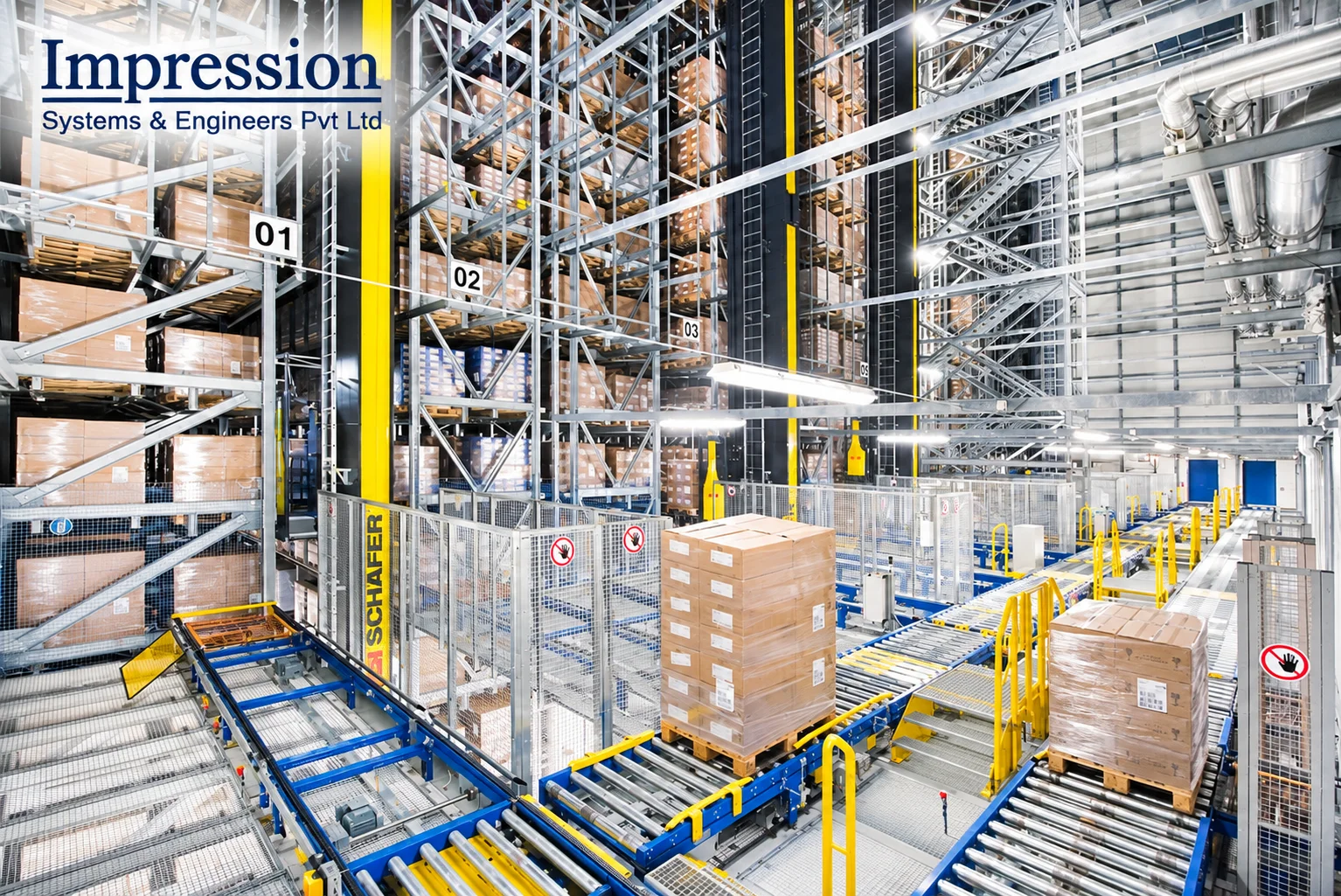
2. Automated Storage and Retrieval Systems (AS/RS)
An automated storage and retrieval system places and retrieves loads from designated storage locations using automated equipment.
Depending on the application, AS/RS may handle pallets, cartons, totes, trays, or smaller components. Common configurations include unit-load systems, mini-load systems, shuttle-based systems, and vertical storage solutions.
Potential advantages include improved storage organisation, reduced manual travel, more controlled inventory movement, and better use of vertical space.
Before implementation, businesses should evaluate storage capacity, retrieval rates, load characteristics, system availability, software integration, and recovery procedures for faults.
Explore Imensys solutions: https://imensys.net/products/
3. Automated Guided Vehicles (AGVs)
Automated guided vehicles transport materials along routes managed through guidance and control technology. Depending on the system, navigation may use magnetic guidance, markers, reflectors, or other configured methods.
AGVs are commonly considered for repetitive transport between production, storage, and staging areas.
They can support pallet movement, line feeding, and transfer operations. Their effectiveness depends on route design, traffic management, load handling, charging or power arrangements, and interaction with people and other vehicles.
4. Autonomous Mobile Robots (AMRs)
Autonomous mobile robots use onboard sensing and navigation capabilities to move through a facility while responding to their operating environment.
Depending on the model and application, AMRs may transport totes, move racks, deliver components, or support picking and replenishment tasks.
Compared with some fixed-route approaches, AMRs can offer greater route flexibility. Nevertheless, deployment still requires careful mapping, traffic rules, docking arrangements, fleet coordination, and safety validation.
AGVs and AMRs are not interchangeable in every application. The appropriate choice depends on route predictability, navigation requirements, load type, operating conditions, and the wider automation architecture.
5. Robotic Material Handling
Industrial robots can support repetitive handling tasks such as palletising, depalletising, machine tending, component transfer, packaging, and selected picking applications.
Robotic systems may include grippers, vacuum tooling, vision systems, conveyors, safety equipment, and control software.
Their value depends on how well the task is defined. Businesses must consider product variation, payload, reach, cycle time, positioning accuracy, end-of-arm tooling, and safe interaction with workers.
Robots are most effective when integrated into a wider material flow rather than treated as isolated equipment.
6. Sensors, Barcode Scanners, and RFID
Sensors and identification technologies help automated systems detect loads, confirm positions, and record movement events.
Barcode systems can identify products, containers, and locations through scanned labels. RFID can identify tagged items without requiring the same visual scanning process as a barcode, subject to tag, reader, and environmental conditions.
Photoelectric sensors, proximity sensors, encoders, and load-detection devices can support equipment control and fault detection.
Reliable identification requires consistent labelling, correct data mapping, and procedures for unreadable or missing identifiers.
7. Warehouse Management and Control Software
Software coordinates the movement of information across the automation system.
A warehouse management system (WMS) manages inventory and warehouse processes. A warehouse control system (WCS) may coordinate the execution of material-handling equipment. A warehouse execution system (WES), where used, can help balance work and coordinate activities across warehouse processes.
Manufacturing facilities may also connect these systems with a manufacturing execution system (MES) or enterprise resource planning (ERP) platform.
The exact division of responsibilities varies by supplier and architecture. Clear system ownership and interface definitions are essential to avoid conflicting instructions, duplicate records, and integration problems.
Major Benefits of Intralogistics Automation Solutions
Higher Throughput and Productivity
Automation can increase the consistency and capacity of internal material movement when equipment is correctly sized for the required workload.
Conveyors can maintain continuous movement, automated vehicles can perform repeated delivery tasks, and software can coordinate transport requests. This may allow employees to focus on quality, exception handling, process improvement, and other higher-value activities.
Actual throughput depends on bottlenecks, equipment availability, travel distances, loading times, and the performance of connected processes.
Reduced Unnecessary Material Handling
Repeated handling increases labour requirements and may increase the risk of product damage. Better-designed transport routes and automated transfers can reduce unnecessary movements.
Reducing handling steps can be especially useful for fragile products, heavy loads, and processes with strict traceability requirements.
Improved Workplace Safety
Automating selected repetitive or physically demanding transport activities can reduce some employee exposure to manual handling and vehicle movement risks.
However, automated equipment introduces its own hazards. Vehicle routes, robot cells, conveyor transfer points, pedestrian access, emergency stops, and maintenance procedures must be designed and managed appropriately.
Safety should be assessed throughout design, installation, commissioning, and operation, not treated as a final-stage addition.
Better Traceability
Digital movement records can help businesses determine when materials were received, transferred, stored, issued to production, or dispatched.
When connected to reliable product and location identifiers, these records can support investigations, inventory control, and operational reporting.
Greater Operational Flexibility
Some mobile robots and modular systems can be reconfigured as production needs change. Software-based routing and scheduling may also support changing priorities.
Flexibility depends on the solution. Fixed conveyors and high-density automated storage systems may require more substantial physical changes when processes or product dimensions change.
More Consistent Service
A well-managed automation system can improve the predictability of internal material movement. More reliable replenishment and order preparation may contribute to improved delivery performance.
Automation alone cannot guarantee faster fulfilment. Results also depend on inventory availability, order management, staffing, maintenance, and dispatch processes.
Applications Across Manufacturing and Warehousing
Intralogistics automation can support a broad range of industries, but each sector has different material characteristics and process requirements.
Automotive Manufacturing
Automotive facilities move components, assemblies, tools, and finished products across multiple production stages. Conveyors, pallet transfer systems, AGVs, AMRs, and robotic handling can support component delivery and production-line replenishment.
Automotive applications often require synchronised material flow, reliable identification, and integration with production schedules.
Learn more: https://imensys.net/automotive/
Food and Beverage
Food and beverage operations may use conveyors, palletising robots, automated storage, and controlled material transport to move packaged products, containers, and ingredients.
Equipment selection must consider hygiene requirements, washdown conditions, temperature, packaging formats, and applicable food-safety requirements. Not every automation technology is suitable for every processing environment.
Explore: https://imensys.net/food-and-beverages/
Metal and Heavy Manufacturing
Metal-processing facilities may need to transport heavy loads, components, coils, fabricated parts, or finished products. Suitable conveyors, transfer cars, lifting systems, and automated handling equipment can support movement between production stages.
Load stability, impact resistance, operating temperatures, payload limits, and guarding are particularly important in these environments.
Explore: https://imensys.net/metal-industry/
Consumer Appliances and Electronics
Appliance and electronics manufacturers may use conveyors, automated component delivery, robotic handling, and traceability systems to coordinate assembly and testing operations.
Where products or components vary frequently, the solution should account for changeover time, identification, handling precision, and integration with production planning.
Explore: https://imensys.net/appliances/
Distribution Centres and E-commerce
Distribution facilities handle receiving, put-away, storage, picking, sorting, packing, and dispatch. Automated storage, conveyors, AMRs, sortation equipment, and digital warehouse systems can help coordinate these activities.
The most appropriate design depends on order profiles, SKU variety, peak demand, carton dimensions, picking methods, and dispatch deadlines.
How to Integrate Intralogistics Automation with Existing Systems
Integration is one of the most important parts of an automation project. Equipment may perform well individually yet fail to deliver the intended operational benefits if information cannot flow correctly between systems.
Define System Responsibilities
Before implementation, determine which system manages inventory, creates movement requests, assigns tasks, controls equipment, records completion, and handles exceptions.
Documenting these responsibilities reduces ambiguity between ERP, WMS, WCS, MES, fleet-management systems, and machine-level controllers.
Establish Reliable Data Exchange
Integration may use APIs, industrial communication protocols, middleware, or supplier-specific interfaces. The choice depends on existing systems, technical requirements, and cybersecurity constraints.
Data mapping should define product identifiers, location codes, quantities, status values, timestamps, and error messages.
Plan Exception Handling
Real operations include blocked routes, missing pallets, damaged labels, equipment faults, inventory discrepancies, and urgent production requests.
A robust design specifies what happens when normal movement cannot be completed. Operators need clear alerts, recovery procedures, and a reliable way to resume operations without creating duplicate or incorrect inventory records.
Protect Operational Technology
Connected automation introduces cybersecurity considerations. Businesses should identify critical systems, restrict unnecessary access, manage user permissions, control remote connections, maintain backups, and follow a documented patching and incident-response process.
For guidance on industrial control system security, consult the NIST Computer Security Resource Center and relevant operational technology guidance.
How to Implement Intralogistics Automation Solutions
A structured implementation process helps businesses select the right technologies and manage technical and operational risks.
Step 1: Assess Current Material Flow
Document how materials enter the facility, where they are stored, how they move between processes, and how finished goods leave the site.
Collect relevant baseline information, including movement frequency, travel distance, inventory accuracy, peak demand, labour requirements, equipment utilisation, waiting time, and recurring bottlenecks.
The assessment should include employees who operate the existing processes because they often understand exceptions that are not visible in standard reports.
Step 2: Define Measurable Objectives
Set clear targets for the proposed system. Objectives might include reducing unnecessary travel, improving material availability, increasing storage capacity, improving traceability, or supporting a defined throughput requirement.
Establish baseline measurements and define how results will be calculated. Avoid relying only on broad goals such as “increase efficiency.”
Step 3: Select the Appropriate Technologies
Compare fixed conveyors, AGVs, AMRs, AS/RS, robotic handling, and hybrid approaches against the actual operating requirements.
Consider load characteristics, layout, required capacity, travel routes, product variation, integration needs, maintenance resources, and future expansion.
The highest level of automation is not necessarily the best choice. The preferred design is the one that addresses the operational problem with an acceptable balance of cost, performance, reliability, and flexibility.
Step 4: Design the System Layout
Prepare a layout covering storage locations, transport routes, production interfaces, charging areas, pedestrian paths, maintenance access, emergency access, and staging zones.
Simulation or modelling may help assess traffic, bottlenecks, storage capacity, and peak workload before installation.
Step 5: Plan Integration and Safety
Define equipment interfaces, software responsibilities, data exchanges, access controls, and fault-recovery procedures.
Complete risk assessments and determine the applicable machinery, electrical, industrial vehicle, and workplace safety requirements for the installation and operating location.
Step 6: Pilot and Validate
Where practical, start with a controlled pilot or a clearly defined phase. Test normal operations as well as exceptions, including equipment faults, blocked routes, incorrect labels, communication failures, and recovery procedures.
Record actual performance against the agreed baseline before expanding the system.
Step 7: Train Employees and Commission
Train operators, supervisors, maintenance personnel, and system administrators for their respective responsibilities.
Commissioning should verify functionality, interfaces, operating limits, alarms, emergency arrangements, documentation, and acceptance criteria. Training and handover should be completed before the system enters routine operation.
Imensys service information: https://imensys.net/service/ and https://imensys.net/training-and-handover/
Step 8: Monitor and Improve
After go-live, review system availability, completed movements, throughput, faults, waiting time, inventory discrepancies, and maintenance needs.
Use these findings to adjust routes, schedules, storage rules, replenishment policies, and maintenance plans. Continuous improvement helps the system remain aligned with changing operational demand.
Challenges to Consider Before Investing
Initial Investment and Total Cost of Ownership
Automation may require spending on equipment, software, integration, building changes, safety systems, installation, training, and commissioning.
A financial assessment should also consider maintenance, spare parts, energy, software support, downtime, upgrades, and eventual replacement. Compare the total expected cost with measurable operating benefits over a defined evaluation period.
Legacy Equipment and Software
Older machinery or business systems may have limited integration options. Interfaces, data quality, and operating constraints should be assessed before equipment selection.
A phased approach may help reduce disruption while retaining suitable existing assets.
Facility Layout and Traffic
Narrow aisles, uneven floors, changing work areas, pedestrian crossings, and congestion can affect automated movement.
The layout must be assessed in real operating conditions, including peak periods and foreseeable changes to production or storage.
Maintenance and System Availability
Automated equipment requires planned inspections, maintenance, spare parts, fault diagnostics, and trained support personnel.
Businesses should agree on service responsibilities, escalation procedures, recovery targets, and documentation before deployment.
Employee Adoption and Change Management
Employees may need to learn new workflows, monitoring tools, and exception-handling procedures. Involving affected teams early can improve practical design decisions and support adoption.
Communicate how roles will change, provide appropriate training, and create clear channels for reporting issues.
How to Evaluate the Return on Investment
The business case for intralogistics automation should be based on measurable operational changes rather than assumed savings.
Potential benefit categories include:
- Reduced labour time spent on repetitive transport or searching for materials.
- Lower product damage or fewer handling-related incidents.
- Improved storage utilisation.
- Reduced production waiting caused by material shortages.
- Better inventory accuracy and traceability.
- Improved order throughput or dispatch consistency.
- Reduced unnecessary vehicle movement or travel distance.
Estimate benefits using actual facility data where possible. Deduct additional operating costs, including maintenance, energy, software, training, and integration support.
A simple payback estimate is:
Payback period = Initial investment ÷ Annual net financial benefit
Annual net financial benefit should account for recurring operating costs and avoid double-counting benefits. This simplified calculation does not replace a full financial assessment, particularly where cash flows vary over time or the system has a long useful life.
The Future of Intralogistics Automation
Intralogistics is increasingly connected to broader digital manufacturing and supply-chain initiatives. Several developments are influencing system design.
Data-Driven Operations
Operational dashboards and analytics can help teams identify recurring delays, underused equipment, and congestion. Reliable data allows managers to compare actual performance with targets and prioritise improvement projects.
AI-Assisted Planning
AI-enabled tools may support demand forecasting, task prioritisation, anomaly detection, and selected optimisation activities. Their usefulness depends on data quality, integration, validation, and appropriate human oversight.
AI should not be treated as a substitute for sound material-flow design or reliable control engineering.
More Connected Mobile Robots
Fleet-management systems can coordinate multiple robots, allocate transport tasks, and manage routes according to defined rules. Multi-vendor integration and safe traffic management remain important considerations.
Modular and Scalable Automation
Some businesses prefer phased automation that can expand as demand grows. Modular solutions can help manage investment and implementation risk, provided the original design accounts for future capacity, interfaces, and layout changes.
Greater Emphasis on Resilience and Cybersecurity
As automation becomes more connected, system availability, backup procedures, secure remote access, and recovery planning become increasingly important. Future-ready systems need operational resilience alongside productivity.
Why Choose an Integrated Approach to Intralogistics Automation?
A successful intralogistics project begins with a clear understanding of the business process. Selecting equipment before analysing material flow can result in isolated automation, unnecessary complexity, or bottlenecks that move from one part of the facility to another.
An integrated approach considers the entire journey of materials—from receiving and storage to production, finished-goods handling, and dispatch. It aligns mechanical equipment, controls, software, safety, maintenance, and employee workflows.
Imensys provides industrial automation-related product and service information for businesses exploring solutions for manufacturing and material handling. When evaluating a project, discuss your material types, facility layout, throughput targets, current challenges, and integration requirements with a qualified automation provider.
You can explore the Imensys products page, review service information, and use the contact page to enquire about your requirements. Confirm the specific capabilities and project scope directly with the provider before making a purchasing decision.
Frequently Asked Questions (FAQs)
1. What are intralogistics automation solutions?
Intralogistics automation solutions use equipment, software, sensors, and control systems to automate or coordinate material movement, storage, inventory handling, production replenishment, and dispatch within a facility.
2. What technologies are used in intralogistics automation?
Common technologies include conveyor systems, automated storage and retrieval systems, AGVs, AMRs, industrial robots, barcode scanners, RFID, sensors, PLCs, warehouse management software, and equipment-control systems.
3. What is the difference between intralogistics and logistics?
Logistics generally covers the broader movement and management of goods across the supply chain, including transportation and distribution. Intralogistics focuses on material movement, storage, and handling inside a facility such as a factory, warehouse, or distribution centre.
4. Can small and medium-sized businesses use intralogistics automation?
Yes. Smaller businesses can consider targeted automation, such as a conveyor section, barcode-based tracking, selected robotic handling, or a mobile robot for a repetitive transport task. The solution should be justified by workload, operating needs, integration requirements, and expected benefits.
5. Are AGVs and AMRs the same?
No. AGVs generally follow defined guidance or configured routes, while AMRs typically use onboard sensing and navigation to move through an environment and respond to obstacles or route conditions. Actual capabilities vary by product and implementation.
6. How does intralogistics automation improve warehouse efficiency?
It can reduce unnecessary travel and handling, coordinate transport tasks, improve storage processes, support inventory visibility, and provide better operational data. Results depend on system design, workload, integration, and maintenance.
7. Can intralogistics automation integrate with an existing ERP or WMS?
Yes, if suitable interfaces and compatible system architectures are available. Integration planning should define data ownership, inventory updates, task execution, error handling, cybersecurity, and recovery procedures.
8. How much do intralogistics automation solutions cost?
Costs vary with facility size, equipment type, throughput, storage density, software, integration complexity, safety requirements, installation work, and service arrangements. A reliable estimate requires an assessment of the facility and its operating requirements.
9. How long does implementation take?
The schedule depends on project scope, equipment lead times, facility modifications, software integration, testing, and training. A small targeted installation may be completed much sooner than a large, fully integrated facility. A supplier should provide a project-specific schedule.
10. How should a business start an intralogistics automation project?
Begin by mapping material flow, measuring bottlenecks, defining objectives, and documenting product and throughput requirements. Then compare technologies, assess integration and safety needs, build a business case, and develop a phased implementation plan.
Conclusion
Intralogistics Automation Solutions help manufacturers, warehouses, and distribution centres coordinate internal material movement, improve operational visibility, and create more consistent workflows. By combining conveyors, AS/RS, AGVs, AMRs, robotics, identification technologies, and connected software, businesses can design systems suited to their specific production and storage requirements.
The most successful projects begin with an operational assessment, measurable objectives, suitable technology selection, and careful planning for integration, safety, training, and maintenance. Automation should solve clearly defined problems rather than add equipment without improving the overall process.
If your business is planning to improve warehouse operations, production-line replenishment, or internal material handling, explore the available Imensys products and services. Contact the team to discuss your facility requirements and determine which automation approach may be appropriate for your operation.