Industrial Conveyor Systems: A Complete Guide for Modern Industries
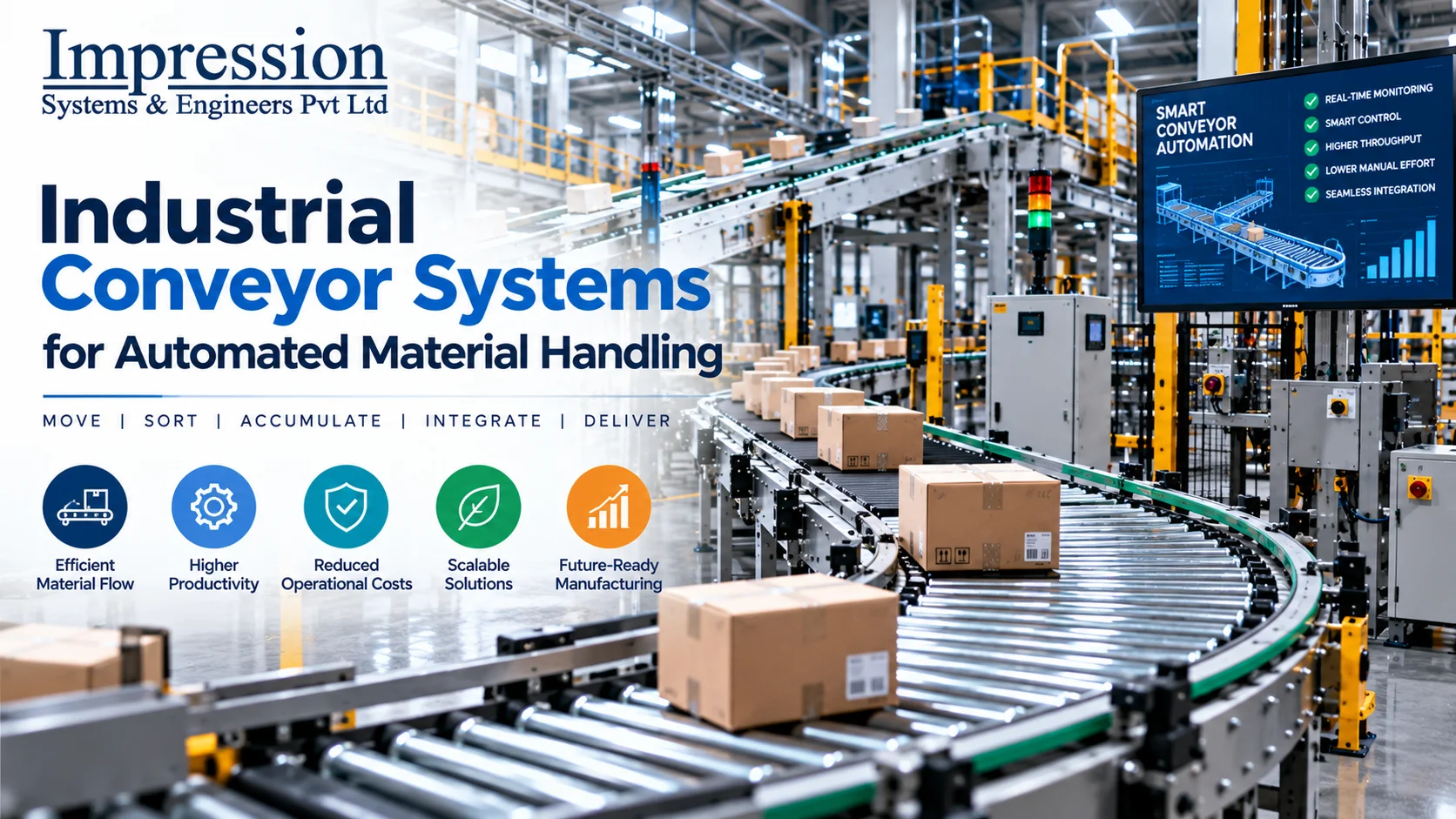
Industrial conveyor systems are an important part of modern material handling and industrial automation. Manufacturing plants, warehouses, distribution centers, logistics facilities, and processing industries use conveyor technology to move materials from one location to another with greater consistency and efficiency.
Instead of relying entirely on manual transportation, forklifts, or material handling equipment, conveyors create controlled pathways for products, components, cartons, containers, and pallets.
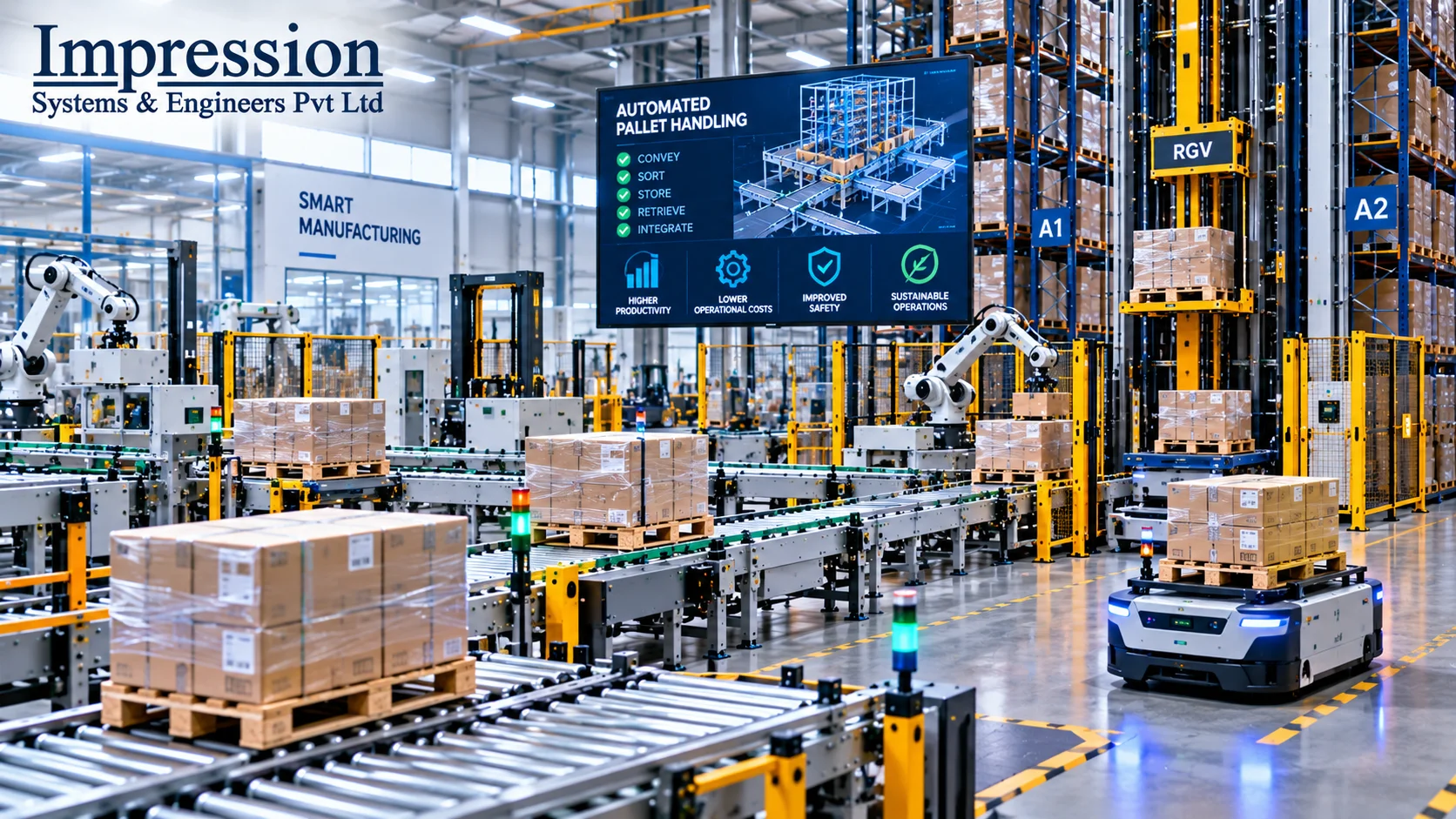
Modern industrial conveyor systems can be designed for simple transportation or integrated into complex automated production and warehouse environments. They can work with sensors, motors, drives, PLCs, HMIs, robotic systems, Automated Storage and Retrieval Systems (AS/RS), Automated Guided Vehicles (AGVs), Autonomous Mobile Robots (AMRs), Rail Guided Vehicles (RGVs), and warehouse or production software.
The right conveyor system depends on the type of material, product dimensions, weight, required speed, throughput, layout, operating environment, and integration requirements.
This complete guide explains what industrial conveyor systems are, how they work, the major types, their components, benefits, applications, automation capabilities, selection criteria, maintenance requirements, and future trends.
What Are Industrial Conveyor Systems?
Industrial conveyor systems are mechanical material handling systems designed to transport products, materials, components, pallets, cartons, containers, or other loads between predetermined locations.
A conveyor generally consists of a transportation surface or mechanism, drive components, supporting structures, controls, and safety devices.
Depending on the application, conveyors can transport:
- Raw materials
- Components
- Work-in-progress products
- Finished goods
- Cartons
- Totes
- Containers
- Pallets
- Heavy industrial parts
Conveyors may operate continuously or move products in controlled cycles.
In a modern automated facility, a conveyor is rarely an isolated machine. It may form part of a larger material handling system connecting receiving, storage, production, assembly, inspection, picking, packing, and dispatch.
Why Are Industrial Conveyor Systems Important?
Material movement is a fundamental part of industrial operations. Products must continuously move between different processes, and inefficient transportation can create production delays and unnecessary labor.
Manual material movement can result in:
- Excessive walking
- Forklift traffic
- Process delays
- Inconsistent transportation
- Product damage
- Manual handling requirements
- Difficult material tracking
- Workplace ergonomic challenges
Industrial conveyor systems provide defined material transportation routes.
For example, a manufacturing facility may use conveyors to move components from a warehouse to an assembly line. A distribution center may use conveyors to transport cartons from receiving through sorting and dispatch.
By automating repetitive movement, conveyors can help create a more predictable and organized material flow.
How Do Industrial Conveyor Systems Work?
A conveyor system typically uses a motor or drive mechanism to move a belt, roller, chain, slat, or other transportation surface.
Sensors can detect the presence and position of products. Control systems can then determine when and where the product should move.
A basic automated conveyor sequence may look like:
Product Entry → Detection → Transportation → Transfer → Sorting → Destination
For example:
- A product enters the conveyor.
- A sensor detects its presence.
- The PLC receives the signal.
- The conveyor motor operates according to the programmed sequence.
- Additional sensors monitor product position.
- A transfer or diverter directs the product.
- The product reaches its destination.
- The control system confirms completion.
More advanced systems can coordinate multiple conveyors and communicate with WMS, MES, ERP, robotics, and other automation equipment.
Main Types of Industrial Conveyor Systems
Different conveyor technologies are designed for different materials and applications.
1. Belt Conveyor Systems
Belt conveyors use a continuous belt to transport materials.
They are suitable for:
- Cartons
- Packages
- Bags
- Components
- General products
- Bulk materials
Belt conveyors can be configured in straight, inclined, declined, curved, or specialized arrangements.
They are widely used because they can accommodate many product types and provide continuous transportation.
2. Roller Conveyor Systems
Roller conveyors use a series of rollers to transport products.
They can be powered or gravity-driven depending on the application.
Roller conveyors are commonly used for:
- Boxes
- Cartons
- Pallets
- Containers
- Industrial components
Powered roller conveyors are particularly useful when controlled transportation and accumulation are required.
3. Chain Conveyor Systems
Chain conveyors use chains to move products along a defined path.
They are often suitable for:
- Heavy loads
- Pallets
- Industrial components
- Automotive applications
- Large containers
Their robust construction makes them useful for demanding industrial environments.
4. Slat Conveyor Systems
Slat conveyors use connected slats or plates mounted on a chain mechanism.
They are suitable for products requiring a stable transportation surface.
Applications can include:
- Automotive components
- Appliances
- Bottles
- Containers
- Assembly operations
5. Pallet Conveyor Systems
Pallet conveyors are specifically designed to transport palletized loads.
They can use:
- Rollers
- Chains
- Transfer units
- Lifts
- Positioning mechanisms
Pallet conveyors are commonly integrated with automated storage and material handling systems.
6. Accumulation Conveyor Systems
Accumulation conveyors allow products to queue or accumulate without necessarily stopping the complete conveyor line.
They are useful when different processes operate at different speeds.
Accumulation can help balance:
- Production
- Inspection
- Packaging
- Picking
- Dispatch
7. Vertical Conveyor Systems
Vertical conveyors transport materials between different floor levels.
They are useful in:
- Multi-level warehouses
- Mezzanine systems
- Production facilities
- Vertical storage applications
Vertical transportation can reduce the need for manual movement between floors.
8. Flexible Conveyor Systems
Flexible conveyors can be adjusted or repositioned according to operational requirements.
They may be useful for temporary, changing, or flexible loading and unloading operations.
9. Transfer Conveyor Systems
Transfer units move products from one conveyor line to another.
They can be designed using:
- Roller transfers
- Chain transfers
- Lift transfers
- Pop-up transfers
Transfer technology is important when multiple material routes need to intersect.
10. Sorting Conveyor Systems
Sorting conveyors automatically direct products toward different destinations.
They can use diverters, transfers, pushers, scanners, or other mechanisms.
Applications include:
- Order fulfillment
- Distribution
- Production sorting
- Packaging
- Dispatch
Main Components of Industrial Conveyor Systems
A reliable conveyor system depends on properly designed mechanical, electrical, and control components.
Conveyor Frame
The frame supports the conveyor structure and determines its physical configuration.
It may be constructed from materials selected according to:
- Load
- Environment
- Corrosion requirements
- Hygiene
- Operating conditions
Motors and Gearboxes
Motors provide the energy required to move the conveyor.
Gearboxes may be used to provide the appropriate speed and torque.
Conveyor Belt or Transportation Surface
The transportation surface depends on the product and application.
Examples include:
- Rubber belts
- PVC belts
- Modular belts
- Rollers
- Chains
- Slats
Rollers and Pulleys
Rollers support and guide products or belts.
Pulleys can drive and redirect belts in belt conveyor systems.
Sensors
Sensors detect:
- Product presence
- Product position
- Accumulation
- Movement
- End-of-line conditions
Variable Frequency Drives
VFDs can control motor speed and support controlled conveyor operation.
Speed control can be useful when conveyor speed needs to match production or process requirements.
PLC
A Programmable Logic Controller manages the automated sequence.
It can coordinate:
- Motors
- Sensors
- Transfers
- Diverters
- Safety signals
- Communication
HMI
A Human Machine Interface provides operators with information and controls.
An HMI can display:
- Conveyor status
- Faults
- Alarms
- Speed
- Operating mode
- Production information
Safety Devices
Depending on the application, safety systems can include:
- Emergency stop devices
- Safety switches
- Guarding
- Interlocks
- Safety scanners
- Access protection
Benefits of Industrial Conveyor Systems
Improved Material Flow
Conveyors create defined routes for moving materials between process areas.
Increased Productivity
Automated transportation reduces the time employees spend manually moving products.
Reduced Manual Handling
Conveyors can handle repetitive transportation tasks, reducing physical movement.
Consistent Transportation
A properly designed conveyor can maintain predictable movement and speed.
Improved Workplace Ergonomics
Reducing repetitive lifting and carrying can support better working conditions.
Better Process Integration
Conveyors can connect different production and warehouse processes into one material flow.
Reduced Forklift Dependency
In suitable applications, automated conveyors can reduce the need for forklifts for repetitive internal transportation.
Improved Product Tracking
When combined with barcode, RFID, sensors, or software, conveyors can provide better visibility of product movement.
Scalability
Conveyor systems can often be extended or integrated with additional equipment as operational requirements grow.
Industrial Conveyor Systems in Manufacturing
Manufacturing facilities often have complex material flows.
Raw materials may enter a warehouse, move to production, pass through multiple workstations, and finally reach packaging and dispatch.
Industrial conveyors can connect these stages.
Automotive Manufacturing
Automotive facilities can use conveyors for:
- Component movement
- Assembly operations
- Pallet transportation
- Sequencing
- Work-in-progress
- Finished vehicle components
- Returnable containers
Heavy-duty conveyors can be designed for industrial components and demanding production environments.
Appliances Manufacturing
Appliance manufacturing can use conveyors to transport:
- Components
- Subassemblies
- Finished appliances
- Packaging materials
- Pallets
Conveyor systems can connect assembly, testing, packaging, and dispatch.
Electronics Manufacturing
Electronics facilities can use conveyor systems for:
- Small components
- Subassemblies
- Inspection
- Packaging
- Finished products
Controlled transportation can reduce unnecessary manual movement.
Food and Beverage
Food and beverage facilities use conveyor systems for:
- Containers
- Bottles
- Packages
- Cartons
- Pallets
- Finished products
The conveyor design should consider the relevant product and operating environment requirements.
Metal and Engineering
Industrial conveyors can transport:
- Heavy components
- Fabricated parts
- Containers
- Pallets
- Work-in-progress
- Finished products
Heavy-duty conveyor designs can accommodate higher loads and demanding environments.
Industrial Conveyor Systems for Warehouses
Warehouses use conveyors to connect different material flow stages.
A typical warehouse flow may be:
Receiving → Inspection → Storage → Picking → Sorting → Packing → Dispatch
Conveyors can reduce unnecessary travel and create organized transportation routes.
They can also integrate with:
- AS/RS
- AMRs
- RGVs
- Barcode scanners
- RFID
- Sorting systems
- WMS
- Warehouse Control Systems
This allows the conveyor to become part of a larger warehouse automation solution.
Conveyor Automation and Industry 4.0
Modern industrial conveyor systems can be connected to Industry 4.0 technologies.
Potential technologies include:
- Industrial IoT
- Sensors
- Data analytics
- Artificial intelligence
- Machine learning
- Cloud monitoring
- Digital twins
- Predictive maintenance
Connected conveyors can provide data such as:
- Motor status
- Operating hours
- Conveyor speed
- Product count
- Fault conditions
- Energy consumption
- Maintenance indicators
This data can help operators understand system performance and identify potential bottlenecks.
Integration with PLC, WMS, MES and ERP
Modern conveyor systems can communicate with other industrial and business systems.
A typical automation architecture can include:
ERP ↔ WMS/MES ↔ WCS ↔ PLC ↔ Conveyor System
The ERP may manage business information.
The WMS may manage warehouse inventory and orders.
The MES may connect production operations with manufacturing information.
The WCS can coordinate warehouse automation.
The PLC manages machine-level operation.
This integration allows material movement to respond to production and warehouse requirements.
How to Choose the Right Industrial Conveyor System
Choosing the right conveyor requires more than selecting a conveyor type.
Consider the Material
Evaluate:
- Weight
- Dimensions
- Shape
- Surface
- Fragility
- Packaging
- Temperature
- Handling requirements
Consider Required Throughput
Determine:
- Products per hour
- Pallets per hour
- Peak throughput
- Required cycle time
- Accumulation requirements
Consider Conveyor Speed
The required speed depends on:
- Product type
- Process time
- Distance
- Production rate
- Worker interaction
Analyze the Layout
Consider:
- Available floor space
- Ceiling height
- Columns
- Doors
- Production equipment
- Storage areas
- Emergency access
Consider Integration
Determine whether the conveyor needs to communicate with:
- PLC
- WMS
- MES
- ERP
- Robots
- AS/RS
- AMRs
- RGVs
Consider Safety
The conveyor should be designed with appropriate safety measures, including guarding, emergency stops, access protection, and safe operating procedures.
Customized Industrial Conveyor Systems
Standard conveyors are suitable for many applications, but industrial facilities often have unique requirements.
Customized conveyor systems can address:
- Unusual product sizes
- Heavy loads
- Complex layouts
- Multi-level transportation
- High throughput
- Specialized production processes
- Existing equipment integration
- Automated storage interfaces
Customization may include conveyor dimensions, frame design, motor selection, transfer mechanisms, sensors, controls, safety systems, and software integration.
Industrial Conveyor System Implementation Process
Requirement Analysis
The project begins with understanding:
- Material characteristics
- Material flow
- Throughput
- Existing equipment
- Production requirements
- Warehouse requirements
Concept and Layout
The proposed conveyor route is developed around the material flow.
Detailed Engineering
Engineering may cover:
- Mechanical design
- Electrical design
- PLC architecture
- HMI
- Safety
- Software communication
Manufacturing
The conveyor components and assemblies are manufactured according to the approved design.
Installation
The system is installed and connected to existing equipment.
Testing and Commissioning
Testing verifies:
- Motor operation
- Sensors
- Conveyor speed
- Transfers
- Safety
- Communication
- Product movement
- System performance
Training and Handover
Operators and maintenance personnel receive training on operation, safety, troubleshooting, and preventive maintenance.
Maintenance of Industrial Conveyor Systems
Preventive maintenance is important for conveyor reliability.
Typical activities include:
- Belt inspection
- Roller inspection
- Chain inspection
- Motor inspection
- Gearbox inspection
- Sensor cleaning
- Alignment checks
- Lubrication
- Electrical inspection
- Safety device testing
Maintenance teams should also monitor unusual noise, vibration, temperature, belt tracking, and motor performance.
Predictive maintenance technologies can use sensor data to identify potential problems before they result in unexpected downtime.
Common Conveyor System Problems
Belt Misalignment
Improper alignment can cause uneven belt movement and premature wear.
Excessive Noise
Unusual noise may indicate problems with bearings, rollers, motors, or mechanical components.
Sensor Failure
A faulty sensor can interrupt automated material flow.
Motor Overheating
Motor temperature should be monitored according to the equipment and operating requirements.
Product Accumulation
Incorrect conveyor speed, spacing, or control logic can create bottlenecks.
Poor Layout Planning
An inefficient conveyor route can increase transportation distance and create unnecessary complexity.
Proper engineering, commissioning, and maintenance can reduce these problems.
Future Trends in Industrial Conveyor Systems
Smart Sensors
Connected sensors can provide real-time information about conveyor condition and material movement.
Predictive Maintenance
Data from motors, bearings, drives, and sensors can support early detection of equipment problems.
AI-Based Optimization
AI can analyze material flow and help identify bottlenecks and opportunities for improved routing.
Robotic Integration
Conveyors can work together with robotic picking, palletizing, and inspection systems.
Flexible Automation
Modern facilities increasingly require conveyor systems that can adapt to changing products and production requirements.
Energy Efficiency
Efficient motors, drives, optimized speeds, and intelligent operating modes can help reduce unnecessary energy consumption.
Why Choose an Experienced Conveyor Automation Partner?
An industrial conveyor is part of a larger material handling process. Successful implementation requires mechanical design, electrical engineering, controls, safety, software integration, installation, and maintenance.
An experienced automation partner can support:
- Process analysis
- Material flow design
- Conveyor selection
- Customized conveyor engineering
- PLC programming
- HMI development
- Safety engineering
- System integration
- Installation
- Commissioning
- Training
- Maintenance
This integrated approach helps ensure that the conveyor system works effectively with the surrounding production or warehouse environment.
Industrial Conveyor Systems from Imensys
Imensys provides industrial automation and material handling capabilities that can support conveyor-based material transportation and integrated automation projects.
Depending on the application, a conveyor project can incorporate:
- Industrial conveyor systems
- Automated material handling
- Storage automation
- RGV transportation
- AMR-based transportation
- Vertical material transportation
- PLC and HMI controls
- Customized automation
- System integration
The right conveyor configuration depends on the product, load, throughput, material flow, facility layout, automation requirements, and future expansion plans.
For organizations looking to automate repetitive material movement, improve internal logistics, or connect warehouse and production processes, a detailed material-flow study can help identify suitable conveyor opportunities.
Frequently Asked Questions About Industrial Conveyor Systems
What are industrial conveyor systems?
Industrial conveyor systems are mechanical and automated systems used to transport materials, products, components, cartons, containers, or pallets between different locations.
What are the main types of industrial conveyors?
Common types include belt conveyors, roller conveyors, chain conveyors, slat conveyors, pallet conveyors, accumulation conveyors, vertical conveyors, transfer conveyors, and sorting conveyors.
What are the benefits of industrial conveyor systems?
Conveyors can improve material flow, reduce repetitive manual handling, increase productivity, support process integration, improve consistency, and reduce unnecessary internal transportation.
Where are industrial conveyor systems used?
They are used in manufacturing plants, warehouses, distribution centers, automotive facilities, food and beverage operations, electronics, appliances, metal and engineering industries, and logistics facilities.
Can conveyor systems be automated?
Yes. Conveyor systems can use sensors, PLCs, HMIs, drives, barcode scanners, RFID, robots, and software interfaces to automate material movement.
Can conveyors connect with a WMS or MES?
Yes. Automated conveyor systems can be integrated with WMS, MES, ERP, WCS, robotics, AS/RS, AMRs, and other industrial systems.
How do I choose an industrial conveyor system?
Consider material characteristics, weight, dimensions, throughput, conveyor speed, layout, operating environment, automation requirements, integration, safety, and future expansion.
How often should industrial conveyors be maintained?
Maintenance frequency depends on the conveyor design, operating conditions, load, duty cycle, and manufacturer recommendations. Preventive inspections should be established as part of the system maintenance program.
Can industrial conveyors be customized?
Yes. Conveyor systems can be customized for product dimensions, load capacity, layout, speed, transfers, sensors, controls, safety, and integration with other automation equipment.
Conclusion
Industrial conveyor systems are a fundamental technology for modern material handling and industrial automation. They provide controlled transportation of products, components, pallets, cartons, and other materials while helping businesses create more efficient and predictable material flows.
From belt and roller conveyors to pallet, chain, slat, vertical, accumulation, transfer, and sorting systems, different conveyor technologies can address different industrial requirements.
Modern conveyors can also integrate with PLCs, HMIs, sensors, robotics, AS/RS, AMRs, RGVs, WMS, MES, and ERP systems. This enables conveyors to become part of an intelligent and connected automation environment.
The right conveyor system should be selected based on the material, throughput, layout, operating conditions, safety requirements, integration needs, and future growth.
For businesses evaluating conveyor automation, the most effective starting point is a detailed study of the existing material flow, bottlenecks, transportation requirements, and future operational objectives.