Smart Material Handling Solutions: A Complete Guide for Modern Industry
Smart Material Handling Solutions are helping manufacturers, warehouses, and distribution centres move, store, track, and manage materials more efficiently. By combining automation equipment, robotics, sensors, intelligent software, and real-time operational data, businesses can improve material flow while gaining better visibility into their production and logistics processes.
Traditional material handling often relies on forklifts, manual transportation, fixed workflows, and disconnected inventory records. These approaches can be effective in certain environments, but growing production volumes, changing customer requirements, labour constraints, and increasing expectations for delivery performance can make manual processes difficult to scale.
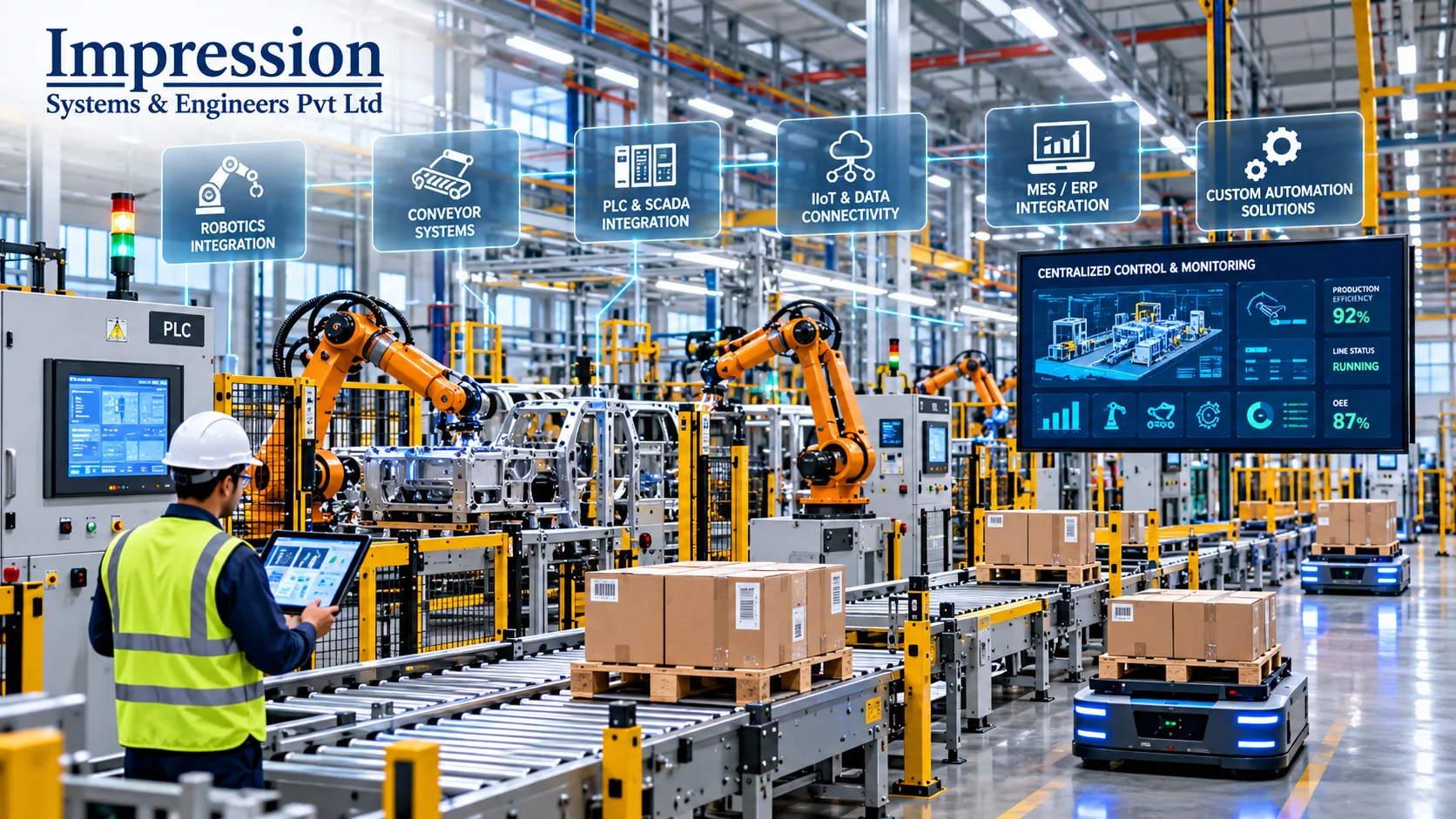
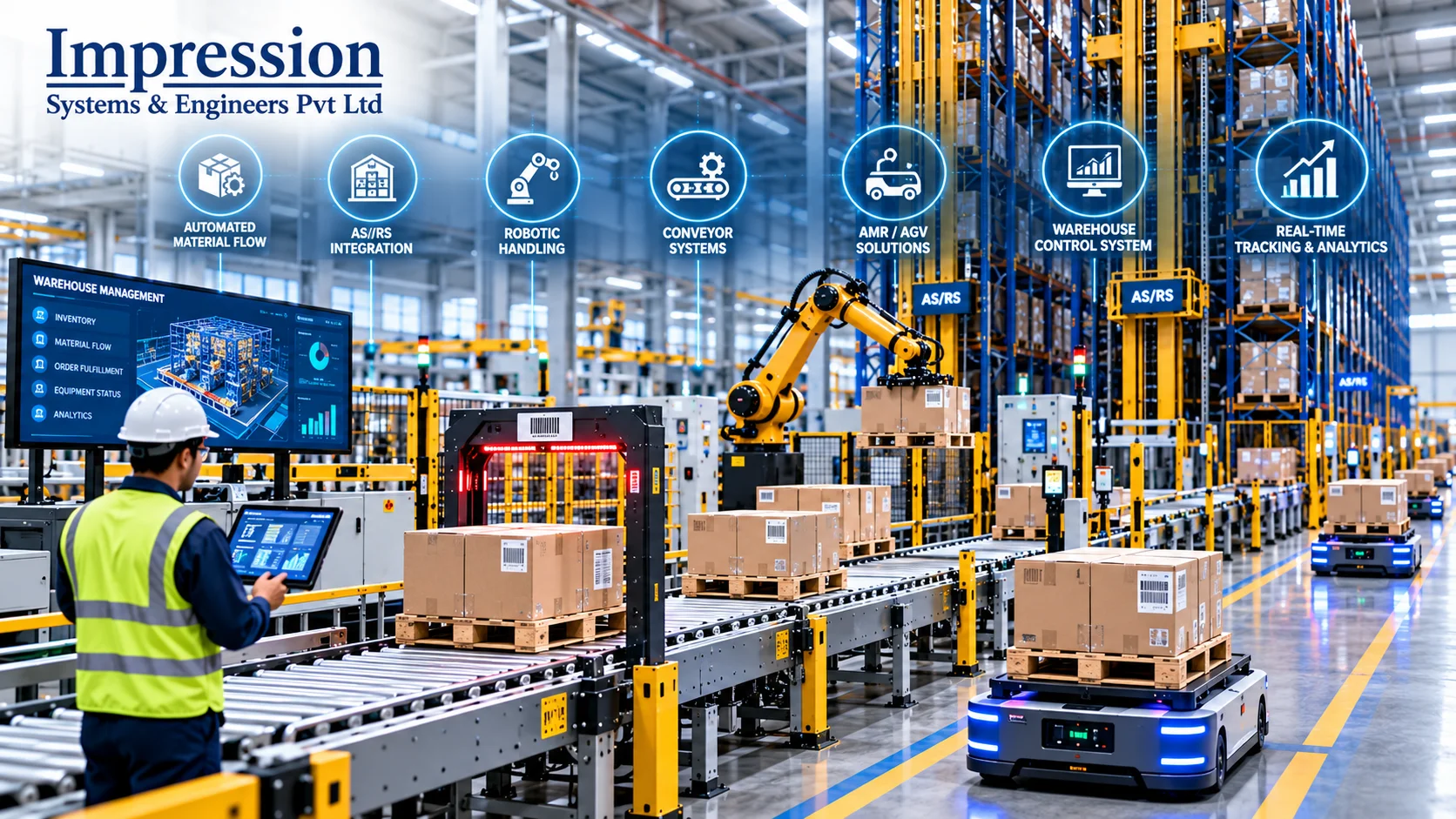
Smart material handling combines suitable physical equipment with digital technologies to coordinate the movement of raw materials, components, work-in-progress products, and finished goods. Depending on the application, a solution may include automated conveyor systems, automated guided vehicles (AGVs), autonomous mobile robots (AMRs), robotic palletising, automated storage and retrieval systems (AS/RS), barcode identification, sensors, and warehouse management software.
The objective is not simply to replace manual tasks with machines. It is to design a connected material-handling process that improves efficiency, supports safe working practices, reduces unnecessary movement, and provides useful operational information.
For manufacturers, a well-designed system can help supply production lines with the right components at the right time. For warehouse operators, it can support organised storage, more predictable picking, and smoother dispatch operations.
This guide explains what smart material handling solutions are, the technologies involved, their benefits, industrial applications, implementation process, common challenges, and the factors businesses should consider before investing.
What Are Smart Material Handling Solutions?
Smart material handling solutions use a combination of equipment, automation, digital identification, control systems, and software to improve the movement, storage, protection, and management of materials within a facility.
Material handling includes activities such as receiving raw materials, transporting components, feeding production lines, moving work-in-progress items, storing inventory, picking orders, packing products, and preparing finished goods for dispatch.
A smart system connects these activities through defined workflows and, where appropriate, digital communication. Sensors can detect the presence or position of a load, control systems can coordinate equipment, and software can assign or track material movement tasks.
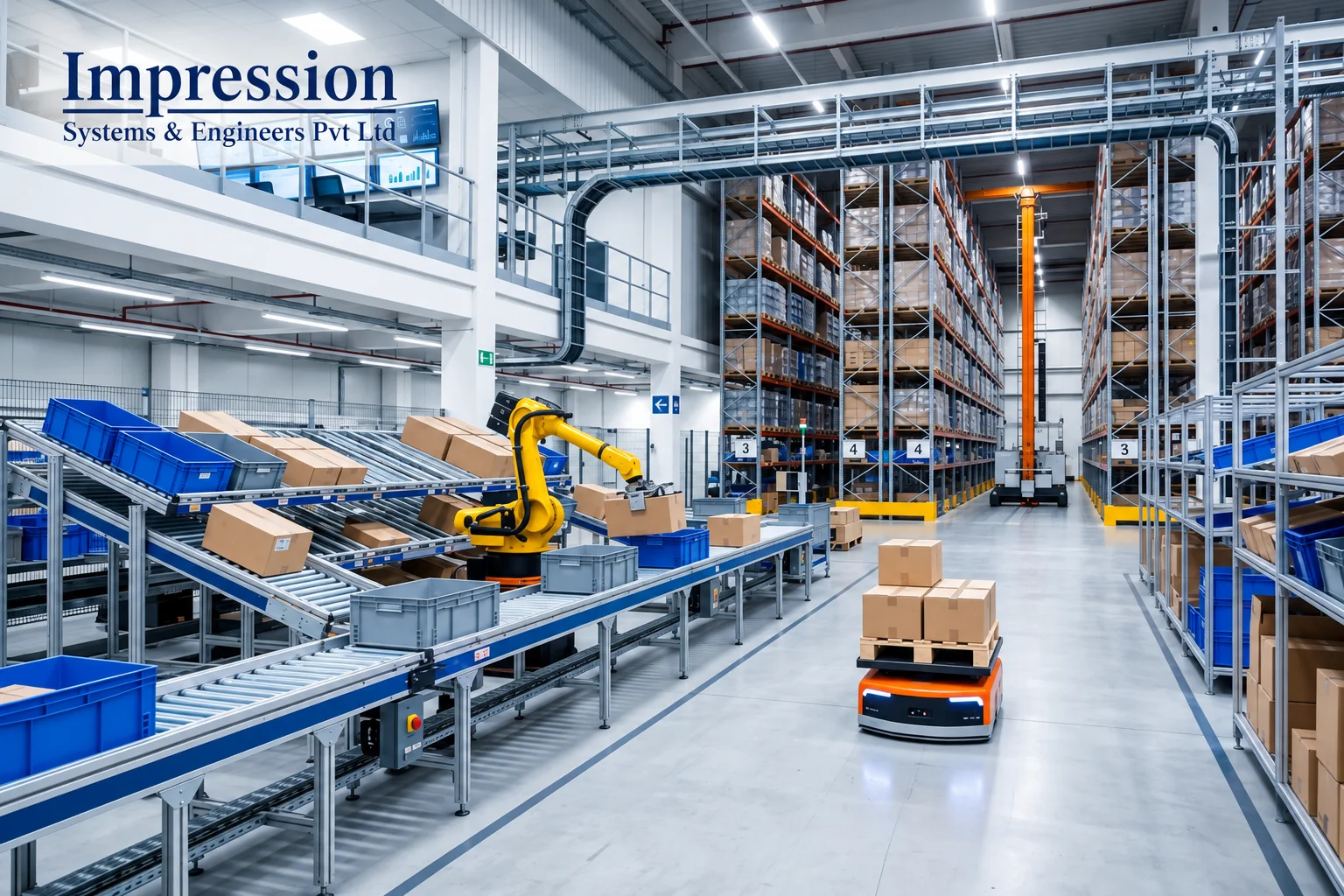
For example, a manufacturing facility might use conveyors to move products between workstations, an AMR to deliver components to assembly lines, a robotic palletiser to prepare finished goods, and warehouse software to track inventory locations.
The most suitable design depends on the type of materials handled, load dimensions, weight, throughput requirements, floor layout, operating environment, and existing systems.
Traditional vs. Smart Material Handling
Traditional material handling may depend on manual instructions, forklift movements, paper-based records, and equipment operated independently. Smart material handling introduces greater coordination through automation, identification technologies, and connected information systems.
However, smart handling does not always mean a completely automated facility. A business may begin by digitising inventory identification, automating one conveyor section, or introducing a mobile robot for a repetitive transport task.
A hybrid approach can be effective when manual processes remain appropriate for irregular loads, specialised tasks, quality checks, or exceptions that require human judgement.
Why Are Smart Material Handling Solutions Important?
Material movement affects productivity, storage capacity, production continuity, inventory accuracy, and order fulfilment. When materials are delayed, misplaced, or handled repeatedly, the consequences can spread across the operation.
Smart material handling helps businesses identify and address these challenges through better process design and suitable technology.
1. Improving Material Flow
A well-planned system coordinates movement between receiving, storage, production, packing, and dispatch. Conveyors, transfer equipment, AGVs, and AMRs can reduce unnecessary travel and create more predictable movement patterns.
The benefit depends on how well the solution fits the facility’s actual material flow. Adding automation without addressing bottlenecks can simply move delays from one process to another.
2. Increasing Operational Visibility
Sensors, barcode scanners, RFID devices, and connected software can provide information about material location, equipment status, and movement history.
This information helps teams locate items, identify delays, and understand how materials move through the facility. The quality of the results depends on correct identification, reliable communication, and accurate data.
3. Supporting Production Continuity
Manufacturing operations depend on components reaching the correct workstation when required. Automated line-feeding and replenishment systems can coordinate material delivery with production needs.
This may reduce time spent searching for components or waiting for deliveries. Reliable results still require appropriate scheduling, inventory availability, and exception-handling procedures.
4. Using Space More Effectively
Automated storage systems, vertical storage equipment, and carefully planned layouts can improve how available space is used.
High-density storage may help a facility increase capacity without expanding its building. However, the design must still account for maintenance access, emergency routes, fire protection, equipment clearances, and future operational needs.
5. Improving Consistency
Automation can standardise repetitive transport and handling activities. Defined routes, movement rules, and control sequences can make material delivery more repeatable.
This is particularly useful in high-volume environments where a delay in one operation can affect several downstream processes.
Key Technologies Used in Smart Material Handling
Smart material handling is not a single technology. It is a coordinated combination of equipment and software selected for specific operational requirements.
1. Automated Conveyor Systems
Conveyors move materials along defined routes between receiving, storage, production, inspection, packing, and dispatch areas.
Common conveyor types include:
- Belt conveyors: Suitable for compatible packages, cartons, and other products.
- Roller conveyors: Used for appropriate cartons, totes, containers, and pallets.
- Chain conveyors: Suitable for certain heavy-duty industrial loads and pallet applications.
- Overhead conveyors: Used in selected manufacturing and assembly environments.
- Transfer conveyors: Move loads between conveyor sections or change their direction.
- Sortation conveyors: Route compatible packages or products to designated destinations.
Conveyors are particularly useful when material follows predictable routes and the required throughput supports fixed infrastructure.
Design considerations include load dimensions, weight, conveyor speed, accumulation, transfer points, guarding, sensors, maintenance access, and emergency stops.
2. Automated Guided Vehicles (AGVs)
Automated guided vehicles transport materials along configured routes using a guidance and control system. Depending on the application, navigation may use markers, magnetic guidance, reflectors, or other technologies.
AGVs can move pallets, containers, components, and production supplies between designated areas.
They are often considered when transport routes are repetitive and predictable. Route planning, traffic management, load stability, charging, docking, and interactions with pedestrians must be assessed before deployment.
3. Autonomous Mobile Robots (AMRs)
Autonomous mobile robots use onboard sensors and navigation software to move through a facility and respond to their operating environment. Depending on the model, an AMR may transport totes, move racks, deliver components, or support replenishment and picking activities.
AMRs can provide flexibility in environments where routes or work requirements change. Their capabilities vary by design, and they still require appropriate mapping, fleet coordination, docking locations, traffic rules, and safety validation.
AGVs and AMRs are not interchangeable in every situation. Compare the actual navigation method, load capacity, operating environment, route flexibility, and integration requirements before selecting a system. The International Federation of Robotics provides useful background on industrial robot and mobile-robot terminology. Read more from IFR.
4. Industrial Robots for Material Handling
Industrial robots can automate repetitive handling tasks such as palletising, depalletising, machine loading, machine unloading, packaging, and selected pick-and-place operations.
A robotic material-handling cell may include a robot arm, gripper, vision system, conveyor, safety equipment, and a controller that coordinates the task.
The robot must be selected according to payload, reach, cycle time, positioning requirements, product variation, tooling, and the layout of the work area.
Robots can improve consistency and support productivity when properly integrated. Their installation must include application-specific risk assessment, safeguarding, operating procedures, and maintenance planning. OSHA’s technical guidance discusses industrial robot components, applications, and safety considerations. Read the OSHA robotics guidance.
5. Automated Storage and Retrieval Systems (AS/RS)
An automated storage and retrieval system places loads into designated storage locations and retrieves them using automated equipment.
Depending on the application, AS/RS may handle pallets, cartons, totes, trays, or small components. System configurations can include unit-load systems, mini-load systems, shuttle-based systems, and vertical storage solutions.
Potential benefits include better organisation, reduced manual travel, improved inventory visibility, and more efficient use of vertical space.
Before choosing an AS/RS, businesses should assess storage capacity, retrieval rates, load types, software interfaces, equipment availability, and recovery procedures.
Explore relevant Imensys information: https://imensys.net/products/
6. Sensors, Barcode Scanners, and RFID
Sensors and identification technologies allow smart material handling equipment to detect loads, identify items, and confirm movement events.
Barcode scanners read printed identifiers on products, packages, containers, and locations. RFID technologies can identify tagged items through radio-frequency communication, subject to tag, reader, material, and environmental conditions.
Photoelectric sensors, proximity sensors, encoders, and load-detection devices can support conveyor control, positioning, and equipment monitoring.
Reliable identification depends on consistent labelling, correct data mapping, and a defined process for unreadable labels or missing identifiers.
7. Warehouse Management and Control Software
Software coordinates information across storage, picking, inventory, and material-handling activities.
A warehouse management system (WMS) manages inventory and warehouse processes. A warehouse control system (WCS) may coordinate the execution of automated material-handling equipment. A warehouse execution system (WES), where used, can help balance and coordinate work across warehouse processes.
Manufacturing facilities may also connect these systems with an enterprise resource planning (ERP) platform or manufacturing execution system (MES).
The exact division of responsibilities varies by solution. A well-defined architecture should establish which system manages inventory, assigns tasks, controls equipment, records completion, and handles exceptions.
Major Benefits of Smart Material Handling Solutions
Higher Productivity and Throughput
Automation can improve the consistency and capacity of internal movement when equipment is properly sized for the workload.
Conveyors maintain movement along defined routes, mobile robots can perform repetitive deliveries, and robotic systems can handle suitable products at consistent intervals.
Actual throughput depends on bottlenecks, equipment availability, loading time, travel distance, maintenance, and the performance of connected processes.
Reduced Unnecessary Handling
Repeated handling consumes time and can increase the risk of product damage. Better-designed routes and automated transfers can reduce avoidable movements.
This can be valuable for fragile products, heavy components, and operations requiring clear traceability.
Improved Workplace Safety
Automating selected repetitive or physically demanding tasks can reduce some exposure to manual handling and vehicle movement risks.
However, automated equipment introduces its own hazards. Robot cells, conveyor transfer points, mobile-robot routes, pedestrian crossings, maintenance access, and emergency stops must be designed and managed appropriately.
Safety must be considered throughout planning, installation, commissioning, and operation.
Better Inventory Accuracy
Digital identification and connected records can improve visibility into where items are stored and when they move.
When material identifiers and locations are correctly maintained, inventory systems can provide more reliable information for replenishment, picking, and production planning.
Improved Space Utilisation
Automated storage, vertical systems, and improved layout planning can help make better use of available space.
Any projected space savings should be assessed against aisle requirements, equipment footprint, access needs, and the facility’s storage profile.
Greater Flexibility
Some AMRs, modular conveyors, and reconfigurable robotic systems can adapt to changes in production or warehouse workflows.
Flexibility varies by technology. Fixed conveyors and high-density storage installations may require more substantial physical changes when products, load dimensions, or routes change.
Better Operational Decision-Making
Integrated data can help managers understand movement volumes, waiting times, equipment faults, inventory discrepancies, and recurring bottlenecks.
These insights can guide process improvement, maintenance planning, and investment decisions. Data quality and clear metric definitions remain essential.
Applications Across Industries
Smart material handling solutions can support different sectors, but each application must be designed around the materials, processes, and environmental conditions involved.
Automotive Manufacturing
Automotive facilities move components, assemblies, tools, and finished products through multiple production stages. Conveyors, mobile robots, pallet transfer systems, and robotic handling can support line feeding, kitting, and production replenishment.
Automotive applications often require reliable sequencing, component identification, and coordination with production schedules.
Explore: https://imensys.net/automotive/
Food and Beverage Manufacturing
Food and beverage facilities may use conveyors, palletising robots, automated storage, and connected tracking systems to move packaged goods, containers, and ingredients.
Equipment selection should consider hygiene, cleaning requirements, temperature, packaging formats, and applicable food-safety requirements. Not every technology is suitable for every environment.
Explore: https://imensys.net/food-and-beverages/
Metal and Heavy Manufacturing
Metal-processing facilities may handle heavy parts, fabricated components, coils, castings, or finished assemblies.
Suitable conveyors, transfer systems, lifting equipment, and automated handling solutions can coordinate movement between production stages. Load stability, temperature, payload, impact resistance, and equipment guarding are important design considerations.
Explore: https://imensys.net/metal-industry/
Appliances and Electronics
Appliance and electronics manufacturers may use automated component delivery, conveyors, robotic handling, and identification systems to support assembly and testing.
Where product variants change frequently, the design should account for changeover time, product identification, handling precision, and software integration.
Explore: https://imensys.net/appliances/
Warehouses and Distribution Centres
Distribution facilities handle receiving, put-away, storage, picking, sorting, packing, and dispatch.
Conveyors, AS/RS, AMRs, automated sortation, and warehouse software can coordinate these activities. The best solution depends on order profiles, SKU variety, package dimensions, peak demand, picking methods, and dispatch deadlines.
Pharmaceuticals and Other Controlled Environments
Some pharmaceutical and controlled-environment operations require careful material identification, controlled access, traceability, and environmental monitoring.
Material-handling equipment must be suitable for the specific product, process, and regulatory requirements. Automation should be validated where required and should support—not bypass—documented quality procedures.
How to Implement Smart Material Handling Solutions
A structured implementation process helps businesses select suitable technologies and manage technical, financial, and operational risks.
Step 1: Assess Current Material Flow
Map how materials enter the facility, where they are stored, how they move between processes, and how finished products leave the site.
Collect baseline information such as movement frequency, travel distance, peak demand, inventory accuracy, waiting time, labour requirements, and recurring bottlenecks.
Include operators and maintenance personnel in the assessment because they often understand practical exceptions that are not visible in reports.
Step 2: Define Measurable Objectives
Identify the business problem and define clear objectives. These may include reducing unnecessary travel, improving storage utilisation, increasing throughput, improving material availability, or strengthening traceability.
Record baseline values and determine how results will be measured. Avoid using broad goals such as “increase efficiency” without defining the relevant metric.
Step 3: Select the Appropriate Technologies
Compare conveyors, AGVs, AMRs, AS/RS, robotic handling, identification technologies, and software based on the actual requirements.
Consider load characteristics, facility layout, throughput, product variation, integration needs, maintenance resources, and future expansion.
The highest level of automation is not always the best choice. The preferred solution is one that addresses the operational problem at an acceptable total cost and level of complexity.
Step 4: Design the Layout
Plan storage locations, transport routes, workstations, charging areas, pedestrian access, maintenance clearances, staging zones, and emergency routes.
Simulation or modelling may help evaluate congestion, throughput, and storage capacity before installation.
Step 5: Plan Integration and Safety
Define how the equipment will communicate with WMS, WCS, MES, ERP, and machine-level control systems where applicable.
Complete risk assessments, establish access controls, document fault-recovery procedures, and determine which safety standards and regulations apply to the facility and equipment.
Step 6: Pilot and Validate
Where practical, begin with a controlled pilot or clearly defined phase. Test normal operations and exceptions such as blocked routes, incorrect labels, equipment faults, communication loss, and recovery procedures.
Measure actual performance against the baseline before expanding the solution.
Step 7: Train Employees and Commission
Provide role-specific training for operators, supervisors, maintenance teams, and system administrators.
Commissioning should verify functionality, interfaces, operating limits, alarms, emergency arrangements, documentation, and agreed acceptance criteria before routine operation.
Explore Imensys resources: https://imensys.net/service/ and https://imensys.net/training-and-handover/
Step 8: Monitor and Improve
After deployment, review equipment availability, completed movements, throughput, fault frequency, inventory discrepancies, and maintenance requirements.
Use the findings to adjust routes, schedules, replenishment rules, storage policies, and maintenance plans. Ongoing improvement helps keep the system aligned with changing operating needs.
Common Challenges and How to Address Them
Initial Investment and Total Cost of Ownership
A project may require spending on equipment, software, integration, facility modifications, safety systems, installation, training, and commissioning.
A business case should also account for maintenance, spare parts, energy, software support, downtime, upgrades, and eventual replacement. Evaluate expected benefits over a defined period instead of relying only on the initial purchase price.
Legacy Systems and Compatibility
Existing equipment may have limited communication interfaces or use older control systems. Before selection, assess available interfaces, technical documentation, system condition, and upgrade options.
A phased approach may reduce disruption while allowing suitable existing assets to remain in use.
Layout Constraints and Congestion
Narrow aisles, uneven floors, pedestrian crossings, staging areas, and changing work zones can affect automated movement.
Assess the facility under realistic operating conditions, including peak periods and expected changes in production or storage.
Maintenance and System Availability
Automated equipment needs planned inspections, diagnostics, spare parts, and trained technical support.
Agree on service responsibilities, escalation procedures, recovery targets, and maintenance documentation before deployment.
Employee Adoption
Employees may need to learn new workflows, monitoring systems, and exception-handling procedures.
Involve affected teams early, explain how tasks will change, provide suitable training, and establish clear ways to report problems.
How to Measure Return on Investment
The business case for smart material handling should use measurable operational information rather than assumed savings.
Potential benefit categories include:
- Reduced time spent on repetitive transportation or searching for materials.
- Lower product damage or fewer handling-related incidents.
- Improved storage utilisation.
- Reduced production waiting caused by material shortages.
- Better inventory accuracy and traceability.
- Improved order throughput or dispatch consistency.
- Reduced unnecessary travel or vehicle movement.
Estimate benefits using actual facility data wherever possible. Deduct additional operating costs, including maintenance, energy, software, training, and integration support.
A simple payback estimate is:
Payback period = Initial investment ÷ Annual net financial benefit
Annual net financial benefit should account for recurring costs and avoid double-counting benefits. This simplified calculation is not a substitute for a full financial evaluation where cash flows vary over time or the system has a long useful life.
The Future of Smart Material Handling
Smart material handling is evolving alongside connected manufacturing, digital warehouses, and data-driven operations.
AI-Assisted Planning and Analytics
AI-enabled tools may support task prioritisation, demand forecasting, anomaly detection, and selected routing or scheduling activities.
Their usefulness depends on data quality, integration, validation, and human oversight. AI should complement sound process engineering rather than replace safe control design.
Connected Mobile Robots
Fleet-management systems can coordinate multiple mobile robots, assign transport tasks, and manage traffic according to defined rules.
Multi-vendor integration, charging arrangements, safe pedestrian interaction, and exception handling remain important considerations.
Modular and Scalable Automation
Modular systems can allow businesses to expand automation in phases as demand grows. However, future capacity, interfaces, facility layout, and maintenance requirements should be considered from the beginning.
Digital Twins and Simulation
Simulation and digital-twin approaches can help businesses model material flow, assess bottlenecks, and test selected design changes before making physical modifications.
The accuracy of these tools depends on the quality of the underlying process model and operational data.
Energy Efficiency and Resilience
Energy use, maintenance, spare-parts availability, and recovery procedures are increasingly relevant to material-handling design.
Businesses should evaluate equipment over its operating life and consider how the facility will respond to system faults, network outages, and changes in demand.
Why Choose an Integrated Approach to Smart Material Handling?
A successful material-handling project begins with an understanding of the complete process, from receiving and storage to production, finished-goods handling, and dispatch.
Selecting equipment before analysing material flow can create isolated automation, unnecessary complexity, or bottlenecks elsewhere in the operation. An integrated approach aligns mechanical equipment, controls, software, safety, maintenance, and employee workflows.
Imensys provides industrial automation-related product and service information for businesses exploring manufacturing and material-handling improvements. When evaluating a project, consider your material types, facility layout, throughput targets, existing equipment, and integration requirements.
Explore the Imensys products page, review service information, or contact the team to discuss your requirements. Confirm specific capabilities, project scope, and technical suitability directly with the provider before making a purchasing decision.
Frequently Asked Questions (FAQs)
1. What are smart material handling solutions?
Smart material handling solutions combine automation equipment, sensors, identification technologies, control systems, and software to improve how materials are moved, stored, tracked, and managed within a facility.
2. What technologies are used in smart material handling?
Common technologies include conveyor systems, AGVs, AMRs, industrial robots, automated storage and retrieval systems, barcode scanners, RFID, sensors, PLCs, warehouse management software, and equipment-control systems.
3. How do smart material handling solutions improve productivity?
They can reduce unnecessary movement, coordinate transport tasks, support consistent material delivery, improve inventory visibility, and provide operational data for process improvement. Results depend on system design and operating conditions.
4. What is the difference between AGVs and AMRs?
AGVs generally follow defined guidance or configured routes, while AMRs typically use onboard sensing and navigation to respond to their operating environment. Actual capabilities vary by model and implementation.
5. Are smart material handling solutions suitable for small manufacturers?
Yes. Small and medium-sized manufacturers can start with targeted solutions such as barcode-based inventory tracking, a conveyor section, a robotic handling cell, or a mobile robot for a repetitive task. Investment should be justified by the workload and expected operational benefits.
6. Can smart material handling systems integrate with an existing WMS or ERP?
Yes, where compatible interfaces and a suitable architecture are available. Integration planning should define data ownership, inventory updates, task execution, error handling, cybersecurity, and recovery procedures.
7. How much do smart material handling solutions cost?
Costs vary by facility size, equipment type, throughput, storage requirements, software, integration complexity, safety requirements, installation work, and service arrangements. A reliable estimate requires an assessment of the facility.
8. How do businesses choose the right material handling system?
Begin by analysing material flow, load characteristics, movement frequency, throughput, facility layout, and recurring bottlenecks. Then compare technologies against operational requirements, integration needs, maintenance capacity, and total cost of ownership.
9. Are automated material handling systems safe?
They can improve certain aspects of workplace safety when correctly designed and implemented, but automated equipment also introduces hazards. Application-specific risk assessment, safeguarding, training, maintenance procedures, and compliance with applicable requirements are essential.
10. How should a business start a smart material handling project?
Map current material flow, identify measurable improvement opportunities, and document equipment and data requirements. Then develop a business case, compare suitable technologies, plan integration and safety, test the system, train employees, and monitor results.
Conclusion
Smart Material Handling Solutions help manufacturers, warehouses, and distribution centres improve how materials move through their facilities. By combining conveyors, robotics, AGVs, AMRs, automated storage, sensors, and connected software, businesses can create more coordinated and visible material-handling operations.
The strongest projects begin with a clear understanding of the current process, measurable objectives, and suitable technology selection. They also account for integration, safety, maintenance, employee training, and long-term operating costs.
If your business is planning to improve production-line replenishment, warehouse operations, or internal material movement, explore the Imensys products and services. Contact the team to discuss your facility requirements and determine which approach may be appropriate for your operation.