Industry 4.0 Checklist for Automotive BIW Assembly Lines
By the Imensys Engineering Team — Industrial Automation Specialists
A truly Industry 4.0-ready automotive BIW (Body-in-White) assembly line needs more than a few connected sensors. It requires automated, high-precision material transfer between stations, PLC/HMI-driven control with real-time data visibility, and integration between the shop floor and your MES/ERP systems. This 10-point checklist walks through exactly what to verify before calling your line “Industry 4.0 ready.”
Automotive manufacturers everywhere are under pressure to modernize BIW lines — not just to keep pace with global OEM standards, but to hit throughput targets with fewer defects and less downtime. The challenge is that “Industry 4.0” gets used loosely, often to describe a single connected machine rather than a genuinely integrated smart factory. This checklist is built to cut through that, giving you a practical, engineering-level list to assess where your BIW line actually stands.
What Does “Industry 4.0 Ready” Actually Mean for a BIW Line?
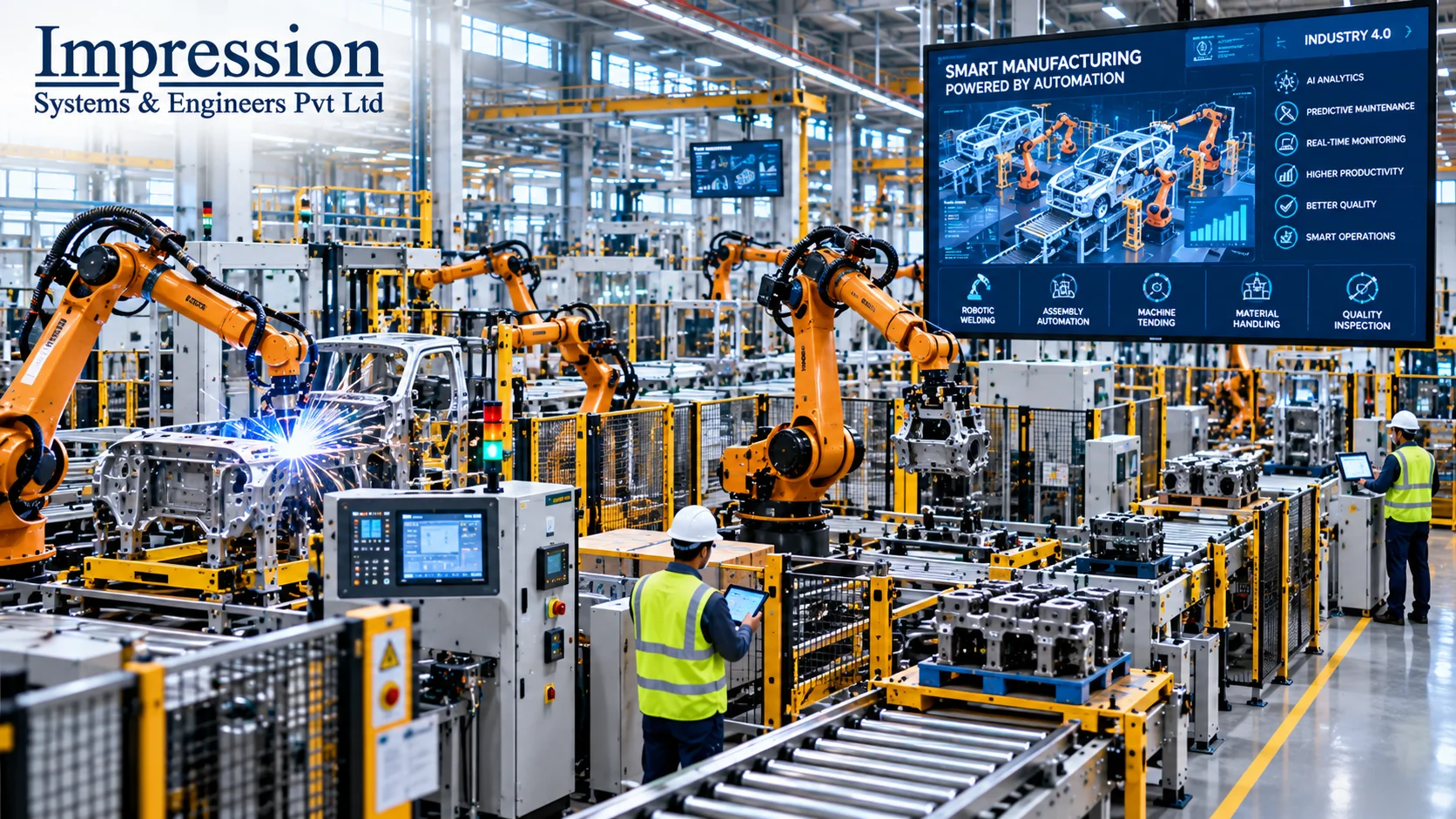
Industry 4.0, at its core, is about connecting physical production equipment with real-time data and control systems so decisions — human or automated — can be made faster and more accurately. For a BIW assembly line specifically, that means the mechanical backbone of the line (skid transfer, RGVs, conveyors, robotic welding stations) has to be paired with digital visibility: sensors that report status, PLCs that control logic in real time, HMIs that give operators clear visibility, and software layers (MES/ERP) that turn floor-level data into production decisions.
The World Economic Forum’s Global Lighthouse Network — a community of manufacturers recognized for applying Fourth Industrial Revolution technologies at scale — offers a useful benchmark here. The manufacturers in this network aren’t distinguished by isolated pilot projects; they’re recognized for integrating digital technologies across their operations to drive measurable gains in productivity and performance. That distinction — isolated automation versus integrated smart factory — is exactly what this checklist is designed to help you evaluate.
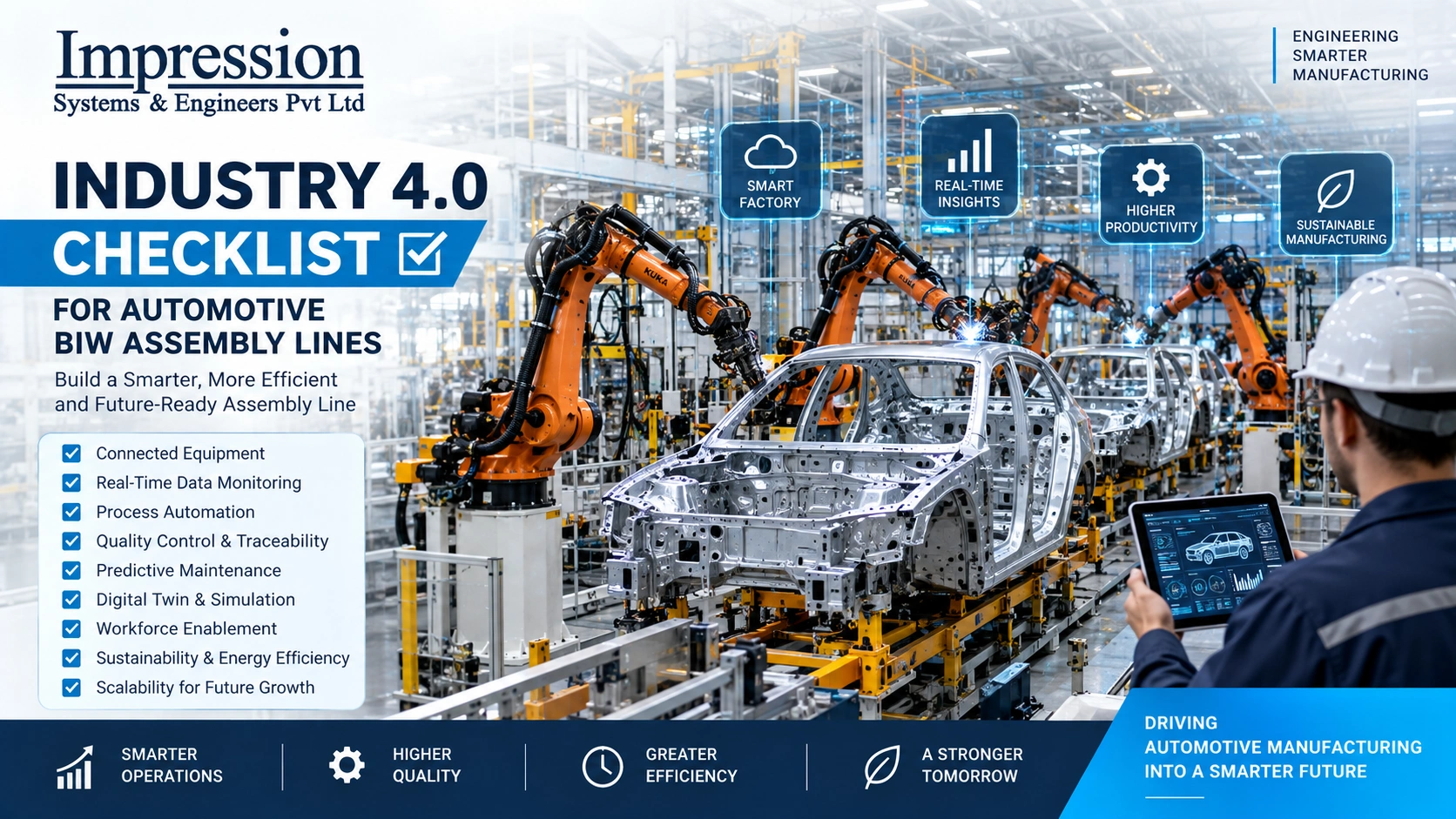
The 10-Point Industry 4.0 Checklist for Automotive BIW Assembly Lines
Use this checklist to assess where your BIW line currently stands, and where the biggest gaps are.
1. Automated, High-Precision Skid Transfer Between Stations
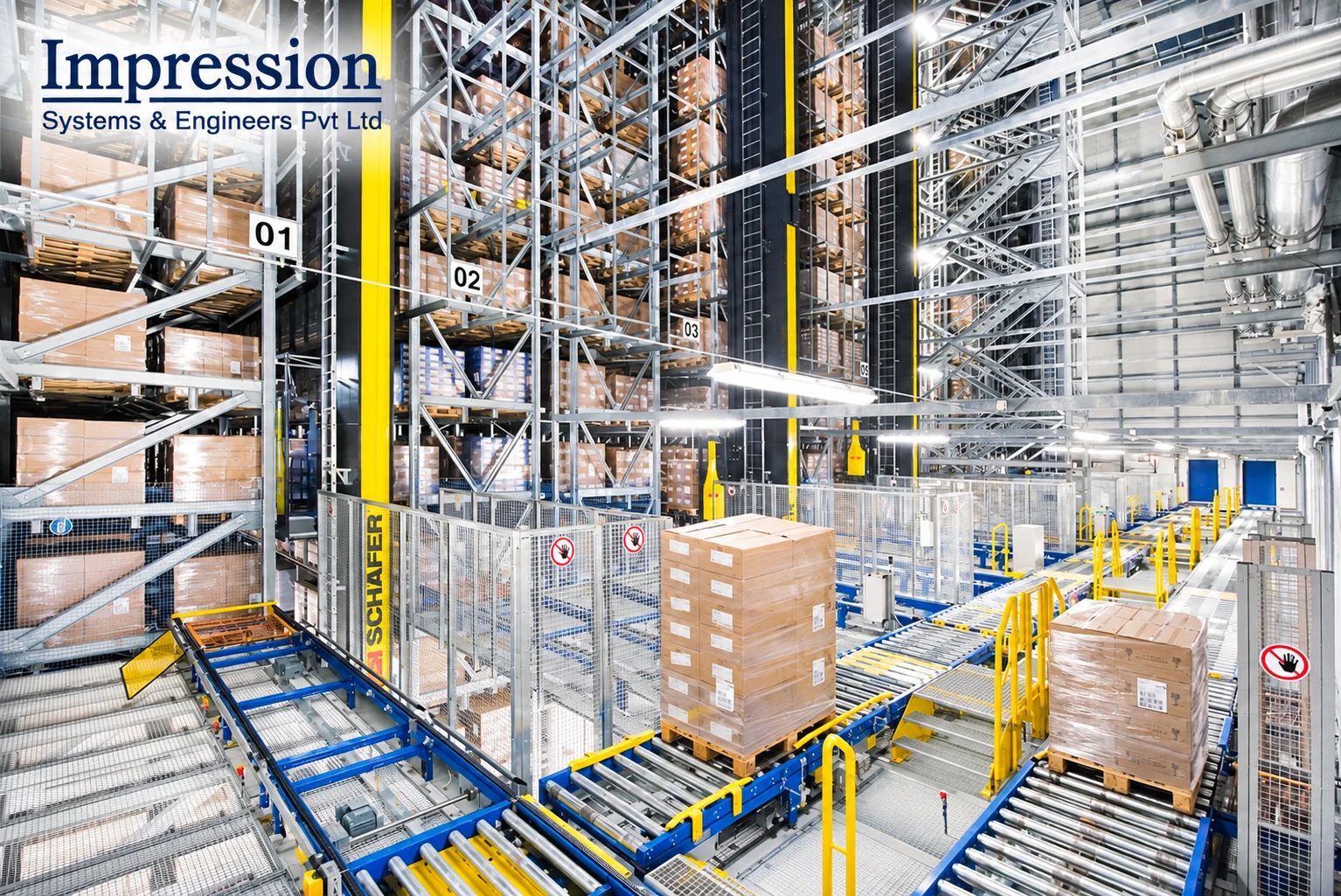
The backbone of any modern BIW line is how the skid (the fixture carrying the body shell) moves between welding, framing, and inspection stations. This should be automated — using RGVs, skid shuttles, or transfer conveyors — with positioning accuracy tight enough to support automated welding and robotic operations without manual realignment.
2. PLC-Controlled Line Logic With Real-Time Fault Detection
Every station along the line should be governed by PLC logic that not only sequences operations but detects faults — misalignment, missed welds, sensor failures — in real time, rather than relying on end-of-line inspection to catch problems after the fact.
3. HMI Visibility at Every Critical Station
Operators and supervisors need clear, real-time visibility into line status through HMI panels — not just “running/stopped” indicators, but actionable data: cycle time, fault codes, station-level throughput, and maintenance alerts.
4. Integration Between Shop-Floor Systems and MES/ERP
Data generated on the floor — cycle counts, downtime events, quality flags — needs to flow into your Manufacturing Execution System (MES) and, ideally, ERP, so production planning and quality teams aren’t working from lagging or manually-entered data.
5. Traceability From Skid to Finished Body Shell
Each skid and body shell should be trackable through the line, ideally with unique identifiers (RFID, barcode, or vision-based tracking) that let you trace a specific unit back through every station it passed — essential for defect root-cause analysis and warranty investigations.
6. Predictive or Condition-Based Maintenance Signals
Rather than relying purely on scheduled maintenance, Industry 4.0-ready lines pull condition data (vibration, temperature, cycle counts) from critical equipment — RGVs, robotic welders, conveyor drives — to flag maintenance needs before a failure causes downtime.
7. Safety Systems Integrated With Line Control, Not Just Standalone
Safety guarding, light curtains, and e-stops should be integrated with the PLC-level control system so a safety event triggers a coordinated, logged response across the line — not just a local stop with no visibility elsewhere.
8. Scalable Automation Architecture for Model Changeovers
Automotive lines increasingly need to handle multiple body variants or model changeovers without a full line rebuild. Check whether your skid transfer, tooling, and control logic can be reconfigured through software/tooling changes rather than requiring mechanical rework each time.
9. Real-Time Throughput and OEE Dashboards
Overall Equipment Effectiveness (OEE) — availability, performance, and quality — should be visible in real time, not compiled manually at shift-end. This is one of the clearest signals of genuine Industry 4.0 integration versus a line that’s automated but not truly “connected.”
10. Cybersecurity and Network Segmentation for Connected Equipment
As more equipment connects to your network, PLCs, HMIs, and MES integrations need proper network segmentation and access control. A connected line that hasn’t addressed industrial cybersecurity is a growing operational risk, not just an IT afterthought.
Why BIW Skid Transfer Automation Is the Foundation
Of all ten items above, skid transfer automation deserves particular attention, because it’s the physical layer everything else depends on. If skid movement between stations isn’t automated, precise, and repeatable, no amount of PLC logic, HMI visibility, or MES integration upstream will deliver real throughput gains — you’ll simply be adding digital visibility to a mechanically inconsistent process.
This is where Rail Guided Vehicles (RGVs) and automated skid transfer systems earn their place as the backbone of a modern BIW line: consistent cycle times, precise positioning at each station, and the mechanical reliability that automated welding and robotic operations depend on. Get this layer right, and the rest of the Industry 4.0 stack — PLC control, HMI visibility, MES integration — has something solid to build on.
Imensys designs Automotive BIW – Skid Transfer Solutions specifically for this purpose, engineered for the precision and throughput consistency that BIW lines require, and built to integrate with the PLC and control architecture already running your line.
How PLC and HMI Systems Fit Into the Bigger Picture
PLCs (Programmable Logic Controllers) and HMIs (Human-Machine Interfaces) are the control and visibility layer sitting directly on top of your mechanical automation. On a well-integrated BIW line, this layer does three things:
- Sequences operations reliably — ensuring each station only proceeds once the prior station’s process is confirmed complete
- Surfaces real-time status and faults — so operators aren’t discovering problems only when a defect reaches final inspection
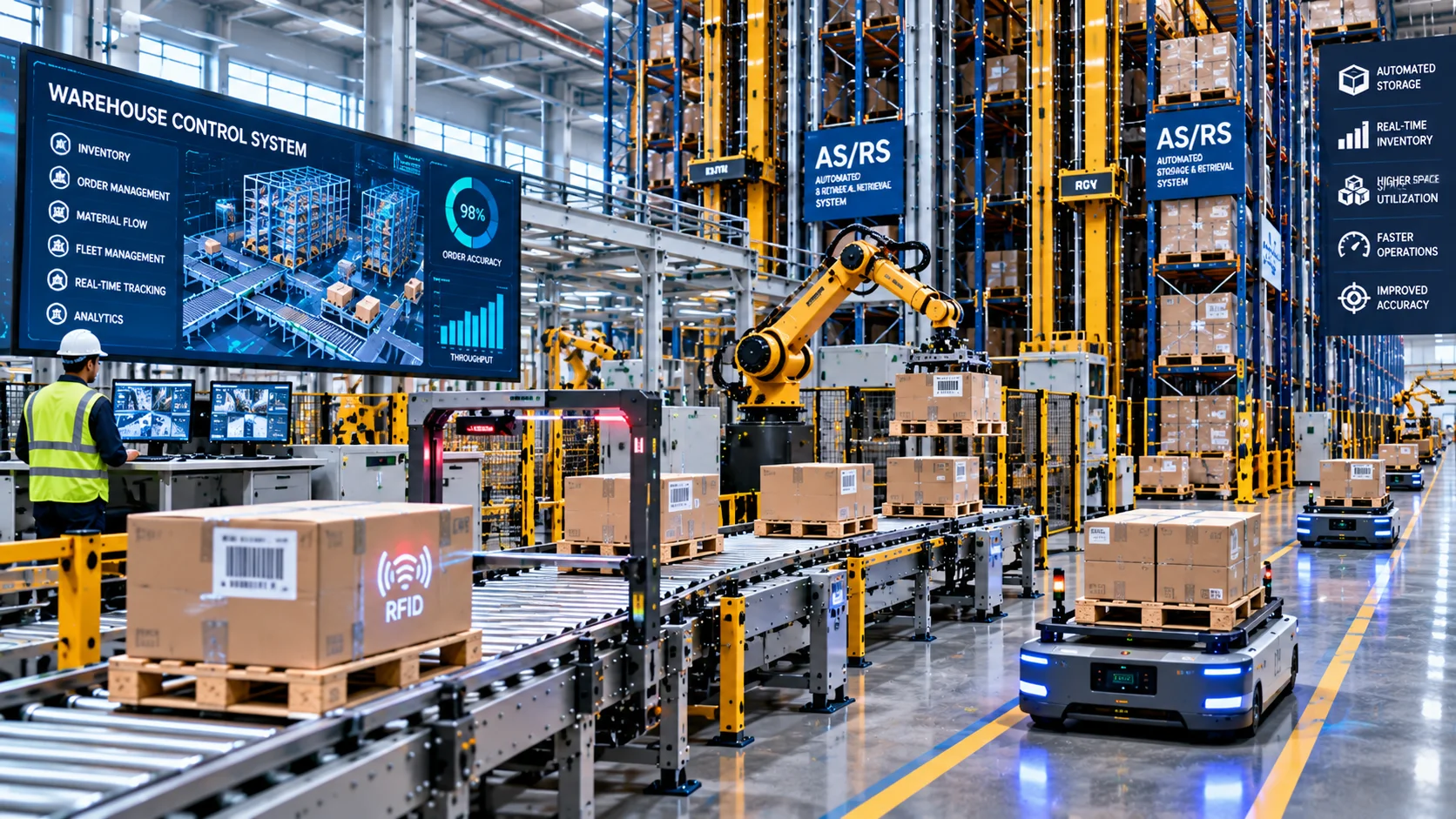
- Feeds data upward — turning floor-level events into the OEE dashboards, MES records, and maintenance alerts that plant managers and engineers actually use to make decisions
A common mistake we see is treating PLC/HMI as a “nice to have” layered onto existing mechanical automation as an afterthought, rather than designing the control architecture and the transfer/handling systems together from the start. When these are designed together, fault detection, traceability, and OEE visibility become straightforward by-products of the system — not a separate integration project bolted on later.
Common Gaps We See in “Partially Automated” BIW Lines
Across automotive facilities we’ve assessed, a few gaps come up repeatedly:
Automated stations, manual transfer. Individual welding or inspection stations are automated, but the skid transfer between them still relies on manual intervention or basic, unmonitored conveyors — creating a bottleneck and a traceability gap right at the connection points.
Data collected but not connected. PLCs are logging fault codes and cycle data locally, but that data never makes it into MES or a plant-wide dashboard — meaning engineers are still walking the floor or pulling logs manually to diagnose recurring issues.
HMI panels that show status, not insight. Many HMI screens simply show “running” or “stopped,” without surfacing the fault codes, cycle-time trends, or maintenance flags that would actually help operators act before a stoppage happens.
No clear changeover plan. Lines built around a single body variant often can’t accommodate a model changeover without significant mechanical rework — a growing problem as automotive manufacturers increasingly run multiple variants on shared lines.
Cybersecurity treated as out of scope. As PLCs and HMIs get networked for MES integration, industrial cybersecurity is often left to a later phase — or not addressed at all — creating risk that grows with every additional connected device.
If any of these sound familiar, it’s usually not a sign you need to rebuild the entire line — it’s a sign that specific layers (most often skid transfer automation or the control/data integration layer) need targeted upgrades.
Industry 4.0 vs Traditional Automation: What’s Actually Different
It’s worth pausing on a distinction that trips up a lot of plant teams: automation and Industry 4.0 are not the same thing, even though the terms get used interchangeably.
Traditional automation replaces manual effort with machines — a robotic welder instead of a manual welder, a conveyor instead of a hand-pushed trolley. It improves consistency and speed at the station level, but each piece of equipment often operates as its own island, with limited visibility beyond its immediate task.
Industry 4.0 adds a data and connectivity layer on top of that automation — sensors, PLCs, and software that let every station report status in real time, feed that data into a shared system, and in more advanced deployments, use that data to predict issues before they occur or adjust operations dynamically. A BIW line can be heavily automated at the mechanical level and still fall short of Industry 4.0 if that data layer doesn’t exist or doesn’t connect across stations.
This distinction matters practically because it changes where you should invest next. If your line already has strong mechanical automation — automated welding, transfer, and material handling — but limited data visibility, your next investment should likely go toward the control and integration layer (Items 2–4 on the checklist above) rather than more mechanical automation. If your line still has manual or inconsistent material transfer, that’s the gap to close first, since it’s the foundation the data layer depends on.
Real-World Signals You’re Ready to Move to the Next Phase
Beyond the checklist itself, a few practical signals tend to indicate a BIW line is ready to invest in the next layer of Industry 4.0 capability:
- Your quality team is still relying on end-of-line inspection to catch most defects, rather than catching issues at the station where they occur. This usually points to a gap in real-time fault detection (Item 2) or traceability (Item 5).
- Maintenance is purely calendar-based, with limited or no condition data feeding into planning. This is a strong signal that Item 6 (predictive/condition-based maintenance) is the next practical investment.
- Production reports are compiled manually at shift-end rather than viewed in real time. This points directly to a gap in OEE dashboards and MES integration (Items 4 and 9).
- Model changeovers require days of mechanical rework rather than a software/tooling reconfiguration. This signals that your transfer and control architecture (Items 1 and 8) wasn’t designed with flexibility in mind from the start.
- IT and OT (operational technology) teams have separate, disconnected views of the plant network, with no clear ownership of industrial cybersecurity. This is worth addressing (Item 10) before adding further connected equipment, not after.
If two or more of these signals sound familiar, it’s a reasonable indication that your BIW line has strong mechanical automation but is still in the early stages of genuine Industry 4.0 integration — which is a normal, common starting point, not a red flag. The purpose of this checklist is to help you identify exactly where to focus next, rather than treating the transition as an all-or-nothing overhaul.
How to Prioritize These 10 Items If You Can’t Do Them All at Once
Most facilities can’t tackle all ten checklist items simultaneously — and they don’t need to. A practical prioritization approach:
- Start with skid transfer automation (Item 1) if it’s still manual or inconsistent — this is the physical foundation everything else builds on.
- Add PLC-level fault detection and HMI visibility (Items 2–3) next, since these deliver immediate operational value and are usually feasible without a full line rebuild.
- Connect that data to MES/ERP (Item 4) once floor-level data capture is reliable — there’s little value connecting incomplete or inconsistent data upstream.
- Layer in traceability and predictive maintenance (Items 5–6) as your data infrastructure matures.
- Address safety integration, changeover flexibility, OEE dashboards, and cybersecurity (Items 7–10) as ongoing improvements, ideally planned into any future line expansion or retrofit project rather than treated as isolated add-ons.
This sequencing avoids the common trap of investing in dashboards and analytics before the underlying mechanical and control layers are solid enough to generate trustworthy data.
Conclusion
A genuinely Industry 4.0-ready BIW assembly line isn’t defined by any single piece of technology — it’s the combination of precise, automated skid transfer; PLC-driven control with real-time fault detection; HMI visibility that gives operators actionable information; and data integration that connects the shop floor to MES and ERP systems. Skipping the mechanical foundation — reliable, automated skid transfer — while investing in dashboards and connectivity layered on top tends to produce a line that looks modern but doesn’t deliver the throughput or traceability gains Industry 4.0 promises.
If you’re assessing where your BIW line currently stands against this checklist, the most valuable next step is usually a focused review of your skid transfer and control architecture — since that foundation determines how much value the rest of your Industry 4.0 investment can actually deliver.
Want a practical assessment of where your BIW line stands against this checklist?
Frequently Asked Questions
What is Industry 4.0 in the context of an automotive BIW assembly line?
Industry 4.0 for a BIW (Body-in-White) assembly line refers to connecting the physical automation — skid transfer, robotic welding, conveyors — with real-time data and control systems, including PLCs, HMIs, and MES/ERP integration. The goal is to move from isolated automated stations to a fully integrated smart factory where data flows in real time and supports faster, more accurate decisions.
Why is skid transfer automation considered the foundation of Industry 4.0 for BIW lines?
Skid transfer is the physical layer that moves the body shell between every station on the line. If this movement isn’t automated, precise, and repeatable, the digital layers built on top — PLC control, HMI visibility, MES integration — won’t have a mechanically consistent process to work with, limiting the real throughput and traceability gains a facility can achieve.
What role do PLCs and HMIs play in an Industry 4.0 assembly line?
PLCs (Programmable Logic Controllers) sequence operations and detect faults in real time at the equipment level, while HMIs (Human-Machine Interfaces) give operators and supervisors visibility into that data — cycle times, fault codes, and maintenance alerts — so issues can be addressed before they cause downtime or defects.
How do I know if my BIW line is only “partially automated” rather than truly Industry 4.0 ready?
Common signs include automated individual stations connected by manual or unmonitored transfer systems, PLC data that’s logged locally but never reaches MES or plant-wide dashboards, HMI screens that show basic status without actionable insight, and no clear plan for handling model changeovers without mechanical rework.
Do I need to upgrade my entire BIW line at once to become Industry 4.0 ready?
No. Most facilities prioritize incrementally — starting with automated, precise skid transfer if it’s still manual, then adding PLC-level fault detection and HMI visibility, followed by MES/ERP data integration, traceability, and predictive maintenance as the data infrastructure matures.
What is BIW skid transfer automation?
BIW skid transfer automation refers to using automated systems — such as Rail Guided Vehicles (RGVs) or automated skid shuttles — to move the skid carrying a vehicle’s body shell between welding, framing, and inspection stations, replacing manual or inconsistent transfer methods with precise, repeatable movement.
What’s the difference between automation and Industry 4.0 on a BIW line?
Automation refers to machines replacing manual tasks at the station level — such as robotic welding or automated transfer. Industry 4.0 adds a connectivity and data layer on top of that automation, allowing every station to report real-time status, feed data into shared systems like MES, and support faster, more informed decisions across the entire line, not just at individual stations.
How does the World Economic Forum’s Global Lighthouse Network relate to Industry 4.0 in automotive manufacturing?
The Global Lighthouse Network is a World Economic Forum initiative recognizing manufacturers that have successfully scaled Fourth Industrial Revolution technologies across their operations, rather than limiting them to isolated pilot projects. It serves as a useful industry benchmark for what genuine, integrated Industry 4.0 adoption looks like, as opposed to automation that remains disconnected from a broader data and control layer.
Have questions about upgrading your BIW assembly line toward Industry 4.0? Explore our Automotive solutions or contact the Imensys team for a tailored assessment.